Posted: Wednesday, 19 April 2006 6:48AM
Funeral Thursday for Former Riverside Church Minister
NEW YORK -- A funeral service for the Rev. William Sloane Coffin, a former Yale University chaplain and minister at Manhattan's Riverside Church, is scheduled for Thursday.
The service will take place at 4 p.m. at Riverside Church and will be open to the public.
Coffin died last week at his home in Vermont. He was 81-years-old.
Coffin was well known for his peace activism during the Vietnam War and his continuing work for social justice in New York.
He retired from Riverside in 1987 to Vermont, but continued traveling the country to lecture.
The Rev. James Forbes Jr., who succeeded Coffin as senior minister of Riverside, is expected to officiate at the service.
[ from WINS radio - forward widely ]
link: http://www.1010wins.com/pages/26599.php
Wednesday, April 19, 2006


Tuesday, April 18, 2006
NYT: Mayor Seeks to Lower a Barrier for Food Stamps
Date: Tue, 18 Apr 2006 14:29:31 -0400
From: "Carmen Perez"
To: "Woody Pascal", "Benjamin Rosen" , reysmont@yahoo.com
Subject: Fwd: NYT: Mayor Seeks to Lower a Barrier for Food Stamps
---------- Forwarded message ----------
From: Berger, Dan
Date: Apr 17, 2006 7:32 PM
Subject: RE: NYT: Mayor Seeks to Lower a Barrier for Food Stamps
To: NY15 All Staff
This piece is especially significant upon review of the Manhattan
Hunger Task Force's 2005 Strategy Paper. Here are the Paper's
highlights, which I reviewed earlier today.
Washington Heights, Inwood, East Harlem, Morningside Heights and
Hamilton Heights have the highest number of individuals at risk.
60% of EFP (Emergency Food Programs) clients are male
66% are Hispanic; 23% African American; 6% White; 3% Asian; 3% Other
21% are single women w/ children
5% are 18-29; 40% are 30-49; 25% are 50-64; 29% are 65 and over
54% have less than h.s. diploma; 8% have a college degree
64% were born outside the U.S.
46% of Manhattan residents are aware of a neighborhood EFP
83% of Manhattan's residents live within 10 blocks of one
21% of Manhattan residents had difficulty affording food over the past
year
18% are employed
16% would not be able to afford food for themselves/families if they
missed one paycheck
The report highlights the need for
1) more EFP funding
2) more collaboration b/w EFPs, city agencies and social service
providers
3) more staff and volunteers
4) "create an economic environment in which people area able to
sustain w/o emergency food" via job creation and a living wage
________________________________
From: Berger, Dan
Sent: Monday, April 17, 2006 7:20 PM
To: NY15 All Staff
Subject: NYT: Mayor Seeks to Lower a Barrier for Food Stamps
Mayor Seeks to Lower a Barrier for Food Stamps
By SEWELL CHAN
Published: April 17, 2006
The Bloomberg administration, in a significant departure from the welfare policies of the Giuliani era, is pursuing a federal waiver that would make it easier for able-bodied adults who do not have children to qualify for food stamps, even if they are not working.
Skip to next paragraph
 In his first term, Mayor Michael R. Bloomberg hewed closely to the groundbreaking changes in welfare policy begun under his predecessor, Rudolph W. Giuliani, who criticized what he called a culture of dependence on public aid and whose reforms were emulated in other large cities. But now Mr. Bloomberg is moving to loosen a major provision of welfare reform.
About 43,000 able-bodied childless adults in the city use food stamps, and easing the eligibility requirements would make at least 13,900 more people eligible, according to city estimates, although nonprofit groups that have been pressing for the change since the Giuliani administration predicted that even more could qualify.
Driving the change is a recognition that poor residents are facing growing pressures in paying for food and basic costs. The number of New Yorkers receiving food stamps has steadily risen in the last four years, even as the number of those receiving cash welfare assistance has fallen to its lowest level in 40 years.
"The city expects everyone to do their fair share when taking any form of public help, but we recognize that some people have barriers that make it impossible, or very difficult, for them to find jobs," said Robert McHugh, a spokesman for the city's Human Resources Administration.
With little public attention, the Bloomberg administration has been turning to the federally financed food stamp program over the past year as a way to help needy New Yorkers. Last April, the city began accepting food stamp applications by mail or fax. In September, the city received a three-year federal grant that allowed nonprofit groups to start accepting food stamp applications at food pantries and soup kitchens and to begin processing them online.
In January, in his State of the City address, the mayor announced a plan to build an online information and application system for food stamps, health insurance and other public benefits.
The waiver now being sought by the city, which is expected to be approved by the federal government, would affect adults ages 18 to 49 who are not responsible for a child or incapacitated relative and are not physically or mentally unfit for work. The federal welfare overhaul of 1996 imposed a three-month limit on food stamps in any three-year period for this group, known as able-bodied adults without dependents.
The overhaul allowed states to request a waiver of the three-month time limit for residents of areas with relatively high unemployment rates. Most big cities that have been eligible currently receive the waiver, including Chicago, Seattle and Washington.
"New York has been unusual in being one of the only cities in the country eligible for the waiver that has not had it," said Robert Greenstein, executive director of the Center on Budget and Policy Priorities, a liberal research group in Washington.
The three-month time limit does not affect those adults who work at least 80 hours a month, participate in job-training programs for at least 20 hours a week, or are enrolled in workfare, performing a job like raking leaves or answering phones in exchange for benefits.
Advocates of programs that feed the poor have long viewed the three-month limit as too harsh. A 1998 study sponsored by the Agriculture Department found that able-bodied childless adults who were receiving food stamps were likely to have incomes far below the poverty line and to have poor employment prospects because they lacked skills and education. Even when they find jobs in the retail or service industries, they have little job security.
"People can take six months and even a year to find new jobs," said James D. Weill, executive director of the Food Research and Action Center, an anti-hunger policy organization in Washington. "To say you can only have three months of food-stamp benefits is egregiously harsh and not a sensible public policy."
Joel S. Berg, executive director of the New York City Coalition Against Hunger, which represents 1,100 food pantries and soup kitchens, wrote letters to Mr. Bloomberg each of his first four years in office urging him to accept the waiver. "I didn't bother to send such a letter in 2006 because I assumed this issue was a lost cause with this mayor," he said.
The waiver will cost the city almost nothing. Federal food stamp benefits are financed by the Food and Nutrition Service of the Agriculture Department, although states pay a portion of the program's administrative costs. In comparison, the federal government pays for roughly half of the cash welfare program, Temporary Assistance for Needy Families, in New York; the state and local governments pay the rest.
The number of food stamp recipients dropped from a high of nearly 1.5 million in March 1995, during the Giuliani administration, to a low of 798,396 in January 2002, Mr. Bloomberg's first month in office. Since then it has steadily risen, to nearly 1.1 million as of February � its highest level since 1998.
The fall and subsequent rise in the use of food stamps mirrors a national trend, driven by unemployment rates and efforts by the federal government to simplify the application process. The average national food stamp benefit was $92.69 a month, per person, in 2005. (In most places, including New York, electronic benefit cards have replaced paper coupons.)
At least three major factors seem to have played into the decision by the Bloomberg administration to accept the waiver.
First, despite a short-lived rise in the welfare rolls, from 2002 to 2004, the number of city residents on public assistance is at its lowest level since 1964, allowing Mr. Bloomberg to ease his position on food stamps without opening himself to attack by conservatives as being irresponsible or encouraging dependence.
"New York City has developed the most extensive work-focused employment program of any large city in the country," the commissioner of the Human Resources Administration, Verna Eggleston, wrote on March 28 to the State Office of Temporary and Disability Assistance, which is seeking the waiver on the city's behalf.
Second, public pressure on hunger and nutrition issues has been mounting.
Since she took office in 2002, the city's public advocate, Betsy Gotbaum, has called for the city to accept the waiver, and the City Council speaker, Christine C. Quinn, this month proposed setting aside $260,000 a year to operate a new citywide office to combat hunger and obesity. And Mr. Bloomberg himself has said that alleviating poverty would be a priority of his second term.
Third, there are practical benefits to accepting the waiver. In February 2005, the city began WeCare, a program that offers medical assessments, health care and individual training for welfare recipients who say they are too sick to work.
By easing the work requirements for some adult food stamp recipients, the city will be able to shift caseworkers away from the tedious task of verifying eligibility for food stamps and toward the goal of further reducing the welfare caseload by moving recipients into the workforce.
The city's moves to ease eligibility for such benefits marks a significant departure from past practice. In 1999, the Agriculture Department and a federal judge found that the Giuliani administration was routinely delaying or denying applications for food stamps and Medicaid in violation of federal law.
The Urban Justice Center has twice sued the Bloomberg administration over food stamp issues. In 2002, it asserted that the city was improperly denying benefits to poor people who were too disabled to work. In 2004, it claimed that the city's delays in processing food stamp applications were illegal. Both cases are pending.
Lawrence M. Mead III, a professor of politics at New York University and a conservative scholar of welfare, said he did not believe that easier access to food stamps would discourage people from working.
"To apply for the food-stamp waiver is an important departure from Giuliani's policies, but its practical effect, in terms of producing a large increase in dependency, is probably limited," Professor Mead said.
________________________________
Dan J. Berger
Congressman Charles B. Rangel
163 West 125th Street, Suite 737
New York, NY 10027
Phone: (212) 663-3900
Fax: (212) 663-4277
Mobile: (917) 359-7757
http://rangel.house.gov/ - Sign up to receive the Rangel Bulletin!
--
Carmen L. Perez
District Liaison
NYS Assemblyman Keith L.T. Wright
163 West 125th Street, Suite 911
New York, NY 10027
212-866-5809 Tel.
212-864-1368 Fax
From: "Carmen Perez"
To: "Woody Pascal"
Subject: Fwd: NYT: Mayor Seeks to Lower a Barrier for Food Stamps
---------- Forwarded message ----------
From: Berger, Dan
Date: Apr 17, 2006 7:32 PM
Subject: RE: NYT: Mayor Seeks to Lower a Barrier for Food Stamps
To: NY15 All Staff
This piece is especially significant upon review of the Manhattan
Hunger Task Force's 2005 Strategy Paper. Here are the Paper's
highlights, which I reviewed earlier today.
Washington Heights, Inwood, East Harlem, Morningside Heights and
Hamilton Heights have the highest number of individuals at risk.
60% of EFP (Emergency Food Programs) clients are male
66% are Hispanic; 23% African American; 6% White; 3% Asian; 3% Other
21% are single women w/ children
5% are 18-29; 40% are 30-49; 25% are 50-64; 29% are 65 and over
54% have less than h.s. diploma; 8% have a college degree
64% were born outside the U.S.
46% of Manhattan residents are aware of a neighborhood EFP
83% of Manhattan's residents live within 10 blocks of one
21% of Manhattan residents had difficulty affording food over the past
year
18% are employed
16% would not be able to afford food for themselves/families if they
missed one paycheck
The report highlights the need for
1) more EFP funding
2) more collaboration b/w EFPs, city agencies and social service
providers
3) more staff and volunteers
4) "create an economic environment in which people area able to
sustain w/o emergency food" via job creation and a living wage
________________________________
From: Berger, Dan
Sent: Monday, April 17, 2006 7:20 PM
To: NY15 All Staff
Subject: NYT: Mayor Seeks to Lower a Barrier for Food Stamps
Mayor Seeks to Lower a Barrier for Food Stamps
By SEWELL CHAN
Published: April 17, 2006
The Bloomberg administration, in a significant departure from the welfare policies of the Giuliani era, is pursuing a federal waiver that would make it easier for able-bodied adults who do not have children to qualify for food stamps, even if they are not working.
Skip to next paragraph
 In his first term, Mayor Michael R. Bloomberg hewed closely to the groundbreaking changes in welfare policy begun under his predecessor, Rudolph W. Giuliani, who criticized what he called a culture of dependence on public aid and whose reforms were emulated in other large cities. But now Mr. Bloomberg is moving to loosen a major provision of welfare reform.
 About 43,000 able-bodied childless adults in the city use food stamps, and easing the eligibility requirements would make at least 13,900 more people eligible, according to city estimates, although nonprofit groups that have been pressing for the change since the Giuliani administration predicted that even more could qualify.
Driving the change is a recognition that poor residents are facing growing pressures in paying for food and basic costs. The number of New Yorkers receiving food stamps has steadily risen in the last four years, even as the number of those receiving cash welfare assistance has fallen to its lowest level in 40 years.
"The city expects everyone to do their fair share when taking any form of public help, but we recognize that some people have barriers that make it impossible, or very difficult, for them to find jobs," said Robert McHugh, a spokesman for the city's Human Resources Administration.
With little public attention, the Bloomberg administration has been turning to the federally financed food stamp program over the past year as a way to help needy New Yorkers. Last April, the city began accepting food stamp applications by mail or fax. In September, the city received a three-year federal grant that allowed nonprofit groups to start accepting food stamp applications at food pantries and soup kitchens and to begin processing them online.
In January, in his State of the City address, the mayor announced a plan to build an online information and application system for food stamps, health insurance and other public benefits.
The waiver now being sought by the city, which is expected to be approved by the federal government, would affect adults ages 18 to 49 who are not responsible for a child or incapacitated relative and are not physically or mentally unfit for work. The federal welfare overhaul of 1996 imposed a three-month limit on food stamps in any three-year period for this group, known as able-bodied adults without dependents.
The overhaul allowed states to request a waiver of the three-month time limit for residents of areas with relatively high unemployment rates. Most big cities that have been eligible currently receive the waiver, including Chicago, Seattle and Washington.
"New York has been unusual in being one of the only cities in the country eligible for the waiver that has not had it," said Robert Greenstein, executive director of the Center on Budget and Policy Priorities, a liberal research group in Washington.
The three-month time limit does not affect those adults who work at least 80 hours a month, participate in job-training programs for at least 20 hours a week, or are enrolled in workfare, performing a job like raking leaves or answering phones in exchange for benefits.
Advocates of programs that feed the poor have long viewed the three-month limit as too harsh. A 1998 study sponsored by the Agriculture Department found that able-bodied childless adults who were receiving food stamps were likely to have incomes far below the poverty line and to have poor employment prospects because they lacked skills and education. Even when they find jobs in the retail or service industries, they have little job security.
"People can take six months and even a year to find new jobs," said James D. Weill, executive director of the Food Research and Action Center, an anti-hunger policy organization in Washington. "To say you can only have three months of food-stamp benefits is egregiously harsh and not a sensible public policy."
Joel S. Berg, executive director of the New York City Coalition Against Hunger, which represents 1,100 food pantries and soup kitchens, wrote letters to Mr. Bloomberg each of his first four years in office urging him to accept the waiver. "I didn't bother to send such a letter in 2006 because I assumed this issue was a lost cause with this mayor," he said.
The waiver will cost the city almost nothing. Federal food stamp benefits are financed by the Food and Nutrition Service of the Agriculture Department, although states pay a portion of the program's administrative costs. In comparison, the federal government pays for roughly half of the cash welfare program, Temporary Assistance for Needy Families, in New York; the state and local governments pay the rest.
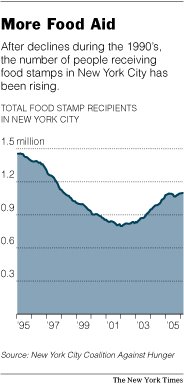
The number of food stamp recipients dropped from a high of nearly 1.5 million in March 1995, during the Giuliani administration, to a low of 798,396 in January 2002, Mr. Bloomberg's first month in office. Since then it has steadily risen, to nearly 1.1 million as of February � its highest level since 1998.
The fall and subsequent rise in the use of food stamps mirrors a national trend, driven by unemployment rates and efforts by the federal government to simplify the application process. The average national food stamp benefit was $92.69 a month, per person, in 2005. (In most places, including New York, electronic benefit cards have replaced paper coupons.)
At least three major factors seem to have played into the decision by the Bloomberg administration to accept the waiver.
First, despite a short-lived rise in the welfare rolls, from 2002 to 2004, the number of city residents on public assistance is at its lowest level since 1964, allowing Mr. Bloomberg to ease his position on food stamps without opening himself to attack by conservatives as being irresponsible or encouraging dependence.
"New York City has developed the most extensive work-focused employment program of any large city in the country," the commissioner of the Human Resources Administration, Verna Eggleston, wrote on March 28 to the State Office of Temporary and Disability Assistance, which is seeking the waiver on the city's behalf.
Second, public pressure on hunger and nutrition issues has been mounting.
Since she took office in 2002, the city's public advocate, Betsy Gotbaum, has called for the city to accept the waiver, and the City Council speaker, Christine C. Quinn, this month proposed setting aside $260,000 a year to operate a new citywide office to combat hunger and obesity. And Mr. Bloomberg himself has said that alleviating poverty would be a priority of his second term.
Third, there are practical benefits to accepting the waiver. In February 2005, the city began WeCare, a program that offers medical assessments, health care and individual training for welfare recipients who say they are too sick to work.
By easing the work requirements for some adult food stamp recipients, the city will be able to shift caseworkers away from the tedious task of verifying eligibility for food stamps and toward the goal of further reducing the welfare caseload by moving recipients into the workforce.
The city's moves to ease eligibility for such benefits marks a significant departure from past practice. In 1999, the Agriculture Department and a federal judge found that the Giuliani administration was routinely delaying or denying applications for food stamps and Medicaid in violation of federal law.
The Urban Justice Center has twice sued the Bloomberg administration over food stamp issues. In 2002, it asserted that the city was improperly denying benefits to poor people who were too disabled to work. In 2004, it claimed that the city's delays in processing food stamp applications were illegal. Both cases are pending.
Lawrence M. Mead III, a professor of politics at New York University and a conservative scholar of welfare, said he did not believe that easier access to food stamps would discourage people from working.
"To apply for the food-stamp waiver is an important departure from Giuliani's policies, but its practical effect, in terms of producing a large increase in dependency, is probably limited," Professor Mead said.
________________________________
Dan J. Berger
Congressman Charles B. Rangel
163 West 125th Street, Suite 737
New York, NY 10027
Phone: (212) 663-3900
Fax: (212) 663-4277
Mobile: (917) 359-7757
http://rangel.house.gov/ - Sign up to receive the Rangel Bulletin!
--
Carmen L. Perez
District Liaison
NYS Assemblyman Keith L.T. Wright
163 West 125th Street, Suite 911
New York, NY 10027
212-866-5809 Tel.
212-864-1368 Fax
125th Street/River-to-River
125th Street/River-to-River Overview
Overview Advisory Committee Presentations Upcoming Events Contact Us
Upcoming Meeting:
125th Street Preliminary Zoning FrameworkThe Department of City Planning together with the Department of Housing Preservation and Development and the NYC Economic Development Corporation invite you to attend the next Advisory Committee Meeting focusing on a preliminary zoning framework for 125th Street.
Tuesday, May 2nd, 20067:00-9:00 PM
Adam Clayton Powell Jr. State Office Building
163 W 125th Street
(between Adam Clayton Powell Jr. Blvd and Lenox Ave/Malcolm X Blvd)
Art Gallery, 2nd Floor
Based on input from public meetings held in 2005, the City has developed a preliminary zoning framework for 125th Street. This meeting will focus on urban design issues, including density, height, bulk and use.
For more information please email Edwin Marshall at the Department of City Planning: emarsha@planning.nyc.gov
This website contains background information on past meetings; we encourage you to review it.
http://www.nyc.gov/html/dcp/html/125th/index.shtml

In response to recent and anticipated development activity in Harlem, the Department of City Planning has initiated the 125th Street/River-to-River Study to generate a development framework for the entire 125th Street corridor between the Harlem and Hudson Rivers. 125th Street, alternatively known as Martin Luther King, Jr. Boulevard, boasts a unique character and many distinct assets upon which to build. It offers a multitude of cultural, religious and institutional resources, many of which have historic importance for the Harlem community. It is well-served by public transportation, providing both local and regional service. And the recent reactivation of the Hudson and Harlem River waterfronts highlights the corridor's potential for additional amenities. This is a pivotal time for leveraging the public and private investments and initiatives to continue the rejuvenation of Harlem's "Main Street�.


The study's Advisory Committee � a diverse group of over 100 individuals representing elected officials, developers, local civic groups and cultural institutions, and community boards 9,10 and 11 � met initially in December 2003. In response to the broad range of concerns expressed by participants about the future of 125th Street, Deputy Mayor Daniel L. Doctoroff formed the 125th Street/River-to-River Interagency Working Group. In addition to City Planning (DCP), the team consists of representatives from the Economic Development Corporation (EDC), and several other city agencies including the Departments of Cultural Affairs, Transportation, Small Business Services, and Housing Preservation and Development. The team will work together with the Advisory Committee to identify solutions for issues raised during the planning process.
Because public outreach and involvement are critical to the study, a series of meetings with the Advisory Committee and the general public has begun and will continue during the course of the study. The objective is to have a meaningful dialogue with the people who will be most affected by the changes and opportunities ahead for 125th Street, its development, transportation, culture, environment, urban design and waterfront. On April 28th, 2004, our second Advisory Committee meeting, that dialogue began. Ultimately, the planning process will generate a comprehensive development framework for 125th Street.
Advisory Committee Presentations: Summaries of the presentations and the committee�s comments at the meetings held to date.
Upcoming Events: Find out what�s happening next in the study.
Contact Us: Please use our form to send us your thoughts or questions about 125th Street.
View a summary of the Advisory Committee comments from the Kick-Off meeting.
View the Preliminary Opportunities presentation (3.1 mb)
View a summary of the Advisory Committee comments from the Preliminary Opportunities meeting.
View the Streetscape presentation (1.8 mb).
View a summary of the Advisory Committee comments from the Streetscape meeting.
View the 125th Streetscape questionnaire.
View the Zoning Presentation (2.4 mb).
View the Zoning Summary Notes
View the Transportation Presentation (3.3 mb).
Read the Summary Notes of the Transportation Meeting
Overview Advisory Committee Presentations Upcoming Events Contact Us
Overview Advisory Committee Presentations Upcoming Events Contact Us
Upcoming Meeting:
125th Street Preliminary Zoning FrameworkThe Department of City Planning together with the Department of Housing Preservation and Development and the NYC Economic Development Corporation invite you to attend the next Advisory Committee Meeting focusing on a preliminary zoning framework for 125th Street.
Tuesday, May 2nd, 20067:00-9:00 PM
Adam Clayton Powell Jr. State Office Building
163 W 125th Street
(between Adam Clayton Powell Jr. Blvd and Lenox Ave/Malcolm X Blvd)
Art Gallery, 2nd Floor
Based on input from public meetings held in 2005, the City has developed a preliminary zoning framework for 125th Street. This meeting will focus on urban design issues, including density, height, bulk and use.
For more information please email Edwin Marshall at the Department of City Planning: emarsha@planning.nyc.gov
This website contains background information on past meetings; we encourage you to review it.
http://www.nyc.gov/html/dcp/html/125th/index.shtml
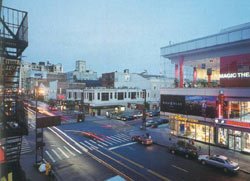
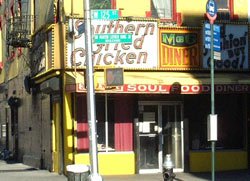
In response to recent and anticipated development activity in Harlem, the Department of City Planning has initiated the 125th Street/River-to-River Study to generate a development framework for the entire 125th Street corridor between the Harlem and Hudson Rivers. 125th Street, alternatively known as Martin Luther King, Jr. Boulevard, boasts a unique character and many distinct assets upon which to build. It offers a multitude of cultural, religious and institutional resources, many of which have historic importance for the Harlem community. It is well-served by public transportation, providing both local and regional service. And the recent reactivation of the Hudson and Harlem River waterfronts highlights the corridor's potential for additional amenities. This is a pivotal time for leveraging the public and private investments and initiatives to continue the rejuvenation of Harlem's "Main Street�.
The study's Advisory Committee � a diverse group of over 100 individuals representing elected officials, developers, local civic groups and cultural institutions, and community boards 9,10 and 11 � met initially in December 2003. In response to the broad range of concerns expressed by participants about the future of 125th Street, Deputy Mayor Daniel L. Doctoroff formed the 125th Street/River-to-River Interagency Working Group. In addition to City Planning (DCP), the team consists of representatives from the Economic Development Corporation (EDC), and several other city agencies including the Departments of Cultural Affairs, Transportation, Small Business Services, and Housing Preservation and Development. The team will work together with the Advisory Committee to identify solutions for issues raised during the planning process.
Because public outreach and involvement are critical to the study, a series of meetings with the Advisory Committee and the general public has begun and will continue during the course of the study. The objective is to have a meaningful dialogue with the people who will be most affected by the changes and opportunities ahead for 125th Street, its development, transportation, culture, environment, urban design and waterfront. On April 28th, 2004, our second Advisory Committee meeting, that dialogue began. Ultimately, the planning process will generate a comprehensive development framework for 125th Street.
Advisory Committee Presentations: Summaries of the presentations and the committee�s comments at the meetings held to date.
Upcoming Events: Find out what�s happening next in the study.
Contact Us: Please use our form to send us your thoughts or questions about 125th Street.
View a summary of the Advisory Committee comments from the Kick-Off meeting.
View the Preliminary Opportunities presentation (3.1 mb)
View a summary of the Advisory Committee comments from the Preliminary Opportunities meeting.
View the Streetscape presentation (1.8 mb).
View a summary of the Advisory Committee comments from the Streetscape meeting.
View the 125th Streetscape questionnaire.
View the Zoning Presentation (2.4 mb).
View the Zoning Summary Notes
View the Transportation Presentation (3.3 mb).
Read the Summary Notes of the Transportation Meeting
Overview Advisory Committee Presentations Upcoming Events Contact Us
Monday, April 17, 2006
Transformed by Light: The New York Night - May 3, 2006



Click to see the full image and description
Transformed by Light: The New York Night
Dec 21 through May 7
Transformed by Light: The New York Night reveals how illumination shaped the legend and experience of the 24-hour city. The exhibition immerses visitors in a series of environments that portray the essential role of light in the construction of New York life--on the street, at home, in the office, on the town. Artifacts range from Rockefeller Tree bulbs to a giant neon 'i' that once towered over Columbus Circle. The exhibition is curated and designed by Chicken&Egg Public Projects and features state-of-the-art lighting by ten contemporary design firms.
Transformed by Light: The New York Night is made possible by the Illuminating Engineering Society of North America, with support from Cooper Lighting, GE Consumer & Industrial Lighting, Holophane, Osram Sylvania, Lithonia Lighting, Lumec, Inc., Philips Lighting, Con-Tech Lighting, Day-Brite Capri Omega, Edison Price Lighting, Lightolier, Litecontrol, M. Neils Engineering, Magnaray, Stresscrete, TIR Systems, Inc., W.A.C. Lighting, and Zumtobel Staff Lighting.
Featured image: Stereoview of Luna Park, c. 1903
Museum of the City of New York, gift of M.M. Gordon
PUBLIC PROGRAMS
ORDER TICKETS HERE
http://www.mcny.org/exhibitions/current/96.html
Wed, May 03, 6:30 PMThe Empire State Building at 75: A Celebration
Peace Zone NYC Campaign
ACTION ALERT * UNITED FOR PEACE AND JUSTICE
www.unitedforpeace.org | 212-868-5545 | Click to subscribe
Please forward widely!
The UFPJ Peace Zone NYC Campaign is pleased toannounce�
CouncilmemberRobert Jackson of District 7 will be introducing
the Peace Zone Resolution on
Wednesday, April 26th.
This resolution calls for the orderly and rapidwithdrawal of all U.S. military forces from Iraq and for the financial resources used to prosecutethe war to be redirected to the urgent needs of America�s great urban centers and the most vulnerableportions of our population.
Join us on Wednesday,
April 26th at 1 pm
on the steps of City Hall
for a press conference where Councilmember Robert Jackson will announce the introduction of the Peace Zoneresolution and deliver a proclamation naming Saturday, April 29th 2006,New York City Peace Zone Day, in honor of the March for Democracy, Peace,and Justice taking place in our wonderful city. We hope that everyone who possibly can, make plans now to come to the Press Conference on April 26th to help us publicize the Peace Zone Resolution and the April 29th March www.april29.org.
RIGHT NOW, we need your help to ask your Councilmember to be a sponsor of the PeaceZone Resolution so that, when it is introduced on April 26th, a majority of the City Council will be standing on the steps of City Hall with Robert Jackson and the
Peace ZoneCampaign.
* Call, write,and email your City Councilmember to ask him or her to support the Peace Zone Resolution
After the NYC Peace Zone Resolution is introduced in City Council, the local NYC groups that make up the Peace Zone NYC Campaign will continue to need your help to make sure that it gets passed with broad support from all over NYC. Please become
part of our campaign!
Contact outreach@unitedforpeace.org
For more information on the Peace Zone NYC Campaign, see www.unitedforpeace.org/ny.
www.unitedforpeace.org | 212-868-5545 | Click to subscribe
Please forward widely!
The UFPJ Peace Zone NYC Campaign is pleased toannounce�
CouncilmemberRobert Jackson of District 7 will be introducing
the Peace Zone Resolution on
Wednesday, April 26th.
This resolution calls for the orderly and rapidwithdrawal of all U.S. military forces from Iraq and for the financial resources used to prosecutethe war to be redirected to the urgent needs of America�s great urban centers and the most vulnerableportions of our population.
Join us on Wednesday,
April 26th at 1 pm
on the steps of City Hall
for a press conference where Councilmember Robert Jackson will announce the introduction of the Peace Zoneresolution and deliver a proclamation naming Saturday, April 29th 2006,New York City Peace Zone Day, in honor of the March for Democracy, Peace,and Justice taking place in our wonderful city. We hope that everyone who possibly can, make plans now to come to the Press Conference on April 26th to help us publicize the Peace Zone Resolution and the April 29th March www.april29.org.
RIGHT NOW, we need your help to ask your Councilmember to be a sponsor of the PeaceZone Resolution so that, when it is introduced on April 26th, a majority of the City Council will be standing on the steps of City Hall with Robert Jackson and the
Peace ZoneCampaign.
* Call, write,and email your City Councilmember to ask him or her to support the Peace Zone Resolution
After the NYC Peace Zone Resolution is introduced in City Council, the local NYC groups that make up the Peace Zone NYC Campaign will continue to need your help to make sure that it gets passed with broad support from all over NYC. Please become
part of our campaign!
Contact outreach@unitedforpeace.org
For more information on the Peace Zone NYC Campaign, see www.unitedforpeace.org/ny.
Friday, April 14, 2006
Wednesday, April 12, 2006
Betsy Gotbaum Mail

From: "Betsy Gotbaum"
To: nyc-cb9m@juno.com
Subject: BG Mail
Date: Tue, 11 Apr 2006 15:44:43 -0400
April 11, 2006
Gotbaum Joins Rallies in Support of Immigrants� Rights
Last Saturday, I addressed thousands of New Yorkers who marched from Brooklyn to Lower Manhattan in support of immigrants� rights. All around me, I saw hard-working men and women who have come here because America is known around the world as a land of hope and opportunity. Now, we are calling on America to live up to its reputation. Instead of going on vacation, Congress needs to grant these men and women the opportunity to qualify for legal status and realize the American dream.
The majority of Americans want to give our immigrant population the right to stay here permanently because they understand that it�s not just in immigrants� best interests; it�s in our best interests, too. Cities with large immigrant populations have faster economic growth and lower unemployment. Across this country, companies that would otherwise be closing their doors are growing thanks to the hard work of immigrants. It�s time for them to be recognized as Americans.
Later today, I will once again voice my support for immigrants� rights at a rally at City Hall, part of a National Day of Action on this important issue.
Gotbaum Talks Schools with Concerned Parents
Last Monday, I attended a town hall in Staten Island sponsored by Robert Jackson, Chair of the City Council�s Education Committee, to talk about the state of the borough�s schools with concerned parents. Later in the week, I met with members of the Chancellor�s Parent Advisory Committee (CPAC), an advisory group of parent volunteers. I told both groups that the DOE has to do a much better job of getting parents involved in the decision-making process. By giving up their free time to participate in town halls and CPAC, parents are showing how important their children�s education is to them. The DOE should be listening to their concerns and doing everything it can to make the system more responsive to their needs.
I also discussed the work I did in my first term monitoring the Department of Education�s response to school safety. During that time, the DOE repeatedly revised its suspension policy, yet our schools, our students, and our teachers didn�t get any safer. Serious, repeat offenders were suspended only to be sent back to their old classrooms to cause trouble again and again. Even relatively safe high schools are not immune from violent crimes committed just off school grounds. For education reform to work, the DOE has to get school safety right.
Gotbaum to DOE: School Leaders Deserve a Fair Contract
Another important step the DOE can take to improve our schools is to take care of the men and women on the front lines of education, keeping our children safe, making sure the buses pick them up on time, working with teachers and parents, supervising everything from the food in the cafeteria to after-school programs. Last Wednesday, I joined representatives of the Council of School Supervisors and Administrators (CSA) to demand a fair, competitive contract for our school administrators.
New programs and bureaucratic reforms are not enough to make our schools better. Without good school leaders, we can't have good schools. No one cares more about our children�s education than the principals and administrators charged with overseeing it. All they want is to be able to do their jobs, but to do their jobs, they need support and respect. They need a contract now.
Have a Great Week,
Betsy Gotbaum
New York City Public Advocate
Visit us at: www.pubadvocate.nyc.gov
To unsubscribe from this service, please reply to: unsubscribe@pubadvocate.nyc.gov
The Public Advocate's Office
1 Centre Street, 15th Floor
New York, NY 10007
General Inquiries:(212) 669-7200
Ombudsman Services: (212) 669-7250 Fax: (212) 669.4701
*********************************************************************
Confidentiality Notice: This email communication and any attachments may contain confidential and privileged information for the use of the designated recipients named above. If you are not the intended recipient, you are hereby notified that you have received this communication in error and that any review, disclosure, dissemination, distribution or copying of it or its contents is prohibited. If you have received this communication in error, please notify me immediately by replying to this message and deleting it from your computer. Thank you.
******************************
www.pubadvocate.nyc.gov
To \nunsubscribe from this service, please reply to: unsubscribe@pubadvocate.nyc.gov
The Public Advocate's Office
1 Centre Street, 15th Floor New York, NY 10007General \nInquiries:(212) 669-7200Ombudsman Services: (212) 669-7250 Fax: (212) \n669.4701\n \n\n \n \n \n\n
Tuesday, April 11, 2006
Oppose electronic voting in NYC!
[ URGENT! We must have paper records to trace votes for fair elections in New York! Please forward this widely ]
Support Resolution 131 for paper ballots/optical scanners
Oppose electronic voting in NYC!
Support Resolution 228 for public hearings &
public testing of voting machines before purchasing
WHAT: Hearing on Voting Machines and NYC Compliance with the federal Help America Vote Act
WHEN: Monday, April 24, 2006, 10:00 AM
WHO: We need YOU to support our speakers!
WHERE: Council Chambers
City Hall
New York, NY
Subways:
N or R to City Hall
4, 5 or 6 to Brooklyn Bridge
J, M, or Z to Chambers Street
2 or 3 to Park Place
WHY:
The Committee on Governmental Operations of the NY City Council is giving us this opportunity to support our two resolutions:
Resolution 131 urges the adoption of paper ballots and precinct-based optical scanners and accessible ballot-marking machines for voters with disabilities and minority languages. This resolution is against electronic voting!
http://webdocs.nyccouncil.info/textfiles/Res%200131-2006.htm?CFID=759601&CFTOKEN=79694900
Resolution 228 urges that the NYC Board of Elections hold public hearings before selecting our new voting machines, and urges public testing to show us that the machines work before selecting them!
Sounds simple, but the NYC Board of Elections is not planning to do this at this time.
http://webdocs.nyccouncil.info/textfiles/Res%200228-2006.htm?CFID=759601&CFTOKEN=79694900
Do you want to speak as part of our coordinated panel?
Please send an email to Teresa Hommel
admin@wherethepaper.org
Have you made phone calls or sent letters supporting Resolution 131 and Resolution 228?
If not, please go to http://www.wheresthepaper.org/ny.html#whattodoNYC
Would you like us to send letters for you?
please send your name, address, and phone to
admin@wheresthepaper.org
(cut-and-paste the email address, it works!)
Gov Ops Chairman:
Simcha Felder
Gov Ops Members:
Joseph P. Addabbo, Jr.
Inez E. Dickens
Erik Martin Dilan
Domenic M. Recchia, Jr.
Larry B. Seabrook
Peter F. Vallone, Jr. -- sponsor of Reso 131
Teresa
Teresa Hommel
http://www.wheresthepaper.org/ny.html
Chair, Task Force on Election Integrity,
Community Church of New York
Support Resolution 131 for paper ballots/optical scanners
Oppose electronic voting in NYC!
Support Resolution 228 for public hearings &
public testing of voting machines before purchasing
WHAT: Hearing on Voting Machines and NYC Compliance with the federal Help America Vote Act
WHEN: Monday, April 24, 2006, 10:00 AM
WHO: We need YOU to support our speakers!
WHERE: Council Chambers
City Hall
New York, NY
Subways:
N or R to City Hall
4, 5 or 6 to Brooklyn Bridge
J, M, or Z to Chambers Street
2 or 3 to Park Place
WHY:
The Committee on Governmental Operations of the NY City Council is giving us this opportunity to support our two resolutions:
Resolution 131 urges the adoption of paper ballots and precinct-based optical scanners and accessible ballot-marking machines for voters with disabilities and minority languages. This resolution is against electronic voting!
http://webdocs.nyccouncil.info/textfiles/Res%200131-2006.htm?CFID=759601&CFTOKEN=79694900
Resolution 228 urges that the NYC Board of Elections hold public hearings before selecting our new voting machines, and urges public testing to show us that the machines work before selecting them!
Sounds simple, but the NYC Board of Elections is not planning to do this at this time.
http://webdocs.nyccouncil.info/textfiles/Res%200228-2006.htm?CFID=759601&CFTOKEN=79694900
Do you want to speak as part of our coordinated panel?
Please send an email to Teresa Hommel
admin@wherethepaper.org
Have you made phone calls or sent letters supporting Resolution 131 and Resolution 228?
If not, please go to http://www.wheresthepaper.org/ny.html#whattodoNYC
Would you like us to send letters for you?
please send your name, address, and phone to
admin@wheresthepaper.org
(cut-and-paste the email address, it works!)
Gov Ops Chairman:
Simcha Felder
Gov Ops Members:
Joseph P. Addabbo, Jr.
Inez E. Dickens
Erik Martin Dilan
Domenic M. Recchia, Jr.
Larry B. Seabrook
Peter F. Vallone, Jr. -- sponsor of Reso 131
Teresa
Teresa Hommel
http://www.wheresthepaper.org/ny.html
Chair, Task Force on Election Integrity,
Community Church of New York
Columbia University Medical Center Announcement
Date: Tue, 11 Apr 2006 08:11:19 -0700 (PDT)
From: "J Reyes-Montblanc"
Subject: Fwd: Columbia University Medical Center Announcement
To: NYC-CB9M@juno.com
FYILoftin Flowerswrote:
Subject: Columbia University Medical Center Announcement
Date: Mon, 10 Apr 2006 10:28:07 -0400
From: "Loftin Flowers" llf2105@columbia.edu
To: reysmont@yahoo.com
Jordi,
I just spoke with Ms. Zita at CB-9 who said you were out of town and suggested I send a quick email.
I was calling to alert you and the Board that, later today, President Bollinger will be announcing the appointment of the new Dean of the CU Medical Center, replacing Dean Gerald Fischbach. The new Dean is Lee Goldman, MD, MPH � currently Professor and Associate Dean for Clinical Affairs at the University of California in San Francisco School of Medicine. As Dean of CUMC, he will hold joint teaching appointments at the College of Physicians and Surgeons and the Mailman School of Public Health, consistent with a teaching and research background in epidemiology. We�ll pass along more complete biographical information in the next day or two�just wanted to give you a heads-up now in advance of the public announcement later today. Please be in touch if you have any questions.
Best,
Loftin Flowers
Loftin Flowers
Office of Government and Community Affairs
Columbia University
302 Low Library; Mail Code 4319
535 West 116th Street
New York, NY 10027
(212) 854-3738; (212) 666-1952 (fax)
http://us.f374.mail.yahoo.com/ym/Compose?To=llf2105@columbia.edu
From: "J Reyes-Montblanc"
Subject: Fwd: Columbia University Medical Center Announcement
To: NYC-CB9M@juno.com
FYILoftin Flowers
Subject: Columbia University Medical Center Announcement
Date: Mon, 10 Apr 2006 10:28:07 -0400
From: "Loftin Flowers" llf2105@columbia.edu
To: reysmont@yahoo.com
Jordi,
I just spoke with Ms. Zita at CB-9 who said you were out of town and suggested I send a quick email.
I was calling to alert you and the Board that, later today, President Bollinger will be announcing the appointment of the new Dean of the CU Medical Center, replacing Dean Gerald Fischbach. The new Dean is Lee Goldman, MD, MPH � currently Professor and Associate Dean for Clinical Affairs at the University of California in San Francisco School of Medicine. As Dean of CUMC, he will hold joint teaching appointments at the College of Physicians and Surgeons and the Mailman School of Public Health, consistent with a teaching and research background in epidemiology. We�ll pass along more complete biographical information in the next day or two�just wanted to give you a heads-up now in advance of the public announcement later today. Please be in touch if you have any questions.
Best,
Loftin Flowers
Loftin Flowers
Office of Government and Community Affairs
Columbia University
302 Low Library; Mail Code 4319
535 West 116th Street
New York, NY 10027
(212) 854-3738; (212) 666-1952 (fax)
http://us.f374.mail.yahoo.com/ym/Compose?To=llf2105@columbia.edu
Monday, April 10, 2006
Borough Needs Program
From: "Shanifah Rieara"
To: "Shanifah Rieara"
CC: reysmont@yahoo.com)
Subject: Manhattan Borough President's Borough Needs Program Grant
Date: Mon, 10 Apr 2006 11:38:55 -0400
Borough Needs Program
Contact: May Wellington 212-669-4478 or mwellington@manhattanbp.org or please visit the website at www.mbpo.org
Programmatic funding is provided to organizations that work to sustain, foster, and enhance the quality of life for Manhattan residents, neighborhoods, and communities.
Deadline: Fiscal Year 2007 Borough Needs Grant applications will be accepted in the Manhattan Borough President's Office beginning April 3, 2006 up until May 19, 2006.
Eligibility: Applicants must be a not-for-profit, community-based organization or a designee to serve as a fiscal conduit with such status. Documentation of 501(c)(3) status is required with your application. The only city agencies in which the Borough President has been allocated funds for Borough Needs grants are: Department for the Aging, Department of Education, Department of Parks & Recreation, Department of Health & Mental Hygiene, and Department of Corrections. Any organization receiving a Borough Needs Grant will be required to enter into a contract with one of these managing city agencies.
Funding Range: Grants start at $3,000, but award amounts are subject to funding availability. Please note that all funding requests must be made for program development and implementation. Requests for general operating expenses are not encouraged.
Shanifah Rieara
Director of Northern Manhattan Office
Office of Manhattan Borough President Scott Stringer
State Office Building
163 West 125th Street
New York, NY 10027
Tel. 212-531-3030
Fax 212-531-4615
srieara@manhattanbp.org
To: "Shanifah Rieara"
CC: reysmont@yahoo.com)
Subject: Manhattan Borough President's Borough Needs Program Grant
Date: Mon, 10 Apr 2006 11:38:55 -0400
Borough Needs Program
Contact: May Wellington 212-669-4478 or mwellington@manhattanbp.org or please visit the website at www.mbpo.org
Programmatic funding is provided to organizations that work to sustain, foster, and enhance the quality of life for Manhattan residents, neighborhoods, and communities.
Deadline: Fiscal Year 2007 Borough Needs Grant applications will be accepted in the Manhattan Borough President's Office beginning April 3, 2006 up until May 19, 2006.
Eligibility: Applicants must be a not-for-profit, community-based organization or a designee to serve as a fiscal conduit with such status. Documentation of 501(c)(3) status is required with your application. The only city agencies in which the Borough President has been allocated funds for Borough Needs grants are: Department for the Aging, Department of Education, Department of Parks & Recreation, Department of Health & Mental Hygiene, and Department of Corrections. Any organization receiving a Borough Needs Grant will be required to enter into a contract with one of these managing city agencies.
Funding Range: Grants start at $3,000, but award amounts are subject to funding availability. Please note that all funding requests must be made for program development and implementation. Requests for general operating expenses are not encouraged.
Shanifah Rieara
Director of Northern Manhattan Office
Office of Manhattan Borough President Scott Stringer
State Office Building
163 West 125th Street
New York, NY 10027
Tel. 212-531-3030
Fax 212-531-4615
srieara@manhattanbp.org
Don't put zoning up for sale in NY
Date: Sun, 09 Apr 2006 17:21:46 -0400
To:
From: "Tenant"View Contact Details Add Mobile Alert
Subject: Now for a good laugh
Don't put zoning up for sale in NY
By Alair Townsend
Crains
(see article below)
NB - I agree. Stop the Community Benefits Agreements.
But Crains' weeping on this one is just too much. As long as anyone
can remember, developers have bought zoning from politicians through
any number of means.
If zoning were really on the merits, there would be no Hudson Yards,
no West Chelsea, no Atlantic Yards and no Williamsburg/Greenpoint
rezoning. If the Broadway producers hadn't bought the 1998 rezoning
of 8th Avenue, it wouldn't have happened. Just ask the campaign
contributors to C.V. Fields and Peter Vallone. These days look at the
campaign bank books of Christine Quinn and Scott Stringer, both of
whom have gone over to the other side in anticipation of their
running for higher office.
If ill-informed construction workers weren't getting paid to show up
at City Hall, then zoning would not be sold for promises of jobs
(usually fake to begin with) or some notion of social equity. Of
course, that gives Democrats cover to support otherwise bad
development. Witness last week's City Council approval of Yankee
Stadium where all but two rolled over allegedly for the community
benefits (supported by no one in that community), but now controlled
as a slush fund by the Bronx machine (similar to the slush fund being
amassed on Manhattan's west side).
Developers buy the zoning changes, but they also get an Easter basket
of goodies, ranging from tax-free bonds, tax abatements, PILOTs
(Payments in Lieu of Taxes -- frozen at reduced rates) and so on.
They get huge zoning bonuses such as the 400% bonus for Inclusionary
Zoning where that can add the ability to add (in some cases) fifteen
floors to a building. How much are fifteen floors of $3 million
condos worth to those developers?
When Stephen Ross of Related bought the entire half block on 42nd
(between Dyer and 10th Avenue) for a song, he also bought a location
promised for the No. 7 subway stop (increasing its value), huge
development rights and most likely fancy financing and tax abatements
from the city. Of course Community Board 4, Christine Quinn and the
Manhattan Plaza Tenants Association (now a wholly-owned subsidiary of
Steve Ross, Inc.) shilled for the tower.
And yes, zoning wouldn't be for sale if it weren't for the likes of
Acorn, Working Families Party, The Pratt Institute and other
so-called progressive groups that have done their best to stand in
line for the largess. Leaving things up to them you might get a dog
run or other bread crumbs, but your neighborhood will be overwhelmed
with towers.
Let zoning be for light, air, bulk, use and motherhood. Stop the
Community Benefits Agreements. If a proposal is bad, then stop it or
mitigate it. Don't sell out even before the haggling starts.
-------------------------------------
Don't put zoning up for sale in NY
Published on April 10, 2006
Crains
By Alair Townsend
Published on April 10, 2006
Memo to Mayor Bloomberg and Council Speaker Quinn:
Get a grip on this community benefits agreement thing. It's out of
control.
So-called community groups have been negotiating commitments for all
sorts of things from developers who want their support for projects
they want to build. Now, large wads of cash--some $50 million over 20
years from The Yankees for Bronx groups--are being sought and handed
over in what looks like bribes for support.
You've been applauding such agreements. Please understand what's at
stake and set some ground rules. Stop the appearance--and
increasingly the reality--of zoning for sale in New York.
These agreements are a radical departure from the recent past. The
city's land-use review procedures were changed in 1976 to provide a
standardized and public process, and to end what many saw as the
buying of favors by developers. Under the revised process, the City
Planning Commission, City Council and mayor must approve projects
requiring land-use changes. The community board and the borough
president also review them, but have no formal approval power.
Developer-funded mitigation measures are supposed to be related to
adverse impacts, such as damage to the environment. Deal-making is
supposed to be public and conducted by public officials.
The process has been supported and enforced by all mayors since that
time. Until now.
Today, developers are being pressured by one and all--including
elected officials--to sign community benefits agreements. These
packages have less to do with mitigating adverse impacts than with
buying off opposition. The rezoning process is now being used as
leverage to extract whatever anyone can.
Among the items in recent CBAs are provisions requiring developers to
build affordable housing; hire workers from the borough the project
is located in; hire contractors based on their borough location,
gender and ethnicity; fund job training programs; pay warehouse store
membership fees; provide offices for community groups; set up day
care centers; not lease space to Wal-Mart; compel stores to accept
food stamps; and put cash into community trust funds. Each agreement
is ratcheting up the expectations and the stakes.
You both have chosen to sit back and watch the action unfold, even
with projects you seem to support. This way, the most serious
opposition will have been bought off by the time projects come before
you for approval. Developers have sought guidance from the mayor, who
has asserted that such negotiations are a private matter.
Nothing could be further from the truth.
Are you comfortable with CBAs that involve cash payments to community
groups for whatever purpose? Should there be any oversight to ensure
that the processes for selecting who gets the housing, contracts and
jobs are fair and not just sleazy patronage? You need to decide how
far you're willing to let this go.
To:
From: "Tenant"
Subject: Now for a good laugh
Don't put zoning up for sale in NY
By Alair Townsend
Crains
(see article below)
NB - I agree. Stop the Community Benefits Agreements.
But Crains' weeping on this one is just too much. As long as anyone
can remember, developers have bought zoning from politicians through
any number of means.
If zoning were really on the merits, there would be no Hudson Yards,
no West Chelsea, no Atlantic Yards and no Williamsburg/Greenpoint
rezoning. If the Broadway producers hadn't bought the 1998 rezoning
of 8th Avenue, it wouldn't have happened. Just ask the campaign
contributors to C.V. Fields and Peter Vallone. These days look at the
campaign bank books of Christine Quinn and Scott Stringer, both of
whom have gone over to the other side in anticipation of their
running for higher office.
If ill-informed construction workers weren't getting paid to show up
at City Hall, then zoning would not be sold for promises of jobs
(usually fake to begin with) or some notion of social equity. Of
course, that gives Democrats cover to support otherwise bad
development. Witness last week's City Council approval of Yankee
Stadium where all but two rolled over allegedly for the community
benefits (supported by no one in that community), but now controlled
as a slush fund by the Bronx machine (similar to the slush fund being
amassed on Manhattan's west side).
Developers buy the zoning changes, but they also get an Easter basket
of goodies, ranging from tax-free bonds, tax abatements, PILOTs
(Payments in Lieu of Taxes -- frozen at reduced rates) and so on.
They get huge zoning bonuses such as the 400% bonus for Inclusionary
Zoning where that can add the ability to add (in some cases) fifteen
floors to a building. How much are fifteen floors of $3 million
condos worth to those developers?
When Stephen Ross of Related bought the entire half block on 42nd
(between Dyer and 10th Avenue) for a song, he also bought a location
promised for the No. 7 subway stop (increasing its value), huge
development rights and most likely fancy financing and tax abatements
from the city. Of course Community Board 4, Christine Quinn and the
Manhattan Plaza Tenants Association (now a wholly-owned subsidiary of
Steve Ross, Inc.) shilled for the tower.
And yes, zoning wouldn't be for sale if it weren't for the likes of
Acorn, Working Families Party, The Pratt Institute and other
so-called progressive groups that have done their best to stand in
line for the largess. Leaving things up to them you might get a dog
run or other bread crumbs, but your neighborhood will be overwhelmed
with towers.
Let zoning be for light, air, bulk, use and motherhood. Stop the
Community Benefits Agreements. If a proposal is bad, then stop it or
mitigate it. Don't sell out even before the haggling starts.
-------------------------------------
Don't put zoning up for sale in NY
Published on April 10, 2006
Crains
By Alair Townsend
Published on April 10, 2006
Memo to Mayor Bloomberg and Council Speaker Quinn:
Get a grip on this community benefits agreement thing. It's out of
control.
So-called community groups have been negotiating commitments for all
sorts of things from developers who want their support for projects
they want to build. Now, large wads of cash--some $50 million over 20
years from The Yankees for Bronx groups--are being sought and handed
over in what looks like bribes for support.
You've been applauding such agreements. Please understand what's at
stake and set some ground rules. Stop the appearance--and
increasingly the reality--of zoning for sale in New York.
These agreements are a radical departure from the recent past. The
city's land-use review procedures were changed in 1976 to provide a
standardized and public process, and to end what many saw as the
buying of favors by developers. Under the revised process, the City
Planning Commission, City Council and mayor must approve projects
requiring land-use changes. The community board and the borough
president also review them, but have no formal approval power.
Developer-funded mitigation measures are supposed to be related to
adverse impacts, such as damage to the environment. Deal-making is
supposed to be public and conducted by public officials.
The process has been supported and enforced by all mayors since that
time. Until now.
Today, developers are being pressured by one and all--including
elected officials--to sign community benefits agreements. These
packages have less to do with mitigating adverse impacts than with
buying off opposition. The rezoning process is now being used as
leverage to extract whatever anyone can.
Among the items in recent CBAs are provisions requiring developers to
build affordable housing; hire workers from the borough the project
is located in; hire contractors based on their borough location,
gender and ethnicity; fund job training programs; pay warehouse store
membership fees; provide offices for community groups; set up day
care centers; not lease space to Wal-Mart; compel stores to accept
food stamps; and put cash into community trust funds. Each agreement
is ratcheting up the expectations and the stakes.
You both have chosen to sit back and watch the action unfold, even
with projects you seem to support. This way, the most serious
opposition will have been bought off by the time projects come before
you for approval. Developers have sought guidance from the mayor, who
has asserted that such negotiations are a private matter.
Nothing could be further from the truth.
Are you comfortable with CBAs that involve cash payments to community
groups for whatever purpose? Should there be any oversight to ensure
that the processes for selecting who gets the housing, contracts and
jobs are fair and not just sleazy patronage? You need to decide how
far you're willing to let this go.
Sunday, April 09, 2006
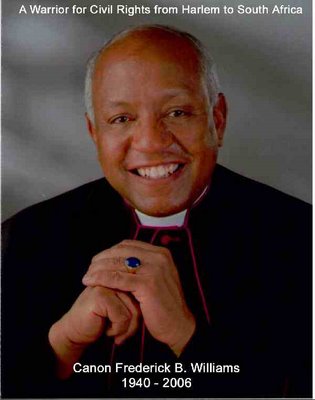
A Warrior for Civil Rights from Harlem to South Africa has died.
Date: Sun, 9 Apr 2006 14:18:08 -0400 (EDT)
From: "Imagenation Film Festival"
To: patjonesny@aol.com
Subject:
A Warrior for Civil Rights from Harlem to South Africa has died.
PLEASE, SEND THIS TO EVERYONE YOU KNOW!!!
Memorial Services
Remembrances
About HCCI
Greetings!
It is with deep sorrow that we announce a warrior for civil rights from Harlem to South Africa has died. Canon Frederick B. Williams, 66, Chairman of Harlem Congregations for Community Improvement, Inc. (HCCI) since its inception 20 years ago, died in his apartment on Sunday, April 2, 2006. Canon Williams made tremendous contributions to the Harlem community and to the world at large. We at HCCI will miss his leadership, his laughter, his wise-cracking jokes and his smile.
Canon Williams will be memorialized at 11am, Monday, April 10, 2006 at Church of the Intercession, 550 West 155th Street (entrance on Broadway, near Amsterdam).
Sincerely yours,
Moikgantsi Kgama, Founder & Gregory Gates, Executive Producer, Imagenation
Memorial Services
What: Memorial Services for (The Reverend) Canon Frederick B. Williams, 20-year Chairman of Harlem Congregations for Community Improvement, Inc.
When: 11a.m., Monday, April 10, 2206
Where: 550 West 155th Street (enter at Amsterdam, near Broadway)
Harlem Congregations for Community Improvement, Inc.
Remembrances About Canon Frederick B. Williams
Canon Williams was the Pastor Emeritus of the Episcopal Church of the Intercession in Harlem, New York, where he served 1972�2005 as the IXth Vicar and XIVth Rector. This institution is one of the first religious centers in the United States to initiate a programmatic response to the HIV-AIDS crisis. He served as the Chairman of the Board of the Interfaith Ecumenical Harlem Congregations for Community Improvement, Inc. (HCCI) and was a key member of the leadership team that has developed over 2,000 units of new and rehabilitated housing in Harlem, the largest such undertaking in the history of New York City.
Recognized as a true �Patron of the Arts,� Canon Williams served since 1973 as chairman or trustee of almost every major African-American performing arts group in New York City. He was a Trustee of The Rockefeller Foundation; member of the Board of Advisors, New York City Landmarks Conservancy; Black Alumni of Pratt Institute advisory council; Trustee of the African Activists� Archive Project, Inc. and served for 10 years as Chair of the National Clergy Advisory Committee of the renowned Harlem Week of Prayer (the Balm in Gilead, Inc.). He was an advisor to Archbishop Emeritus Desmond Tutu of South Africa, whom he represented on the Board of Directors of PEACEJAM, Inc., an international peace education program for youth headquartered in Denver, Colorado, and sponsored by 14 Nobel Peace Prize laureates. He was been a visiting professor at the Episcopal Divinity School, Cambridge, Massachusetts, the General Theological Seminary, New York City; and guest lecturer at several American and international institutions of higher learning. He has preached on six of the earth�s seven continents and is the founder of the International Conference on Afro-Anglicanism.
Canon Williams has a Bachelor�s degree in mathematics from Morehouse College in Atlanta, GA. He holds a Bachelor�s degree in sacred theology from The General Theological Seminary of the Episcopal Church in New York City. He earned a Doctor of ministry degree from Colgate-Rochester Divinity School in Rochester, NY. He has been awarded an Honorary Doctorate degree in canon law by the National Theological Seminary of the Commonwealth University in St. Louis, MO, and an Honorary Doctor of divinity degree by the Episcopal Theological Seminary in Cambridge, Mass.
In 1999, Her Majesty Queen Elizabeth II sanctioned his admission to the Most Venerable Order of St. John of Jerusalem. In 2004 he was a recipient of the Ellis Island Medal of Honor for significant contributions to the nation, and was named by the Greater Harlem Chamber of Commerce as one of Harlem�s 30 most influential citizens. He was the 2005 Baccalaureate Preacher at Columbia University, New York City.
Canon Williams is survived by a godson, several cousins and his extended family at HCCI and Church of the Intercession.
About HCCI
Mission
Harlem Congregations for Community Improvement, Inc. (HCCI) is committed to the holistic revitalization of Harlem. We provide economic development and empowerment opportunities to help Harlem residents rebuild and sustain their community. History Founded in 1986, HCCI is a coalition of more than 90 inter-faith congregations that has implemented a comprehensive portfolio of programs to provide affordable housing and safe streets; offer opportunities for individuals and groups to become and remain economically independent; increase understanding of and access to health care; and provide substantive educational programs for adults and young people. Through alliances with other community organizations, elected officials and local residents, HCCI has also helped reduce crime in the community; increase public sanitation; and preserve and transform open space.
History
Founded in 1986, HCCI is a coalition of more than 90 inter-faith congregations that has implemented a comprehensive portfolio of programs to provide affordable housing and safe streets; offer opportunities for individuals and groups to become and remain economically independent; increase understanding of and access to health care; and provide substantive educational programs for adults and young people. Through alliances with other community organizations, elected officials and local residents, HCCI has also helped reduce crime in the community; increase public sanitation; and preserve and transform open space.
Click here for more info on HCCI
Imagenation, Cinema for the People
Imagenation
College Station
P.O. Box 127
New York, NY 10030
gregory@imagenation.us
http://www.imagenation.us
Imagenation, a Harlem-based organization, was established in 1997 to counteract negative images and stereotypes that are propagated about people of color, through mass media; and, to establish a chain of independent art-house cinemas. Imagenation uses independent cinema and progressive music to foster solidarity and cross-cultural exchange throughout the African Diaspora, with special focus on the USA and South Africa.
From: "Imagenation Film Festival"
To: patjonesny@aol.com
Subject:
A Warrior for Civil Rights from Harlem to South Africa has died.
PLEASE, SEND THIS TO EVERYONE YOU KNOW!!!
Memorial Services
Remembrances
About HCCI
Greetings!
It is with deep sorrow that we announce a warrior for civil rights from Harlem to South Africa has died. Canon Frederick B. Williams, 66, Chairman of Harlem Congregations for Community Improvement, Inc. (HCCI) since its inception 20 years ago, died in his apartment on Sunday, April 2, 2006. Canon Williams made tremendous contributions to the Harlem community and to the world at large. We at HCCI will miss his leadership, his laughter, his wise-cracking jokes and his smile.
Canon Williams will be memorialized at 11am, Monday, April 10, 2006 at Church of the Intercession, 550 West 155th Street (entrance on Broadway, near Amsterdam).
Sincerely yours,
Moikgantsi Kgama, Founder & Gregory Gates, Executive Producer, Imagenation
Memorial Services
What: Memorial Services for (The Reverend) Canon Frederick B. Williams, 20-year Chairman of Harlem Congregations for Community Improvement, Inc.
When: 11a.m., Monday, April 10, 2206
Where: 550 West 155th Street (enter at Amsterdam, near Broadway)
Harlem Congregations for Community Improvement, Inc.
Remembrances About Canon Frederick B. Williams
Canon Williams was the Pastor Emeritus of the Episcopal Church of the Intercession in Harlem, New York, where he served 1972�2005 as the IXth Vicar and XIVth Rector. This institution is one of the first religious centers in the United States to initiate a programmatic response to the HIV-AIDS crisis. He served as the Chairman of the Board of the Interfaith Ecumenical Harlem Congregations for Community Improvement, Inc. (HCCI) and was a key member of the leadership team that has developed over 2,000 units of new and rehabilitated housing in Harlem, the largest such undertaking in the history of New York City.
Recognized as a true �Patron of the Arts,� Canon Williams served since 1973 as chairman or trustee of almost every major African-American performing arts group in New York City. He was a Trustee of The Rockefeller Foundation; member of the Board of Advisors, New York City Landmarks Conservancy; Black Alumni of Pratt Institute advisory council; Trustee of the African Activists� Archive Project, Inc. and served for 10 years as Chair of the National Clergy Advisory Committee of the renowned Harlem Week of Prayer (the Balm in Gilead, Inc.). He was an advisor to Archbishop Emeritus Desmond Tutu of South Africa, whom he represented on the Board of Directors of PEACEJAM, Inc., an international peace education program for youth headquartered in Denver, Colorado, and sponsored by 14 Nobel Peace Prize laureates. He was been a visiting professor at the Episcopal Divinity School, Cambridge, Massachusetts, the General Theological Seminary, New York City; and guest lecturer at several American and international institutions of higher learning. He has preached on six of the earth�s seven continents and is the founder of the International Conference on Afro-Anglicanism.
Canon Williams has a Bachelor�s degree in mathematics from Morehouse College in Atlanta, GA. He holds a Bachelor�s degree in sacred theology from The General Theological Seminary of the Episcopal Church in New York City. He earned a Doctor of ministry degree from Colgate-Rochester Divinity School in Rochester, NY. He has been awarded an Honorary Doctorate degree in canon law by the National Theological Seminary of the Commonwealth University in St. Louis, MO, and an Honorary Doctor of divinity degree by the Episcopal Theological Seminary in Cambridge, Mass.
In 1999, Her Majesty Queen Elizabeth II sanctioned his admission to the Most Venerable Order of St. John of Jerusalem. In 2004 he was a recipient of the Ellis Island Medal of Honor for significant contributions to the nation, and was named by the Greater Harlem Chamber of Commerce as one of Harlem�s 30 most influential citizens. He was the 2005 Baccalaureate Preacher at Columbia University, New York City.
Canon Williams is survived by a godson, several cousins and his extended family at HCCI and Church of the Intercession.
About HCCI
Mission
Harlem Congregations for Community Improvement, Inc. (HCCI) is committed to the holistic revitalization of Harlem. We provide economic development and empowerment opportunities to help Harlem residents rebuild and sustain their community. History Founded in 1986, HCCI is a coalition of more than 90 inter-faith congregations that has implemented a comprehensive portfolio of programs to provide affordable housing and safe streets; offer opportunities for individuals and groups to become and remain economically independent; increase understanding of and access to health care; and provide substantive educational programs for adults and young people. Through alliances with other community organizations, elected officials and local residents, HCCI has also helped reduce crime in the community; increase public sanitation; and preserve and transform open space.
History
Founded in 1986, HCCI is a coalition of more than 90 inter-faith congregations that has implemented a comprehensive portfolio of programs to provide affordable housing and safe streets; offer opportunities for individuals and groups to become and remain economically independent; increase understanding of and access to health care; and provide substantive educational programs for adults and young people. Through alliances with other community organizations, elected officials and local residents, HCCI has also helped reduce crime in the community; increase public sanitation; and preserve and transform open space.
Click here for more info on HCCI
Imagenation, Cinema for the People
Imagenation
College Station
P.O. Box 127
New York, NY 10030
gregory@imagenation.us
http://www.imagenation.us
Imagenation, a Harlem-based organization, was established in 1997 to counteract negative images and stereotypes that are propagated about people of color, through mass media; and, to establish a chain of independent art-house cinemas. Imagenation uses independent cinema and progressive music to foster solidarity and cross-cultural exchange throughout the African Diaspora, with special focus on the USA and South Africa.
Saturday, April 08, 2006
Landlord Accused Of Shady Dealings
Tenants Say Pinnacle Group is Using Courts To Force Them Out
By Anna Phillips
Columbia Spectator Staff Writer
April 07, 2006
Controversy surrounding Pinnacle Group � a New York landlord � has moved into Manhattan and settled in Harlem.
Local tenants, community organizations, and politicians have accused the Pinnacle Group, owned by developer Joel Weiner, of using questionable management practices to clear its buildings of low-income tenants to make way for a co-op conversion plan.
The claims are based on Pinnacle�s record of taking unprecedented numbers of its tenants to court for non-payment of rent, for reasons many say are unwarranted. Controversy around Pinnacle began in the Bronx, where the Norwood News reported that in the last year, Pinnacle had brought over 1,509 cases against Bronx residents within several weeks of purchasing the buildings in which they live.
Now, with an established hold on Manhattan real estate, Pinnacle is taking more tenants to court.
According to Luis Tejada, executive director of the Mirabal Sisters Cultural and Community Center, Pinnacle has filed over 5,000 cases against its tenants in the last three years. The number of cases "increases by about 10 percent each month," Tejada said.
Residents say that while some of these cases are valid, most arise from Pinnacle�s refusal to accept their rent checks due to what they claim is a wilful misunderstanding of succession rights.
"Rather than approach tenants and make an inquiry they immediately take the case to court and that�s been their process for the last five years," said Kim Powell, founder of Buyers and Renters United to Save Harlem. "They go in and issue dispose notices on a whim. They see tenants who are fearful of courts who they know will just get out and move."
"The aggressiveness in going to court is troubling," agreed Dunbar Houses resident Barbara Nienaltowski. "Obviously some of these cases are not so simple, but our concern is that this number of cases had never happened before."
Reportedly, Pinnacle bought the Dunbar Houses from Baruch Singer, an infamous New York landlord who made headlines when one of his buildings collapsed, killing three tenants, and has a stake in a portion of Pinnacle�s property.
"That waves an obvious flag," said former Harlem Council Member Bill Perkins.
At the March 21st Community Board 9 meeting, Weiner announced his intention to convert his properties into co-operatives. In a statement issued by the Marino Organization, Pinnacle�s public relations company, the group denied that Pinnacle was forcing existing residents out.
"No tenant in any of our buildings has ever been evicted because they chose not to buy their apartment," the statement said, adding that Pinnacle had never issued an illegal eviction.
Residents say that while they are not officially being evicted, they�re being harassed into leaving.
The Mirabal Sisters Cultural and Community Center has been collecting the testimonies of Pinnacle tenants since late 2005.
The Pinnacle group said in a statement that the company "is committed to providing a secure and safe environment and essential services to its tenants.... We challenge anyone to find one Pinnacle-owned property that is not safer, cleaner, and better off than it was before we took over management or ownership of the building."
"This could all be a gross misunderstanding," Kristopher John, a tenant of a Pinnacle building on West 108th Street, said. "But it�s not like they�re hiring translators to clear up the misunderstandings."
The main concerns for most tenants are the repairs made to the buildings and allegations of misuse of Major Capital Improvements�repairs a landlord makes that tenants are required to help pay for.
John, a Columbia University General Studies student, lives in a building previously owned by Singer. "I haven�t seen any changes," he said.
Massood Gilani, who lives on 635 Riverside Drive, has filed suit against Pinnacle for failing to repair the building�s damaged roof.
Tenants also claim that often, when repairs are done, they are done superficially.
"Some of these buildings are in dire need of repairs," Powell said. "The work that�s being done is substandard. All that glitters is not gold," she said, possibly referencing the gold paint Pinnacle uses on the iron wrought fences on their properties.
In response, Pinnacle said that it works "very hard to restore [the buildings] into affordable, safe, attractive homes for our tenants. We want them to be places that we are proud of and places in which you are proud to live. Rent increases are never based on cosmetic improvements."
________________________________________________________________________
Link - http://www.columbiaspectator.com/vnews/display.v/ART/2006/04/07/443620203c59d
By Anna Phillips
Columbia Spectator Staff Writer
April 07, 2006
Controversy surrounding Pinnacle Group � a New York landlord � has moved into Manhattan and settled in Harlem.
Local tenants, community organizations, and politicians have accused the Pinnacle Group, owned by developer Joel Weiner, of using questionable management practices to clear its buildings of low-income tenants to make way for a co-op conversion plan.
The claims are based on Pinnacle�s record of taking unprecedented numbers of its tenants to court for non-payment of rent, for reasons many say are unwarranted. Controversy around Pinnacle began in the Bronx, where the Norwood News reported that in the last year, Pinnacle had brought over 1,509 cases against Bronx residents within several weeks of purchasing the buildings in which they live.
Now, with an established hold on Manhattan real estate, Pinnacle is taking more tenants to court.
According to Luis Tejada, executive director of the Mirabal Sisters Cultural and Community Center, Pinnacle has filed over 5,000 cases against its tenants in the last three years. The number of cases "increases by about 10 percent each month," Tejada said.
Residents say that while some of these cases are valid, most arise from Pinnacle�s refusal to accept their rent checks due to what they claim is a wilful misunderstanding of succession rights.
"Rather than approach tenants and make an inquiry they immediately take the case to court and that�s been their process for the last five years," said Kim Powell, founder of Buyers and Renters United to Save Harlem. "They go in and issue dispose notices on a whim. They see tenants who are fearful of courts who they know will just get out and move."
"The aggressiveness in going to court is troubling," agreed Dunbar Houses resident Barbara Nienaltowski. "Obviously some of these cases are not so simple, but our concern is that this number of cases had never happened before."
Reportedly, Pinnacle bought the Dunbar Houses from Baruch Singer, an infamous New York landlord who made headlines when one of his buildings collapsed, killing three tenants, and has a stake in a portion of Pinnacle�s property.
"That waves an obvious flag," said former Harlem Council Member Bill Perkins.
At the March 21st Community Board 9 meeting, Weiner announced his intention to convert his properties into co-operatives. In a statement issued by the Marino Organization, Pinnacle�s public relations company, the group denied that Pinnacle was forcing existing residents out.
"No tenant in any of our buildings has ever been evicted because they chose not to buy their apartment," the statement said, adding that Pinnacle had never issued an illegal eviction.
Residents say that while they are not officially being evicted, they�re being harassed into leaving.
The Mirabal Sisters Cultural and Community Center has been collecting the testimonies of Pinnacle tenants since late 2005.
The Pinnacle group said in a statement that the company "is committed to providing a secure and safe environment and essential services to its tenants.... We challenge anyone to find one Pinnacle-owned property that is not safer, cleaner, and better off than it was before we took over management or ownership of the building."
"This could all be a gross misunderstanding," Kristopher John, a tenant of a Pinnacle building on West 108th Street, said. "But it�s not like they�re hiring translators to clear up the misunderstandings."
The main concerns for most tenants are the repairs made to the buildings and allegations of misuse of Major Capital Improvements�repairs a landlord makes that tenants are required to help pay for.
John, a Columbia University General Studies student, lives in a building previously owned by Singer. "I haven�t seen any changes," he said.
Massood Gilani, who lives on 635 Riverside Drive, has filed suit against Pinnacle for failing to repair the building�s damaged roof.
Tenants also claim that often, when repairs are done, they are done superficially.
"Some of these buildings are in dire need of repairs," Powell said. "The work that�s being done is substandard. All that glitters is not gold," she said, possibly referencing the gold paint Pinnacle uses on the iron wrought fences on their properties.
In response, Pinnacle said that it works "very hard to restore [the buildings] into affordable, safe, attractive homes for our tenants. We want them to be places that we are proud of and places in which you are proud to live. Rent increases are never based on cosmetic improvements."
________________________________________________________________________
Link - http://www.columbiaspectator.com/vnews/display.v/ART/2006/04/07/443620203c59d
Friday, April 07, 2006
Harlem Fur: St. John the Supine?
HARLEMFUR.COM
� Culinary Plenipotentiaries: Patisserie Des Ambassades Main Follow-Up To Cab Sighting: Pedicab Sighting �
St. John the Supine?
� Culinary Plenipotentiaries: Patisserie Des Ambassades Main Follow-Up To Cab Sighting: Pedicab Sighting �
St. John the Supine?

Okay, it's a week old (NY TImes and Curbed), but Harlem Fur got its grubbly little paws on the text of the April 4th Morningside Heights Historic District Committee letter to the Landmarks Preservation Commission re-calling for legal protection of the entire Close at St. John the Divine. Looks like they are saying the Cathedral is laying down and taking it.
See the full text after the jump.
Of course, St. John's is best known on Harlem Fur for its annual Feast of St. Francis, the Blessing of the Animals. And I'm jones'n for photos. Does anyone have some? Joe?
The letter was sent with 1,300 signatures to the New York City Landmarks Preservation Commission and, as it looks from the extensive 'CC' section, just about every elected official or government employee to have come within 300 miles of the campus.
The letter offers sharp words for both the Landmarks Commission and AvalonBay, the developer seeking to build a 20-story, 300-unit market-rate apartment building on the deficit-running Cathedral's grounds.
For a reasoned argument in support of developing the Close, try Starts and Fits. (Although, who calls Morningside Drive dreary, especially in the fall?)
St. John the Divine also has its statement here.
MORNINGSIDE HEIGHTS HISTORIC DISTRICT COMMITTEE
PO Box 250344, Columbia Station, NY, NY 10025
Tel/Fax 212-665-8535
April 4, 2006
Robert B. Tierney, Chair, NYC Landmarks Preservation
Commission and members of the Commission
Municipal Building, 9th floor North
1 Centre Street
New York, NY 10007
Dear Robert Tierney and members of the Commission:
We enclose with this letter copies of more than 1300 signatures on our petition-in-process which asks the Commission to reopen discussion on designation of the Cathedral and Cathedral Close of St. John the Divine, an eligible National Historic Landmark and one of the world's most significant ecclesiastical sites.
Our earlier request by letter of July 11, 2005 for reconsideration of legal protection for the entire Cathedral Close was merely acknowledged by a short form letter from the Research Department dated August 5, 2005.
Let us move forward from this stand-off to serious discussion now urgently called for by the current Cathedral administration's public presentation, March 9th, of the design for a 300 luxury rental apartment complex proposed by AvalonBay, the high-end market rental housing developer, for installation on 32,000 sq. ft. of the SE corner of the historic Close which, you will recall, was calendared for designation as an historic whole in 1979.
To review further: during your discussions with the Cathedral prior to your designation, June 17, 2003, of the Cathedral alone on its footprint, it was understood that Columbia University had been selected as developer for the two portions of the Close which the Commission voted to de-calendar. However, after the unanimous disapproval of the Cathedral's footprint designation by the City Council, October 24, 2003, Columbia withdrew its option on the SE corner and AvalonBay was then selected to develop the site for luxury rentals.
Perhaps the Commission would not have declined regulatory oversight of the Close's SE corner had it known that development here would pass to a publicly traded corporation which boasts its high-end rentals as "living in a resort." And indeed, AvalonBay's renderings disclose an all-window oceanfront resort-type glassed wedge rising 200' on the prominent SE corner of the Close as if to advertise to the world that a dollar-driven real estate deal has gained possession of the Cathedral's consecrated precinct.
This building type has no precedent within historic Morningside Heights nor can the current Cathedral administration offer any coherent justification for bringing a building entirely commercial in character onto the historic Cathedral Close. Rising 200' and stretching 240' from the Diocesan House to the corner of Morningside Drive and the Cathedral Parkway, the proposed building would wall out views of the Cathedral from the south; wall in, dwarf and darken the eastern cluster of finely executed ancillary buildings; rob these of their open horizon; irrevocably disfigure every southeast sightline within the Close.
Does the effort to "maximize revenue" by leasing 32,000 sq. ft. of the sanctified Close as commercial real estate to a profit-taking corporation strengthen the Cathedral? AvalonBay's proposed apartment complex would deflect the large donations now urgently needed for long-deferred maintenance of the Cathedral and its buildings; it would in effect cancel hope for the Cathedral's completion; it would compromise beyond repair the founders "vision of a cathedral “worthy of a great city," an architectural triumph redefining New York City at 1900, the turn of the American century, as not merely a newly worldwide financial center but the cultural wellspring able to offer the New World's highest expression of the Western Gothic through a hard-labored work of art and faith.
The Commission has legal authority to intervene in an emergency such as this, where Ralph Adams Cram�'s masterpiece is held hostage to an institutional determination to "maximize revenue" by means of the current luxury housing market.
It is in the City's interests for the Commission to use legal means to curtail such inappropriate, short-sighted but irreversible construction and to encourage the Cathedral administration instead to prepare a detailed preservation plan for the Cathedral and its ancillary buildings and then formulate a long-range plan by which to attract wide public support for re-starting the construction that will offer, rather than luxury apartments, maintenance and completion of the already soaring world monument Cathedral itself.
Yours sincerely,
Carolyn Kent for the Committee
Enclosed:
Copies of 1300 signatures on the Committee's
petition-in-process
Nomination of the Cathedral Church of St. John
the Divine to the National Trust's 2006 List
of America's of 11 Most Endangered Historic
Places
Cc: Hon. Michael R. Bloomberg, Mayor
Hon. Patricia Harris, Deputy Mayor
Hon. Dennis Walcott, Deputy Mayor
Hon. Scott Stringer, Manhattan Borough President
Hon. Inez Dickens, City Council member
Hon. Robert Jackson, City Council member
Hon. Jordi Reyes-Montblanc, Chair, Community Board #9
Hon. Charles Schumer, U.S. Senator
Hon. Hillary Clinton, U.S. Senator
Hon. Charles B. Rangel, Member of Congress
Hon. David Paterson, State Senator
Hon. Eric Schneiderman, State Senator
Hon. Dan O’Donnell, Assembly member
Hon. Keith Wright, Assembly member
Hon. Herman D. Farrell, Assembly member
Lee C. Bollinger, President, Columbia University
Henry L. King, Esq., former Chair, Columbia Board of
Trustees, President, Board of Trustees,
Cathedral Church of St. John the Divine
The Most Reverend Frank Tracy Griswold III, Presiding
Bishop of the Episcopal Church in the USA
The Right Reverend Mark S. Sisk, Bishop of New York
The Very Reverend James A. Kowalski, Dean, Cathedral
Church of St. John the Divine
Hon. Bernadette Castro, Commissioner and State Historic
Preservation Officer, Vice Chair of the
Advisory Council on Historic Preservation
Jan Matthews, Keeper of the National Register, National
Park Service
Richard Moe, President, National Trust for
Historic Preservation
New York City preservation advocacy groups
Posted by Chris on April 12, 2006 07:27 AM Permalink
TrackBack
TrackBack URL for this entry:
http://www.harlemfur.com/mt-tb.cgi/18
Post a comment
If you have a TypeKey identity, you can sign in to use it here.
(If you haven't left a comment here before, you may need to be approved by the site owner before your comment will appear. Until then, it won't appear on the entry. Thanks for waiting.)
Banks Press Landlords on Repairs

Banks Press Landlords on Repairs
By JANNY SCOTT
Published: April 7, 2006
A coalition of housing advocacy groups and two large banks that hold mortgages on hundreds of apartment buildings in New York City announced an unusual agreement yesterday under which they will use the banks' leverage as lenders to pressure landlords into repairing dilapidated buildings.
The agreement between the coalition, Housing Here and Now, and the banks, Citigroup and New York Community Bank, represents a new weapon against landlords reluctant to make repairs. Housing advocates hope to use this tool not simply to fix leaks and crumbling plaster, but also to shore up low-income neighborhoods and make them less vulnerable to gentrification.
The loan portfolios of New York Community Bank and Citigroup together include more than 900 buildings and 66,000 units, according to Housing Here and Now. New York Community Bank, which holds the loans on a majority of those buildings, describes itself as the largest producer of multifamily loans in New York City and operates a network of branches including Queens County Savings Bank and Roslyn Savings Bank.
Under the agreement, a bank that receives an application for a mortgage on an apartment building must first evaluate the owner's and the building's track record. Using the records of the city's Department of Housing Preservation and Development and those of Housing Here and Now, the bank will consider past housing code violations, emergency repair liens and litigation.
The bank would then require that run-down conditions and violations be fixed before closing on the sale. New York Community Bank agreed to hold repair money in escrow for release when repairs are done. The banks are also to inspect buildings annually; those considered severely distressed are to be given a repair plan and timetable for completion.
While in theory a bank has the power to foreclose on a building whose owner has repeatedly failed to make repairs, bank officials said such a step is unusual. Under the new agreement, banks are more likely to use the threat of withholding a loan, rather than the threat of foreclosure, to pressure landlords into properly maintaining their properties.
Representatives of about 18 other banks doing business in the city met on Wednesday with Citigroup and New York Community Bank officials, as well as city and state housing and banking officials, to discuss the agreement.
Diana L. Taylor, the state superintendent of banks, has written to banks throughout New York encouraging them to adopt similar practices voluntarily.
"This is a big deal," Alan G. Hevesi, the New York State comptroller, said at a news conference yesterday organized by Housing Here and Now to announce the agreement. "This is serious and historic. It's an agreement that brings the banks in as partners in maximizing the potential for landlords to clean up buildings."
Mr. Hevesi added, "This is serious mostly for tens of thousands of tenants in the city who have not been able to get landlords to respond to the problems that they live with every single day."
In a hot real estate market like New York's, with the price of land rising, housing advocates say some landlords feel little pressure to maintain their buildings.
If tenants leave, the owner is free to sell. "If you're a landlord, you don't need to preserve your collateral," said Jonathan Rosen, a spokesman for Housing Here and Now. "You just flip it on the land prices alone."
The agreement is the product of a campaign that began last summer, when Housing Here and Now released a list of what it described as the city's 10 worst landlords. When some of the owners continued to fail to make repairs, even after the city had cracked down, the coalition turned its attention to the banks that had financed the purchase of the buildings.
In January, the group reported that its own analysis of city housing code violations turned up problems in more than 600 multifamily buildings on which New York Community Bank held the mortgage. The group vowed to block the bank's planned acquisition of another bank, Atlantic Bank of New York, which was under federal review at the time, until it required its clients to repair their buildings.
The coalition accused New York Community Bank of failing to meet its obligations under the Community Reinvestment Act, which requires that banks meet the credit needs of their communities � including, advocates say, by doing business in a way that strengthens community ties. A bank's compliance with the act can be reviewed when the bank is planning an acquisition.
The coalition enlisted the help of Christine C. Quinn, the City Council speaker, who wrote a letter to the bank's president in February saying she was considering asking the state's Banking Department to hold public hearings and delay the merger "until the issue of poor building conditions is satisfactorily resolved."
Julie Miles, the director of Housing Here and Now, said yesterday, "We've withdrawn our objection to the merger."
 Art Review 'Energy/Experimentation'
 Energy and Abstraction at the Studio Museum in Harlem
By HOLLAND COTTER
Published: April 7, 2006
HISTORIES get lost. That's how life is. Then, when the time is right, they get found. "Energy/Experimentation: Black Artists and Abstraction 1964-1980" at the Studio Museum in Harlem, is about such a history, which went something like this:
Skip to next paragraph
Enlarge This Image

The Studio Museum in Harlem
William T. Williams's "Trane" (1969).
Mr. Williams sought to reconcile
color-field painting and Expressionism.
"Energy/Experimentation: Black Artists
and Abstraction 1964-1980" remains at
the Studio Museum in Harlem,
144 West 125th Street, through July 2.
Readers� Opinions
Forum: Artists and Exhibitions

The Studio Museum of Harlem
Melvin Edwards's "Cotton Hang-Up"
(1966), a work in welded steel.
During one of the most radical periods
in 20th-century American politics,
the black power era, a group of
African-American artists was
working with what was, and still is,
one of the most radical forms of
20th-century art, abstraction.
Radicalism is relative, though,
and in this case politics and culture
were on different tracks.
At a time of impassioned gestures and hot visions � raised fists, "the fire next time" � abstract art appeared cool and noncommittal. It had been conceived as a revolutionary language of color, line, shape. But the 1960's revolution was about bodies and beliefs. Also, abstraction raised authenticity issues. It was widely seen as white art, academic art. Whites viewed black practitioners as copycats; blacks dismissed them as sellouts.
So, while a few figures like Melvin Edwards, Sam Gilliam and Al Loving (1935-2005) gained visibility, abstraction by African-Americans as a phenomenon faded from view, and its invisibility has persisted. The Guggenheim Museum's 1996 survey, "Abstraction in the 20th Century: Total Risk, Freedom, Discipline," included no artists of color.
But now the relationship between aesthetics and politics is changing. Many young artists see racially defined art as limiting; a problem, not a solution. A return to the story of earlier artists who struggled with that same view is in order, and that's what the Studio Museum exhibition does.
It is not alone. Two years ago, at Franklin and Marshall College in Pennsylvania, the painter Bill Hutson organized "Something to Look Forward To," a survey of African-American abstract painters whose careers began in the 1960's. He included nearly two dozen artists, but much of the work was recent, so the show was really about a past continuing in the present. A full-scale historical survey was still needed.
"Energy/Experimentation" is not that survey. It has only 15 artists. Much of the art is large, and the Studio Museum galleries are fairly small. A multi-venue show, done in partnership with, say, the Bronx Museum of the Arts, or one of the City University of New York campus galleries, might have been a solution. Although it is by no means complete, the present show, organized by Kellie Jones, an art and cultural historian at Yale University, does many things right. All but one piece date from the 1960's and 70's, when a number of black artists � too few to be a movement, too many to be a circle � were turning contemporary styles (Pop, Minimalism, Conceptualism), new materials (acrylic paint, plastics, light) and varying degrees of multicultural content to abstract ends.
The artists spanned generations. When Alma Thomas (1891-1978) first started painting her abstract images of gardens in Washington, D.C., in the 1960's, she was almost 70. When Mr. Gilliam had his first career retrospective in that city in 1967, he was in his 30's.
Cosmopolitanism ruled. Frank Bowling was born in Guyana, trained in London and settled in New York. The Americans Ed Clark and Barbara Chase-Riboud emigrated from New York to Paris. Ms. Chase-Riboud, who has a splendid 1972 aluminum floor piece in the show � it's like a Carl Andre spouting green silk creepers � lives in France still.
The show traces spheres of influence. Haywood Bill Rivers (1922-2002), represented by a florette-pattern picture inspired by quilts and Islamic arabesques, was a mentor to artists like Jack Whitten. In the late 1960's, the superb painter William T. Williams who was instrumental in establishing the artists in residence program at the Studio Museum, which has nurtured major talent.
What's instantly apparent when you enter the galleries is the absence of any binding "look." These artists were a determinedly individualistic bunch. Mr. Loving and Mr. Williams both did high-color, hard-edge painting early on, but the results are unalike: one favored self-contained forms, the other framented compositions pitched at a tilt.
Fragmentation, in fact, was a shared interest: Ms. Pindell made ethereal relief paintings from sewn strips of cloth; Tom Lloyd (1921-96) assembled sculptures from colored lights. So was an interplay of weightlessness and gravity. Steel sculptures by Mr. Edwards, like "Lifted X" (1965), were heavy but free-hanging. Joe Overstreet's "Saint Expedite A" (1971) is a shaped painting that seems to levitate in midair.
Daniel LaRue Johnson's smashing, spacey "Homage to Ren� d'Harnoncourt" floats between categories. It is at once a reclining polychrome sculpture and a painting that hovers horizontally over the floor. Metaphors of floating in space are everywhere in the show. Mr. Whitten's paintings look like lunar landscapes. Fred Eversley's plastic-resin sculptures have an otherworldly sheen. A 1972 painting by Ms. Thomas of a cloud of red strokes against deep blue ground is titled "Mars Dust."
Images of suspension made sense in an age obsessed with aeronautics and mobility. They also had pertinence to the lives of forward-looking artists who found themselves on uncertain ground in relation to the mainstream art world and to the intensifying identity politics of the day.
These politics found their way, however obliquely, into abstraction. Mr. Loving, Ms. Pindell and Mr. Williams were all inspired by traditions of African-American quiltmaking and African weaving. Mr. Overstreet's piece refers to Native American shelters but is painted in a Africanesque palette of black, red and green.
Mr. Bowling, who argued adamantly against the association of art with racial politics, made paintings in the colors of the Guyanese flag. Mr. Lloyd's flashing light sculptures have links to the work of Dan Flavin and Bruce Nauman, but also to police cars. The title of Mr. Edwards's sculptural series "Lynch Fragments" speaks for itself.
In short, politics is here if you want it, but it is just one aspect of an art that focuses on extracting something fresh from formal convention and new materials. Only one piece, Ms. Pindell's video "Free, White and 21," is a direct-address indictment of racism. Made in 1980, it points to a type of confrontational, non-abstract, activist art that dominated the following decades.
Actually, that dominance was never as monolithic as it is often made out to be. And Ms. Pindell herself has consistently blended abstraction, figuration and political content into a single expressive language. Younger contemporaries, like Ellen Gallagher, have done the same in nuanced bodies of work, some more abstract than others. So have still younger figures like Louis Cameron, Arnold Kemp and Annette Lawrence, who are in a show at the museum titled "Collection in Context: Gesture" that complements Ms. Jones's exhibition.
If we were seeing their art someplace other than the Studio Museum in Harlem, would we necessarily read it as African-American at all? And because we know it is by African-American artists, must we automatically mine it for racial and political content? The answer to both questions is no.
Art is about possibility. As Ms. Jones's fine show demonstrates, it is capacious; its history is ever-changing; and what is lost is only lost until you see it again.
"Energy/Experimentation: Black Artists and Abstraction 1964-1980" remains at the Studio Museum in Harlem, 144 West 125th Street, through July 2.
Thursday, April 06, 2006
Memorial Services for The Reverend Canon Frederick Boyd Williams

Memorial Services for The Reverend
Canon Frederick Boyd Williams
It is with profound sadness that we announce the death of The Reverend Canon Williams.
Canon Williams the former Rector of the Church of the Instercession and was chairman of the Board and founder of
It is with profound sadness that we announce the death of The Reverend Canon Williams.
Canon Williams the former Rector of the Church of the Instercession and was chairman of the Board and founder of
Harlem Congregationfor Community Improvements, Inc. (HCCI).
Canon Williams not only promoted, he vigorously advocate for every cause that would help improve our community and will be sorely missed.
Memorial Tribute:
Monday, April 10, 2006
11:00 AM at Church of the Intercession
Location:
550 West 155th Street, off Broadway
Please use Broadway entrance
(Direct Cremation)
Interment:
Greenwood Cemetery
Chattanooga, Tennessee
Canon Williams not only promoted, he vigorously advocate for every cause that would help improve our community and will be sorely missed.
Memorial Tribute:
Monday, April 10, 2006
11:00 AM at Church of the Intercession
Location:
550 West 155th Street, off Broadway
Please use Broadway entrance
(Direct Cremation)
Interment:
Greenwood Cemetery
Chattanooga, Tennessee
In lieu of flowers, the Church is honoring Canon's request that any
acknowledgement of condolonces or other expressions of support be sent to:
Churchof the Intercession
550 West 155th Street
New York, NY 10032
Tel: (212) 283-6200
Fax: 212-283-6202
Churchof the Intercession
550 West 155th Street
New York, NY 10032
Tel: (212) 283-6200
Fax: 212-283-6202
Wednesday, April 05, 2006
CU Student Appointed To CB9M
Columbia Spectator
News
CU Student Appointed To CB9M
Stringer Selects 16 New Members to Join Board
By Erin Durkin and Anna Phillips
Columbia Daily Spectator
April 05, 2006
After three months of recruitment and applicant interviews, Manhattan Borough President Scott Stringer announced the members of Manhattan�s 12 community boards yesterday.
Community Board 9, which serves Morningside Heights and West Harlem, had 12 vacancies�the most of any board in Manhattan�and received 16 new appointments, which indicates that four former board members were not reappointed. For the first time in several years, CB9 is at its full capacity, with 50 members.
�I�m glad that we have a full board for a change. It�s been years,� said CB9 Chairman Jordi Reyes-Montblanc. �I�m disappointed that some of the incumbents were not reappointed, but that�s [Stringer�s] decision, not mine.�
Martha Norrick, BC �07, and a Spectator associate opinion editor, will become the only Columbia student on CB9. �I�m really interested in politics and in local politics, and I couldn�t think of a better place to start,� she said. �It was kind of a �Hey, why not?� type of situation.�
Her appointment will put her in a position to cast a vote on the rezoning for Columbia�s proposed Manhattanville expansion, but she said she had not yet formed an opinion on the topic. �Both sides have valid points,� she said. She said she thought the most important issue for the community board to tackle was the lack of affordable housing.
The new appointees included several neighborhood activists, among them Cecil Corbin-Mark of West Harlem Environmental Action; Brad Taylor, president of Friends of Morningside Park; environmental justice lawyer Norma Ramos; and Tamara Gayer, a Manhattanville artist who has repeatedly spoken against the expansion.
�I go to quite a few of the meetings, and I�m interested in development,� said Taylor, who has lived in the area for 13 years. �I�m excited. I know it�s a big time commitment, but I�m looking forward to it.�
The other new members are Diane Wilson, Winston Majette, Michelle Jewell, Blaine North, Theo Chino, Christa Giesecke, Linda Walton, Jeanine Johnson, Sheena Wright, Deidra Govan-Legrand, and Margaret Jacobs.
�We don�t appoint people with the idea that they�re going to come to the table with a preconceived notion of any issue,� said Joshua Bocian, Stringer�s director of community affairs. He added that the borough president had instead sought �a broad and diverse group of people.�
In his CB9 blog, Reyes-Montblanc wrote that if he had been consulted, he would likely have reappointed most if not all board members.
The four CB9 members who were not reappointed to the board have been selected by Reyes-Montblanc as public, non-voting members to the committees on which they previously served. He said they were likely passed over for reappointment due to frequent absenteeism at meetings.
Sophie Johnson, who served as a member of the Landmarks and Preservation committee, was disappointed to see her application turned down.
�Maybe I spoke out too loudly, and they don�t like what I said,� she said. Regardless, Johnson said she plans to stay involved and attend meetings as a public member.
�I guess they want to put new young people there, but they need to put people who belong to the community there, not people from outside the community,� Johnson said.
Board member Dr. Vicky Gholson, who was reappointed, echoed Johnson�s sentiment.
�It�s important that you have a continuum, that you have a history, that you have people who have demonstrated that they are not selfish in their concerns,� she said.
Reyes-Montblanc said that he did not know the majority of the new members, with the exception of Corbin-Mark, who served on the board with him several years ago and has now returned.
�My big concern is how [the new board members] are going to work out long term. I have to appoint them to committees and make the best use of them. If I�m given lemons, I make lemonade,� Reyes-Montblanc said, adding that he didn�t mean to imply he�d been given lemons.
News
CU Student Appointed To CB9M
Stringer Selects 16 New Members to Join Board
By Erin Durkin and Anna Phillips
Columbia Daily Spectator
April 05, 2006
After three months of recruitment and applicant interviews, Manhattan Borough President Scott Stringer announced the members of Manhattan�s 12 community boards yesterday.
Community Board 9, which serves Morningside Heights and West Harlem, had 12 vacancies�the most of any board in Manhattan�and received 16 new appointments, which indicates that four former board members were not reappointed. For the first time in several years, CB9 is at its full capacity, with 50 members.
�I�m glad that we have a full board for a change. It�s been years,� said CB9 Chairman Jordi Reyes-Montblanc. �I�m disappointed that some of the incumbents were not reappointed, but that�s [Stringer�s] decision, not mine.�
Martha Norrick, BC �07, and a Spectator associate opinion editor, will become the only Columbia student on CB9. �I�m really interested in politics and in local politics, and I couldn�t think of a better place to start,� she said. �It was kind of a �Hey, why not?� type of situation.�
Her appointment will put her in a position to cast a vote on the rezoning for Columbia�s proposed Manhattanville expansion, but she said she had not yet formed an opinion on the topic. �Both sides have valid points,� she said. She said she thought the most important issue for the community board to tackle was the lack of affordable housing.
The new appointees included several neighborhood activists, among them Cecil Corbin-Mark of West Harlem Environmental Action; Brad Taylor, president of Friends of Morningside Park; environmental justice lawyer Norma Ramos; and Tamara Gayer, a Manhattanville artist who has repeatedly spoken against the expansion.
�I go to quite a few of the meetings, and I�m interested in development,� said Taylor, who has lived in the area for 13 years. �I�m excited. I know it�s a big time commitment, but I�m looking forward to it.�
The other new members are Diane Wilson, Winston Majette, Michelle Jewell, Blaine North, Theo Chino, Christa Giesecke, Linda Walton, Jeanine Johnson, Sheena Wright, Deidra Govan-Legrand, and Margaret Jacobs.
�We don�t appoint people with the idea that they�re going to come to the table with a preconceived notion of any issue,� said Joshua Bocian, Stringer�s director of community affairs. He added that the borough president had instead sought �a broad and diverse group of people.�
In his CB9 blog, Reyes-Montblanc wrote that if he had been consulted, he would likely have reappointed most if not all board members.
The four CB9 members who were not reappointed to the board have been selected by Reyes-Montblanc as public, non-voting members to the committees on which they previously served. He said they were likely passed over for reappointment due to frequent absenteeism at meetings.
Sophie Johnson, who served as a member of the Landmarks and Preservation committee, was disappointed to see her application turned down.
�Maybe I spoke out too loudly, and they don�t like what I said,� she said. Regardless, Johnson said she plans to stay involved and attend meetings as a public member.
�I guess they want to put new young people there, but they need to put people who belong to the community there, not people from outside the community,� Johnson said.
Board member Dr. Vicky Gholson, who was reappointed, echoed Johnson�s sentiment.
�It�s important that you have a continuum, that you have a history, that you have people who have demonstrated that they are not selfish in their concerns,� she said.
Reyes-Montblanc said that he did not know the majority of the new members, with the exception of Corbin-Mark, who served on the board with him several years ago and has now returned.
�My big concern is how [the new board members] are going to work out long term. I have to appoint them to committees and make the best use of them. If I�m given lemons, I make lemonade,� Reyes-Montblanc said, adding that he didn�t mean to imply he�d been given lemons.
Greetings From Rancho Mirage


Author BioLetter to the EditorPrint This ArticleEmail This ArticleAbout RSS Feeds
The Nation's Pulse
Greetings From Rancho Mirage
By Ben Stein Published 4/5/2006 2:29:42 AM
Tuesday
Dear Soldiers, Sailors, Airmen, Marines, National Guard, Reservists, in Iraq, in the Middle East theater, in Afghanistan, in the area near Afghanistan, in any base anywhere in the world, and your families:
Let me tell you about why you guys own about 90 percent of the cojones in the whole world right now and should be damned happy with yourselves and damned proud of who you are. It was a dazzlingly hot day here in Rancho Mirage today. I did small errands like going to the bank to pay my mortgage, finding a new bed at a price I can afford, practicing driving with my new 5 wood, paying bills for about two hours.
I spoke for a long time to a woman who is going through a nasty child custody fight. I got e-mails from a woman who was fired today from her job for not paying attention. I read about multi-billion-dollar mergers in Europe, Asia, and the Mideast. I noticed how overweight I am, for the millionth time.In other words, I did a lot of nothing. Like every other American who is not in the armed forces family, I basically just rearranged the deck chairs on the Titanic in my trivial, self-important, meaningless way.
Above all, I talked to a friend of more than forty-three years who told me he thought his life had no meaning because all he did was count his money.
And, friends in the armed forces, this is the story of all of America today. We are doing nothing but treading water while you guys carry on the life or death struggle against worldwide militant Islamic terrorism. Our lives are about nothing: paying bills, going to humdrum jobs, waiting until we can go to sleep and then do it all again. Our most vivid issues are trivia compared with what you do every day, every minute, every second.
Oprah Winfrey talks a lot about "meaning" in life. For her, "meaning" is dieting and then having her photo on the cover of her magazine every single month (surely a new world record for egomania ).
This is not "meaning."Meaning is doing for others. Meaning is risking your life for others. Meaning is putting your bodies and families' peace of mind on the line to defeat some of the most evil, sick killers the world has ever known. Meaning is leaving the comfort of home to fight to make sure that there still will be a home for your family and for your nation and for free men and women everywhere.
Look, soldiers and Marines and sailors and airmen and Coast Guardsmen, there are eight billion people in this world. The whole fate of this world turns on what you people, 1.4 million, more or less, do every day. The fate of mankind depends on what about 2/100 of one percent of the people in this world do every day -- and you are those people. And joining you is every policeman, fireman, and EMT in the country, also holding back the tide of chaos.
Do you know how important you are? Do you know how indispensable you are? Do you know how humbly grateful any of us who has a head on his shoulders is to you?
Do you know that if you never do another thing in your lives, you will always still be heroes? That we could live without Hollywood or Wall Street or the NFL, but we cannot live for a week without you?
We are on our knees to you and we bless and pray for you every moment.And Oprah Winfrey, if she were a size two, would not have one millionth of your importance, and all of the Wall Street billionaires will never mean what the least of you do, and if Barry Bonds hit ninety home runs it would not mean as much as you going on one patrol or driving one truck to the Baghdad airport. You are everything to us, as we go through our little days, and you are in the prayers of the nation and of every decent man and woman on the planet.
That's who you are and what you mean. I hope you know that.
Love, Ben Stein
Ben Stein is a writer, actor, economist, and lawyer living in Beverly Hills and Malibu. He also writes "Ben Stein's Diary" in every issue of The American Spectator.
Subscribe to:
Posts (Atom)


