Subject: $500,000 Per Hour
Date: 8/19/2005 5:44:51 PM Eastern Daylight Time
From: starquest@nycivic.org
To: reysmontj@aol.com
Sent from the Internet (Details)
MEDICAID STILL LOSES $12 MILLION A DAY TO FRAUD BUT REMEDIAL ACTION PROCEEDS AT A SNAIL'S PACE.
By Henry J. Stern
August 19, 2005
Medicaid is not the most fascinating topic on the public agenda. But it is one of the most important, because of the enormous sums spent on providing medical care, not only for the poor but for parts of the middle class. The most outrageous aspect of the program is the prevalence of fraud and waste, which is estimated at about 10 per cent of the $44.5 billion spent each year in New York State for Medicaid. But even if fraud and gross waste were eliminated, we would still be spending $40 billion a year on what has become a very large item in the budget of the state, the city, and the 57 counties outside the city. There are other issues related to those costs and the way they are allocated between levels of government.
From July 18 to 21, we ran four columns, (available on our website at Nos. 235-238), commenting on the situation and linking to newspaper exposes of Medicaid fraud. Since then, the subject appears to have vanished from public view. We promised that we would keep up with it, and if no progress had been made, we would report that to you. We ran a fifth article on July 29, "Medicaid Fraud Exposed Last Week, But Is Anyone Doing Anything About It?"
Three weeks have passed, and what has transpired is some inter-party skirmishing on the issue of obtaining federal funds for New York State's Medicaid program. New York State spends more on Medicaid than any other state in the union, including California, which has almost twice as many residents as we do..
According to the governor's office, the state budget "will relieve counties and local taxpayers from the crushing burden of escalating Medicaid costs by capping county and New York City spending levels while providing a long-term strategy for a full State takeover of local Medicaid costs."
On August 9, in a speech in Glens Falls, Senator Schumer said "Gov. George Pataki deserves some credit for job growth upstate, but New York still must take action to help ease the local property tax burden. ...The Senator said the cost of the federal health program for the poor, Medicaid, is straining local budgets and driving up property taxes for businesses and homeowners. In New York, the federal government pays for half the cost of the program, while the state and counties split the other half. Some smaller counties devote half their tax levies to paying Medicaid bills.
"The state enacted a cap on the local share of Medicaid in this year's budget that will be phased in through 2008. But that doesn't go far enough,' Schumer said.
"'It prevented the water from going over your nostrils, but it didn't bring it down to waist level,' he said, urging New York to take over most or all of the local costs."
On August 18, Senator Bruno responded. We quote from his press release, which is headlined: SENATOR BRUNO CALLS ON SCHUMER & CLINTON TO SECURE MORE FEDERAL MEDICAID DOLLARS FOR NEW YORK.
Bruno asked the two senators "to secure a larger share of federal Medicaid dollars for New York State to ease the burden on county governments and local taxpayers and to support the State Senate's efforts to reform Medicaid and fight Medicaid fraud.
"'The 50 percent federal Medicaid share New York receives is lower than 37 other states and more than 10 per cent below the national average,' Senator Bruno said at a Capitol news conferences. 'If our United States Senators could even get New York up to 60 percent national average, we would receive almost $5 billion more aid that could be used to provide local property tax relief.'
"Senator Bruno responded to comments made by Senator Schumer at a forum on Glens Falls last week, where Schumer criticized State government for allegedly not doing enough to reduce the local share of Medicaid expenses."
Bruno's statement was picked up by one local paper, Newsday, on pA26. Under the apt title, MEDICAID WAR OF WORDS, Errol A. Cockfield, Jr. reported from Albany: "Yesterday, Bruno, a Republican from upstate Brunswick, sent Schumer and Clinton a letter detailing methods Gov. George Pataki and the Republican-led State Senate have proposed and implemented in recent months to ease costs and police fraud.
"'I get very frustrated and exasperated when people wander around in a cavalier way saying the Legislature ought to do something,' Bruno said."
Both Democratic senators issued a joint statement, an unusual event for two capable public servants whose ambitions and desires occasionally differ.
'Joe Bruno is knocking at the wrong door, as he knows we have been fighting for more funding for Medicaid while President Bush and the Republican-controlled Congress seek to cut Medicaid funding for New York,' their statement said."
So much for progress in the dog days of August. What has happened since the July expose is that Kimberly O'Connor has been named Medicaid Inspector General, but she is still in the process of transitioning from her old office in the State Division of Criminal Justice. When we called today, she was not in, but we were told she would be back Monday.
In May, the Senate passed reform measures to deal with Medicaid fraud, sponsored by Sen. Dean Skelos of Rockville Centre. The bills were not even introduced in the Assembly. A one-house bill is dead as a doornail. On Aug. 2, Skelos proposed that local district attorneys should receive information about Medicaid fraud, be authorized to sue providers, and keep for their counties a portion of the proceeds of the lawsuits. That idea is highly unlikely to get traction.
In mid-July, we estimated that the loss in New York State due to Medicaid fraud, estimated at 10 per cent on a $4,5 billion budget, averaged over $12,300,000 a day. We wondered how long the drainage would continue. More than five weeks have passed since the scandal broke, which means that about an additional $430 million has been stolen or wasted.
The speed with which public funds are being dissipated contrasts sharply with the apparent midsummer languor of public agencies charged with responsibility in this area. Where is the zeal we see exhibited with regard to other areas where wrongful acts are committed?
As far as we know, there have been no other public announcements on the subject by any of the agencies concerned. (If there have been, let us know and we will report them.) Nor have we seen any press inquiries following up on the mid-July revelations. It is possible that new approaches are being prepared, to be put linto effect after Labor Day. We await such an eventuality, we will maintain our vigil, and let you know if and when we see movement.
We are reminded of a story from Chelm, a small Jewish town in eastern Europe. It is about the man who was hired to sit on the wall at the edge of town to await the coming of the Messiah, and when that great day came, the man would sound the alarm to warn the townspeople, so they would not be caught doing anything inappropriate when the Messiah arrived.
The applicant for the position needed the job, but he complained to the town elder that the salary that was being offered was very low.
The elder replied, "It is true that the pay is low, but the work is steady."
Enjoy the weekend.
Henry J. Stern
starquest@nycivic.org
New York Civic
520 Eighth Avenue
22nd Floor
New York, NY 10018
(212) 564-4441
(212) 564-5588 (fax)
www.nycivic.org
Friday, August 19, 2005


MAYOR MICHAEL R. BLOOMBERG ANNOUNCES FINAL COMPETITION FOR VACANT PROPERTIES MARKING AN END OF AN ERA IN CITY'S HOUSING
Subject: MAYOR MICHAEL R. BLOOMBERG ANNOUNCES FINAL COMPETITION FOR VACANT PROPERTIES MARKING AN END OF AN ERA IN CITY'S HOUSING
Date: 8/19/2005 4:50:24 P.M. Eastern Daylight Time
From: MyNYC@nyc.gov
To: reysmontj@aol.com
Sent from the Internet (Details)


"HPD Press Releases" and "Request for Proposals/Qualifications"
MAYOR MICHAEL R. BLOOMBERG ANNOUNCES FINAL COMPETITION FOR VACANT PROPERTIES MARKING AN END OF AN ERA IN CITY'S HOUSING
City Properties to be Designated for Creation of Affordable Housing in all Five Boroughs
Mayor Michael R. Bloomberg and Department of Housing Preservation and Development (HPD) Commissioner Shaun Donovan announced that the City is releasing RFPs for new homes to be built on 317 of the last remaining vacant lots in HPD's portfolio and that preference will be given to developers who commit to building more affordable housing than the required minimum. In addition, for the first time, HPD will give first priority to development plans that incorporate environmentally-friendly design in the construction of multi-family homes. HPD is requesting proposals from developers to build more than 3,200 units citywide.
"As housing costs continues to rise and family budgets are stretched thin, it is important that we find long-term solutions to make the dream of homeownership a reality for more working New Yorkers; that we ease the anxiety of seniors who are living on fix incomes and lend a hand to tenants receiving Section 8 assistance," said Mayor Bloomberg. "Giving priority to developers who commit to building affordable housing is a common sense, practical and long-term solution to our City's housing crunch."
From owning over 100,000 units of housing and over 5,000 thousand vacant lots in the 1980s, the City now owns just over 2,000 units which are currently being redeveloped by HPD programs and 317 developable lots. These vacant lots, the last to be placed in RFPs, will become sites of affordable homes in every borough under HPD's Cornerstone Program, a multi-family construction initiative, the agency's New Foundation Homeownership Program and site-specific RFPs in Arverne, Queens and the north shore of Staten Island. For a nominal price, most of the remaining lots will become available to developers participating in the RFP process.
The release of the RFPs will be advertised in the New York Times this Sunday. Electronic versions will be posted on HPD's website (www.nyc.gov/hpd) by the end of next week. Hard copies of the RFPs will be released on Monday, August 29th. Pre-submission conferences will be held on the following dates: New Foundations on 9/14/05, Markham Gardens on 9/14/05, Cornerstone on 9/15/05, and Arverne East on 9/28/05. Submissions will be due later this fall.
To read the complete press release, visit the HPD website at www.nyc.gov/hpd
To subscribe please go to this link:
https://www.nyc.gov/portal/signin.jsp
Comment on this news service:
http://www.nyc.gov/html/misc/html/news_feedback.html
PLEASE DO NOT REPLY TO THIS MESSAGE!
Date: 8/19/2005 4:50:24 P.M. Eastern Daylight Time
From: MyNYC@nyc.gov
To: reysmontj@aol.com
Sent from the Internet (Details)


"HPD Press Releases" and "Request for Proposals/Qualifications"
MAYOR MICHAEL R. BLOOMBERG ANNOUNCES FINAL COMPETITION FOR VACANT PROPERTIES MARKING AN END OF AN ERA IN CITY'S HOUSING
City Properties to be Designated for Creation of Affordable Housing in all Five Boroughs
Mayor Michael R. Bloomberg and Department of Housing Preservation and Development (HPD) Commissioner Shaun Donovan announced that the City is releasing RFPs for new homes to be built on 317 of the last remaining vacant lots in HPD's portfolio and that preference will be given to developers who commit to building more affordable housing than the required minimum. In addition, for the first time, HPD will give first priority to development plans that incorporate environmentally-friendly design in the construction of multi-family homes. HPD is requesting proposals from developers to build more than 3,200 units citywide.
"As housing costs continues to rise and family budgets are stretched thin, it is important that we find long-term solutions to make the dream of homeownership a reality for more working New Yorkers; that we ease the anxiety of seniors who are living on fix incomes and lend a hand to tenants receiving Section 8 assistance," said Mayor Bloomberg. "Giving priority to developers who commit to building affordable housing is a common sense, practical and long-term solution to our City's housing crunch."
From owning over 100,000 units of housing and over 5,000 thousand vacant lots in the 1980s, the City now owns just over 2,000 units which are currently being redeveloped by HPD programs and 317 developable lots. These vacant lots, the last to be placed in RFPs, will become sites of affordable homes in every borough under HPD's Cornerstone Program, a multi-family construction initiative, the agency's New Foundation Homeownership Program and site-specific RFPs in Arverne, Queens and the north shore of Staten Island. For a nominal price, most of the remaining lots will become available to developers participating in the RFP process.
The release of the RFPs will be advertised in the New York Times this Sunday. Electronic versions will be posted on HPD's website (www.nyc.gov/hpd) by the end of next week. Hard copies of the RFPs will be released on Monday, August 29th. Pre-submission conferences will be held on the following dates: New Foundations on 9/14/05, Markham Gardens on 9/14/05, Cornerstone on 9/15/05, and Arverne East on 9/28/05. Submissions will be due later this fall.
To read the complete press release, visit the HPD website at www.nyc.gov/hpd
To subscribe please go to this link:
https://www.nyc.gov/portal/signin.jsp
Comment on this news service:
http://www.nyc.gov/html/misc/html/news_feedback.html
PLEASE DO NOT REPLY TO THIS MESSAGE!
Thursday, August 18, 2005
City Program Offers First-time Homebuyers Thousands of Dollars toward Down Payment on a Home
Subject: CITY PROGRAM OFFERS FIRST-TIME HOMEBUYERS THOUSANDS OF DOLLARS TOWARD DOWN PAYMENT ON A HOME
Date: 8/18/2005 12:33:50 PM Eastern Daylight Time
From: MyNYC@nyc.gov
To: reysmontj@aol.com
Sent from the Internet (Details)


Apartments and Homes for Rent or Sale
City Program Offers First-time Homebuyers Thousands of Dollars toward Down Payment on a Home
Tomas Vallejo, a mail clerk at John Jay College, is pictured above with Mayor Bloomberg. With the help the HomeFirst down payment assistance program, Vallejo bought his first home in Cypress Hills in Brooklyn.
Many New Yorkers want to buy a home but don't have enough money saved for their down payment and closing costs. Mayor Michael R. Bloomberg's Administration created a program to help prospective homebuyers.
First-time homebuyers can get the greater of 6% of a home's purchase price or $10,000 toward the down payment or closing costs on a 1-4 family home, a condominium, or a cooperative through the New York City Department of Housing Preservation and Development's (HPD) HomeFirst Down Payment Assistance program. Homebuyers must meet income requirements and take a homebuyer education course approved by HPD. Also, the home must be in one of HPD's Homeownership Zones in the Bronx, Brooklyn, Manhattan, Queens, or Staten Island.
To learn more about the HomeFirst Down Payment Assistance Program, visit the HPD website at http://nyc.gov/html/hpd/html/for-homebuyers/homefirst-downpayment.html
This is the NYC.gov News You Requested For:
Apartments and Homes for Rent or Sale
To unsubscribe please go to this link: https://www.nyc.gov/portal/signin.jsp
Comment on this news service: http://www.nyc.gov/html/misc/html/news_feedback.html
PLEASE DO NOT REPLY TO THIS MESSAGE!
HomeFirst Down Payment Assistance Program
Many New Yorkers want to buy a home but don't have enough money saved for their down payment and closing costs. As part of Mayor Bloomberg's "New Housing Marketplace Plan," the New York City Department of Housing Preservation and Development (HPD) created the HomeFirst Down Payment Assistance program. It provides qualified homebuyers with the greater of 6% of a home's purchase price or $10,000 toward the down payment or closing costs on a 1-4 family home, a condominium, or a cooperative in one of HPD's Homeownership Zones in the Bronx, Brooklyn, Manhattan, Queens, or Staten Island.
To qualify for the loan, prospective homebuyers must:
be a first-time homebuyer; complete a homebuyer education course taught by an HPD-approved counseling agency; have their own savings to contribute to the down payment or closing costs; meet program income eligibility requirements ($50,250 is the maximum household income for a family of four.
Maximum annual income varies depending on family size) Click here for details about family composition and income limits; purchase a 1-4 family home, a condominium, or a cooperative for owner-occupancy in one of HPD's Homeownership Zones in Manhattan, Brooklyn, the Bronx, Queens or Staten Island. Click here for a list of HPD homeownership zones.
To take the first step toward purchasing a home through the HomeFirst Down Payment Assistance Program, contact the following HPD-approved counseling agencies to register for homebuyer education training:
Bronx
NHS of the North Bronx
1178 East Gun Hill Road
Bronx, NY 10469
Tel: (718) 881-1180 x202
Languages: English and Spanish
NHS of the South Bronx
Concourse Plaza
200 East 161st Street
Bronx, NY 10451
Tel: (718) 992-5979
Languages: English and Spanish
Brooklyn
ACORN Housing Corporation
88 3rd Avenue, 3rd Floor
Brooklyn, NY 11217
Tel: (718) 246-8080
Languages: English and Spanish
Cypress Hills Local Development Corporation
3214 Fulton Street
Brooklyn, NY 11208
Tel: (718) 647-8100
Languages: English and Spanish
NHS of Bedford Stuyvesant
1012 Gates Avenue
Brooklyn, NY 11221
Tel: (718) 919-2100
Languages: English and Spanish
NHS of East Flatbush
2806 Church Ave
Brooklyn, NY 11226
Tel: (718) 469-4679
Languages: English
NHS of NYC
Homeownership Center
1 Hanson Place
19th Floor
Brooklyn, NY 11243
Tel: (718) 230-7610
Languages: English and Spanish
Neighbors Helping Neighbors
443 39th Street, Suite 202
Brooklyn, NY 11232
Tel: (718) 686-7946 x17
Languages: English and Spanish
Pratt Area Community Council
210 DeKalb Avenue
Brooklyn, NY 11205
Tel: (718) 522-2613
Languages: English
Manhattan
Asian Americans For Equality
111 Division Street
New York, NY 10002
Tel: (212) 964-2288
Languages: Mandarin, Cantonese, Korean
Abyssinian Development Corporation
4 West 125th Street
New York, NY 10027
Tel: (212) 368-4471
Languages: English and Spanish
Queens
Margert Community Corp.
19-31 Mott Avenue
Far Rockaway, NY 11691
Tel: (718) 471-3724
Languages: English and Spanish
NHS of Jamaica
89-70 162nd Street
Jamaica, NY 11432
Tel: (718) 291-7400 x13
Languages: English
NHS of Northern Queens
60-20 Woodside Avenue
2nd Floor
Woodside, NY 11377
Tel: (718) 457-1017
Languages: English and Spanish
Staten Island
NHS of Staten Island
West Brighton
1205 Castleton Avenue
Staten Island, NY 10310
Tel: (718) 442-8080
Languages: English and Spanish
Northfield Community Local Development Corporation
160 Heberton Avenue
Staten Island, NY 10302
(718) 442-7351
Languages: English
Upon the successful completion of the homebuyer education classes, prospective homebuyers will receive a certificate that verifies their eligibility for the forgivable loan of up to 6% of the home's purchase price. The certificate is valid for six months, with a concurrent six-month renewal period. After receiving the certificate, prospective homebuyers begin the path to homeownership.
Step 1: Present the certificate of eligibility to a participating lender for pre-approval on a mortgage loan.
Step 2: After receiving pre-approval from a participating lender, consult a reputable real estate professional to identify an affordable home.
Step 3: Hire a real estate lawyer.
Step 4: Negotiate a contract of sales with the seller.
The homebuyer education counselors will be available to assist program participants throughout the homebuying process. Program participants are encouraged to take advantage of this resource.
HomeFirst Down Payment Assistance Program Family Composition & Income Limits
Program participants must meet the following household size and income requirements to qualify for the forgivable loan to use toward the down payment or closing costs on a home in one of HPD's Homeownership Zones:
Family Size Maximum Household Income
1-person household $35,150
2-person household $40,200
3-person household $45,200
4-person household $50,250
5-person household $54,250
6-person household $58,300
7-person household $62,300
8-person household $66,300
Family size and household income based on area median income calculations established by the U. S. Department of Housing and Urban Development (HUD).
HomeFirst Down Payment Assistance Program Homeownership Zones
Participants in the HomeFirst Down Payment Assistance Program must purchase a one- to four-family home, a condominium, or a cooperative for owner-occupancy in one of the following HPD Homeownership Zones:
Manhattan - Morningside Heights/Hamilton Heights, Central Harlem, East Harlem, Washington Heights/Inwood;
Brooklyn - Williamsburg/Greenpoint, Bedford Stuyvesant, Bushwick, East New York/Starrett City, Sunset Park, North Crown Heights/Prospect Heights, Coney Island, Brownsville/Ocean Hill;
Bronx - Mott Haven/Hunts Point, Morrisania/Belmont, Highbridge/South Concourse, University Heights/Fordham, Kingsbridge Heights/Mosholu, Soundview/Parkchester;
Queens - Corona, South Jamaica, Rockaways, Long Island City;
Staten Island - St. George/Stapleton.
Neighborhood Housing Services of New York City (NHS)
Neighborhood Housing Services of New York City (NHS) will administer the program on HPD's behalf. As administrator, NHS will work with the homebuyer and the representative from the counseling agency to:
1) Request from the homebuyer copies of:
Homebuyer education certificate
HomeFirst Certificate of Eligibility
Bank pre-approval
Sales contract
2) Receive the HomeFirst application
Review signed contract
Verify eligibility of property based on location and type of property
Verify income of mortgage applicants
Review pre-approval and verify lender is a participating lender
3) Reserve funds for closing
4) Receive copy of lender commitment letter
5) Receive confirmation of closing date
6) Release funds for closing
Last Updated: August 18, 2005
--------------------------------------------------------------------------------
Date: 8/18/2005 12:33:50 PM Eastern Daylight Time
From: MyNYC@nyc.gov
To: reysmontj@aol.com
Sent from the Internet (Details)


Apartments and Homes for Rent or Sale
City Program Offers First-time Homebuyers Thousands of Dollars toward Down Payment on a Home
Tomas Vallejo, a mail clerk at John Jay College, is pictured above with Mayor Bloomberg. With the help the HomeFirst down payment assistance program, Vallejo bought his first home in Cypress Hills in Brooklyn.
Many New Yorkers want to buy a home but don't have enough money saved for their down payment and closing costs. Mayor Michael R. Bloomberg's Administration created a program to help prospective homebuyers.
First-time homebuyers can get the greater of 6% of a home's purchase price or $10,000 toward the down payment or closing costs on a 1-4 family home, a condominium, or a cooperative through the New York City Department of Housing Preservation and Development's (HPD) HomeFirst Down Payment Assistance program. Homebuyers must meet income requirements and take a homebuyer education course approved by HPD. Also, the home must be in one of HPD's Homeownership Zones in the Bronx, Brooklyn, Manhattan, Queens, or Staten Island.
To learn more about the HomeFirst Down Payment Assistance Program, visit the HPD website at http://nyc.gov/html/hpd/html/for-homebuyers/homefirst-downpayment.html
This is the NYC.gov News You Requested For:
Apartments and Homes for Rent or Sale
To unsubscribe please go to this link: https://www.nyc.gov/portal/signin.jsp
Comment on this news service: http://www.nyc.gov/html/misc/html/news_feedback.html
PLEASE DO NOT REPLY TO THIS MESSAGE!
HomeFirst Down Payment Assistance Program
Many New Yorkers want to buy a home but don't have enough money saved for their down payment and closing costs. As part of Mayor Bloomberg's "New Housing Marketplace Plan," the New York City Department of Housing Preservation and Development (HPD) created the HomeFirst Down Payment Assistance program. It provides qualified homebuyers with the greater of 6% of a home's purchase price or $10,000 toward the down payment or closing costs on a 1-4 family home, a condominium, or a cooperative in one of HPD's Homeownership Zones in the Bronx, Brooklyn, Manhattan, Queens, or Staten Island.
To qualify for the loan, prospective homebuyers must:
be a first-time homebuyer; complete a homebuyer education course taught by an HPD-approved counseling agency; have their own savings to contribute to the down payment or closing costs; meet program income eligibility requirements ($50,250 is the maximum household income for a family of four.
Maximum annual income varies depending on family size) Click here for details about family composition and income limits; purchase a 1-4 family home, a condominium, or a cooperative for owner-occupancy in one of HPD's Homeownership Zones in Manhattan, Brooklyn, the Bronx, Queens or Staten Island. Click here for a list of HPD homeownership zones.
To take the first step toward purchasing a home through the HomeFirst Down Payment Assistance Program, contact the following HPD-approved counseling agencies to register for homebuyer education training:
Bronx
NHS of the North Bronx
1178 East Gun Hill Road
Bronx, NY 10469
Tel: (718) 881-1180 x202
Languages: English and Spanish
NHS of the South Bronx
Concourse Plaza
200 East 161st Street
Bronx, NY 10451
Tel: (718) 992-5979
Languages: English and Spanish
Brooklyn
ACORN Housing Corporation
88 3rd Avenue, 3rd Floor
Brooklyn, NY 11217
Tel: (718) 246-8080
Languages: English and Spanish
Cypress Hills Local Development Corporation
3214 Fulton Street
Brooklyn, NY 11208
Tel: (718) 647-8100
Languages: English and Spanish
NHS of Bedford Stuyvesant
1012 Gates Avenue
Brooklyn, NY 11221
Tel: (718) 919-2100
Languages: English and Spanish
NHS of East Flatbush
2806 Church Ave
Brooklyn, NY 11226
Tel: (718) 469-4679
Languages: English
NHS of NYC
Homeownership Center
1 Hanson Place
19th Floor
Brooklyn, NY 11243
Tel: (718) 230-7610
Languages: English and Spanish
Neighbors Helping Neighbors
443 39th Street, Suite 202
Brooklyn, NY 11232
Tel: (718) 686-7946 x17
Languages: English and Spanish
Pratt Area Community Council
210 DeKalb Avenue
Brooklyn, NY 11205
Tel: (718) 522-2613
Languages: English
Manhattan
Asian Americans For Equality
111 Division Street
New York, NY 10002
Tel: (212) 964-2288
Languages: Mandarin, Cantonese, Korean
Abyssinian Development Corporation
4 West 125th Street
New York, NY 10027
Tel: (212) 368-4471
Languages: English and Spanish
Queens
Margert Community Corp.
19-31 Mott Avenue
Far Rockaway, NY 11691
Tel: (718) 471-3724
Languages: English and Spanish
NHS of Jamaica
89-70 162nd Street
Jamaica, NY 11432
Tel: (718) 291-7400 x13
Languages: English
NHS of Northern Queens
60-20 Woodside Avenue
2nd Floor
Woodside, NY 11377
Tel: (718) 457-1017
Languages: English and Spanish
Staten Island
NHS of Staten Island
West Brighton
1205 Castleton Avenue
Staten Island, NY 10310
Tel: (718) 442-8080
Languages: English and Spanish
Northfield Community Local Development Corporation
160 Heberton Avenue
Staten Island, NY 10302
(718) 442-7351
Languages: English
Upon the successful completion of the homebuyer education classes, prospective homebuyers will receive a certificate that verifies their eligibility for the forgivable loan of up to 6% of the home's purchase price. The certificate is valid for six months, with a concurrent six-month renewal period. After receiving the certificate, prospective homebuyers begin the path to homeownership.
Step 1: Present the certificate of eligibility to a participating lender for pre-approval on a mortgage loan.
Step 2: After receiving pre-approval from a participating lender, consult a reputable real estate professional to identify an affordable home.
Step 3: Hire a real estate lawyer.
Step 4: Negotiate a contract of sales with the seller.
The homebuyer education counselors will be available to assist program participants throughout the homebuying process. Program participants are encouraged to take advantage of this resource.
HomeFirst Down Payment Assistance Program Family Composition & Income Limits
Program participants must meet the following household size and income requirements to qualify for the forgivable loan to use toward the down payment or closing costs on a home in one of HPD's Homeownership Zones:
Family Size Maximum Household Income
1-person household $35,150
2-person household $40,200
3-person household $45,200
4-person household $50,250
5-person household $54,250
6-person household $58,300
7-person household $62,300
8-person household $66,300
Family size and household income based on area median income calculations established by the U. S. Department of Housing and Urban Development (HUD).
HomeFirst Down Payment Assistance Program Homeownership Zones
Participants in the HomeFirst Down Payment Assistance Program must purchase a one- to four-family home, a condominium, or a cooperative for owner-occupancy in one of the following HPD Homeownership Zones:
Manhattan - Morningside Heights/Hamilton Heights, Central Harlem, East Harlem, Washington Heights/Inwood;
Brooklyn - Williamsburg/Greenpoint, Bedford Stuyvesant, Bushwick, East New York/Starrett City, Sunset Park, North Crown Heights/Prospect Heights, Coney Island, Brownsville/Ocean Hill;
Bronx - Mott Haven/Hunts Point, Morrisania/Belmont, Highbridge/South Concourse, University Heights/Fordham, Kingsbridge Heights/Mosholu, Soundview/Parkchester;
Queens - Corona, South Jamaica, Rockaways, Long Island City;
Staten Island - St. George/Stapleton.
Neighborhood Housing Services of New York City (NHS)
Neighborhood Housing Services of New York City (NHS) will administer the program on HPD's behalf. As administrator, NHS will work with the homebuyer and the representative from the counseling agency to:
1) Request from the homebuyer copies of:
Homebuyer education certificate
HomeFirst Certificate of Eligibility
Bank pre-approval
Sales contract
2) Receive the HomeFirst application
Review signed contract
Verify eligibility of property based on location and type of property
Verify income of mortgage applicants
Review pre-approval and verify lender is a participating lender
3) Reserve funds for closing
4) Receive copy of lender commitment letter
5) Receive confirmation of closing date
6) Release funds for closing
Last Updated: August 18, 2005
--------------------------------------------------------------------------------
Wednesday, August 17, 2005
6 of Time's 25 Most Influential Hispanics 2005
Although Cuban-Americans constitute only 5% of the US Hispanics they constitute almost 1/4 (24%) of Time's Most Influential Hispanics 2005 or 5 times their proportionate number. These are those six:
Click here: TIME.com: Mel Martinez -- Page 1
http://www.time.com/time/nation/article/0,8599,1093619,00.html

CHRIS O'MEARA / AP
Web Exclusive Nation
Mel Martinez
The Maverick Senator
By TIM PADGETT
MORE BY AUTHOR
Posted Saturday, Aug. 13, 2005
Mel martinez is more than the nation's first cuban-American Senator. Because he is one of only two Hispanics in the U.S. Senate (the other is Democratic Senator Ken Salazar of Colorado) and because he represents Florida and its pivotal electoral power, Martinez is perhaps the U.S.'s most important Hispanic lawmaker. But when he was elected last fall, Martinez was widely regarded as little more than a lapdog for President George W. Bush. Martinez upset that image this spring, when he suggested that the U.S. close its controversial prison camp at Guant�namo Bay�and that the Administration has neglected Latin America.
That display of independence was welcomed by many in the Hispanic community as a sign that Martinez will stump for a broader swath of Latino concerns than just those associated with Miami's long-dominant Cubans. Despite its reputation as a conservative Cuban stronghold, Florida arguably has the U.S.'s most diverse Hispanic population, including burgeoning communities of Mexicans, Puerto Ricans and Central and South Americans�who are often at odds with the President on issues like immigration and education. More than any other U.S. politician today, "Martinez has the opportunity to speak for all Hispanics," says Dario Moreno, a political expert at Florida International University.
Martinez, 58, whose parents smuggled him at age 15 out of Fidel Castro's Cuba, hitched his star to the Bush dynasty in 2000, when Florida Governor Jeb Bush tapped him to co-chair his brother's presidential campaign. The President made Martinez his Housing Secretary and then, to help secure Florida in 2004, pushed his Senate candidacy by, among other things, giving him a prime-time spot at the Republican National Convention. Martinez may disagree with Bush at times, but he still enjoys the kind of palanca inside the Oval Office that few Hispanic pols before him have been able to claim.
Click here: TIME.com: Jorge Perez -- Page 1
http://www.time.com/time/nation/article/0,8599,1093639,00.html
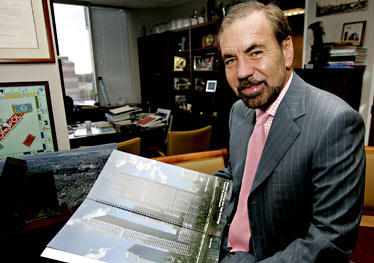
LYNNE SLADKY / AP
Web Exclusive Nation
Jorge Perez
The King of Condominiums
By SIOBHAN MORRISSEY
MORE BY AUTHOR
Posted Saturday, Aug. 13, 2005
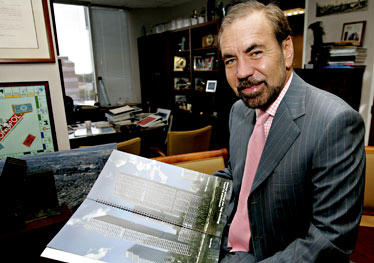
He started out as the leading builder of affordable housing in Florida, but over the past 26 years, developer Jorge Perez has become the Donald Trump of the tropics, with about 50 condo towers in various stages of completion in South Florida, Fort Myers and Las Vegas. His company, the Related Group of Florida, had $2.1 billion in revenue in 2004, putting Perez at the very top of the Hispanic Business 500.
Some of his luxurious condos command as much as $15 million a unit, and his Vegas project is a five-star hotel and casino complex, modeled after Barcelona's famed Las Ramblas. But Perez says his primary mission is to revitalize downtown Miami, which offers little in the way of a residential community, and make it a cultural and business center for the Americas. "I see it as a great international city for traders and people who are always looking for business and possibilities in other countries�sort of like the Phoenicia of old, where everybody came together to do business and cultures merged," he says.
Perez, 55, who was born in Argentina of Cuban parents and came to the U.S. in 1968, is as passionate about politics and the arts as he is about building. An active Democratic fund raiser, he advised Bill Clinton on Cuba. His art collection includes work by such Latin American masters as Fernando Botero, Frida Kahlo and Roberto Matta, among others, and he avidly promotes art in public places. Everything Perez does reflects his philosophy that "Every time you make an act, not only are you defining yourself, but you're defining the world around you." The Miami skyline shows he's doing just that.
Click here: TIME.com: Cristina Saralegui -- Page 1
http://www.time.com/time/nation/article/0,8599,1093626,00.html

BRIAN SMITH FOR TIME
Web Exclusive Nation
Cristina Saralegui
The Queen of The Airwaves
By JEANNE DEQUINE
MORE BY AUTHOR
Posted Saturday, Aug. 13, 2005
When fans encounter Cristina Saralegui, the vivacious, sometimes ribald talk-show host of the weekly prime-time El Show de Cristina, they tend to ask for hugs, not autographs. Her mix of glamour, humor and kitschiness, developed over 16 years of doing the program on the Univision Network, endears her to viewers, though her penchant for the provocative has shocked them at times. On the air, she has revealed her cosmetic surgery, given condom demonstrations, bemoaned her menopause symptoms, even "married" gay couples. The latter event drew bomb threats and 1,500 protesters to her Miami studio. "I have gotten into a lot of trouble in my life for being brutally honest," she says. "Sometimes I put both my feet in my mouth. But like Elton John, I'm still standing."
She's doing better than that. Saralegui, who came to the U.S. from Cuba at age 12, now sits at the center of a Hispanic empire. Like Oprah Winfrey, to whom she is often compared, Saralegui, 57, has become a brand, which includes Cristina La Revista, the magazine she started in 1991; a talk show, which has won 11 Emmys and an estimated 100 million viewers worldwide; a Miami television studio; Casa Cristina, a furniture line; an upcoming clothing line; and a burgeoning acting career that has included an appearance on ABC's George Lopez. Her bilingual website receives an average of 50,000 hits a day. Her book Cristina! My Life as a Blonde is out in Spanish and English. And she runs a foundation, Arriba la Vida/Up with Life, which aims to educate Hispanics about HIV. "Kids can diet, stop smoking, but they will never stop making love," she says.
Click here: TIME.com: Alisa Valdes-Rodriguez -- Page 1
http://www.time.com/time/nation/article/0,8599,1093632,00.html

PATRICK J. RODRIGUEZ
Web Exclusive Nation
Alisa Valdes-Rodriguez
The Godmother Of Chica Lit
By CAROLINA A. MIRANDA
MORE BY AUTHOR
Posted Saturday, Aug. 13, 2005
For almost three decades, U.S. Latino fiction was a realm of magic realism, stuck somewhere among clich�d visions of grandmas, mangoes and the sea. Then in 2003 Alisa Valdes-Rodriguez put pen to paper and produced a hip, fast-paced novel about six young Latinas trying to get ahead at the office and in the bedroom. Call it chica lit. The six women of The Dirty Girls Social Club are smart, funny and, most important, professionals. They include a reporter, a rock star and a news anchor�none of whom ever gets absorbed in ponderous debates about the immigrant experience.
"I didn't want this to be �Oh, here we are with our mantilla, praying to the Virgin of Guadalupe,'" says Valdes-Rodriguez, who is of Cuban-Irish descent. "That's not my reality." Born 36 years ago into a middle-class family in Albuquerque, N.M., she lives there now with her husband and young son. She has a master's degree in journalism from Columbia University and has worked as a reporter for the Los Angeles Times and the Boston Globe.
Valdes-Rodriguez's view of U.S. Latino life has found a diverse and willing audience. Dirty Girls has sold more than 350,000 copies and is in development to become a series on the Lifetime network next spring. Her second book, Playing with Boys, has sold 130,000 hardcover copies. Two more women's novels as well as two works of teen fiction are in the pipeline.
Since Dirty Girls made its debut, similar works by Latina authors, like Hot Tamara by Mary Castillo, have found their way into bookstores. Valdes-Rodriguez hesitates to take any credit. "These writers have always been there," she says. "It's just that the industry wasn't ready to publish them." They're ready now.
Click here: TIME.com: Narciso Rodriguez -- Page 1
http://www.time.com/time/nation/article/0,8599,1093641,00.html
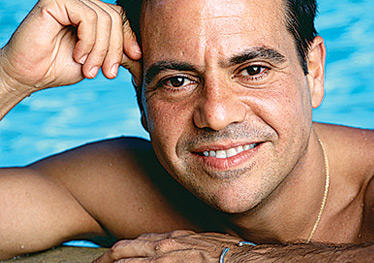
BRIAN SMITH / CORBIS OUTLINE
Web Exclusive Nation
Narciso Rodriguez
The Magical Dressmaker
By KATE BETTS
MORE BY AUTHOR
Posted Saturday, Aug. 13, 2005
It was one dress that put Cuban-American designer Narciso Rodriguez on the fashion map back in September 1996. He had been toiling away for years�under Donna Karan at Anne Klein, as a design assistant at Calvin Klein and as the designer of the Cerruti label in Paris�when his good friend Carolyn Bessette asked him to design her wedding dress. With one simple matte silk crepe slip, Rodriguez made John F. Kennedy Jr.'s bride both sexy and ethereal�a look that would become his fashion hallmark and the most copied silhouette of the past decade.
"He can cut a dress better than any designer," says Kalman Ruttenstein, fashion director of Bloomingdale's, who has known Rodriguez since he started his label in 1998. The only American to be awarded the Council of Fashion Designers of America (CFDA) award for best designer two years running, Rodriguez is often cited as the heir to the mantle of American sportswear's great minimalist innovators: Anne Klein, Halston and Calvin Klein. But unlike any American designer before him, Rodriguez, 44, draws on his Latino roots to imbue his designs with a distinctive sense of color, curve and verve.
Although his father, a retired longshoreman, didn't initially approve of Rodriguez's career choice, preferring that his son study law or medicine, today he sits in the front row at most of Rodriguez's shows, right alongside the adoring buyers and celebrities.
Click here: TIME.com: Ysrael Seinuk -- Page 1
http://www.time.com/time/nation/article/0,8599,1093654,00.html
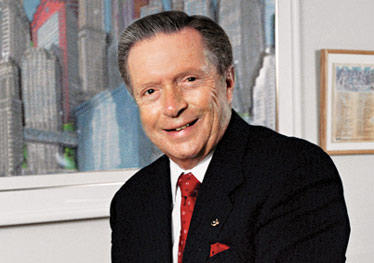
DAVID LAGONE
Web Exclusive Nation
Ysrael Seinuk
The Master Builder
By CAROLINA A. MIRANDA
MORE BY AUTHOR
Posted Saturday, Aug. 13, 2005
Look up as you walk the streets of New York City, and you can appreciate the work of Ysrael Seinuk. As a structural engineer, he is the man who makes tall buildings stand, responsible for the steel-and-concrete core that rises dozens of stories above the earth. In a career that has spanned almost five decades, Seinuk, 73, has plenty of high-profile Manhattan high-rises to his credit, including Philip Johnson's famous "lipstick" building; Trump World Tower, which holds the title of tallest residential skyscraper in the western hemisphere; and Norman Foster's angular Hearst Tower, now under construction.
A pioneering force in the complex world of tall-building engineering, Seinuk was an early proponent of using stronger concrete in New York, a feature that has allowed subsequent generations of engineers to go higher without having to go wider. "My work," says Seinuk, "has always been about stretching the horizon." When he arrived in the U.S. from Cuba soon after Castro's revolution, Seinuk had little more than $20 in his pocket, "my slide rule and my diploma from the University of Havana." The memory of those lean years keeps him committed to a variety of causes in his adopted hometown of New York City and beyond�from cerebral-palsy research to Cuban-American political efforts. "I came to a country that welcomed me," he says. "I make an effort to give back."
Click here: TIME.com: Mel Martinez -- Page 1
http://www.time.com/time/nation/article/0,8599,1093619,00.html
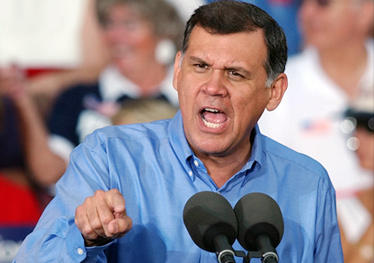
CHRIS O'MEARA / AP
Web Exclusive Nation
Mel Martinez
The Maverick Senator
By TIM PADGETT
MORE BY AUTHOR
Posted Saturday, Aug. 13, 2005
Mel martinez is more than the nation's first cuban-American Senator. Because he is one of only two Hispanics in the U.S. Senate (the other is Democratic Senator Ken Salazar of Colorado) and because he represents Florida and its pivotal electoral power, Martinez is perhaps the U.S.'s most important Hispanic lawmaker. But when he was elected last fall, Martinez was widely regarded as little more than a lapdog for President George W. Bush. Martinez upset that image this spring, when he suggested that the U.S. close its controversial prison camp at Guant�namo Bay�and that the Administration has neglected Latin America.
That display of independence was welcomed by many in the Hispanic community as a sign that Martinez will stump for a broader swath of Latino concerns than just those associated with Miami's long-dominant Cubans. Despite its reputation as a conservative Cuban stronghold, Florida arguably has the U.S.'s most diverse Hispanic population, including burgeoning communities of Mexicans, Puerto Ricans and Central and South Americans�who are often at odds with the President on issues like immigration and education. More than any other U.S. politician today, "Martinez has the opportunity to speak for all Hispanics," says Dario Moreno, a political expert at Florida International University.
Martinez, 58, whose parents smuggled him at age 15 out of Fidel Castro's Cuba, hitched his star to the Bush dynasty in 2000, when Florida Governor Jeb Bush tapped him to co-chair his brother's presidential campaign. The President made Martinez his Housing Secretary and then, to help secure Florida in 2004, pushed his Senate candidacy by, among other things, giving him a prime-time spot at the Republican National Convention. Martinez may disagree with Bush at times, but he still enjoys the kind of palanca inside the Oval Office that few Hispanic pols before him have been able to claim.
Click here: TIME.com: Jorge Perez -- Page 1
http://www.time.com/time/nation/article/0,8599,1093639,00.html
LYNNE SLADKY / AP
Web Exclusive Nation
Jorge Perez
The King of Condominiums
By SIOBHAN MORRISSEY
MORE BY AUTHOR
Posted Saturday, Aug. 13, 2005
He started out as the leading builder of affordable housing in Florida, but over the past 26 years, developer Jorge Perez has become the Donald Trump of the tropics, with about 50 condo towers in various stages of completion in South Florida, Fort Myers and Las Vegas. His company, the Related Group of Florida, had $2.1 billion in revenue in 2004, putting Perez at the very top of the Hispanic Business 500.
Some of his luxurious condos command as much as $15 million a unit, and his Vegas project is a five-star hotel and casino complex, modeled after Barcelona's famed Las Ramblas. But Perez says his primary mission is to revitalize downtown Miami, which offers little in the way of a residential community, and make it a cultural and business center for the Americas. "I see it as a great international city for traders and people who are always looking for business and possibilities in other countries�sort of like the Phoenicia of old, where everybody came together to do business and cultures merged," he says.
Perez, 55, who was born in Argentina of Cuban parents and came to the U.S. in 1968, is as passionate about politics and the arts as he is about building. An active Democratic fund raiser, he advised Bill Clinton on Cuba. His art collection includes work by such Latin American masters as Fernando Botero, Frida Kahlo and Roberto Matta, among others, and he avidly promotes art in public places. Everything Perez does reflects his philosophy that "Every time you make an act, not only are you defining yourself, but you're defining the world around you." The Miami skyline shows he's doing just that.
Click here: TIME.com: Cristina Saralegui -- Page 1
http://www.time.com/time/nation/article/0,8599,1093626,00.html

BRIAN SMITH FOR TIME
Web Exclusive Nation
Cristina Saralegui
The Queen of The Airwaves
By JEANNE DEQUINE
MORE BY AUTHOR
Posted Saturday, Aug. 13, 2005
When fans encounter Cristina Saralegui, the vivacious, sometimes ribald talk-show host of the weekly prime-time El Show de Cristina, they tend to ask for hugs, not autographs. Her mix of glamour, humor and kitschiness, developed over 16 years of doing the program on the Univision Network, endears her to viewers, though her penchant for the provocative has shocked them at times. On the air, she has revealed her cosmetic surgery, given condom demonstrations, bemoaned her menopause symptoms, even "married" gay couples. The latter event drew bomb threats and 1,500 protesters to her Miami studio. "I have gotten into a lot of trouble in my life for being brutally honest," she says. "Sometimes I put both my feet in my mouth. But like Elton John, I'm still standing."
She's doing better than that. Saralegui, who came to the U.S. from Cuba at age 12, now sits at the center of a Hispanic empire. Like Oprah Winfrey, to whom she is often compared, Saralegui, 57, has become a brand, which includes Cristina La Revista, the magazine she started in 1991; a talk show, which has won 11 Emmys and an estimated 100 million viewers worldwide; a Miami television studio; Casa Cristina, a furniture line; an upcoming clothing line; and a burgeoning acting career that has included an appearance on ABC's George Lopez. Her bilingual website receives an average of 50,000 hits a day. Her book Cristina! My Life as a Blonde is out in Spanish and English. And she runs a foundation, Arriba la Vida/Up with Life, which aims to educate Hispanics about HIV. "Kids can diet, stop smoking, but they will never stop making love," she says.
Click here: TIME.com: Alisa Valdes-Rodriguez -- Page 1
http://www.time.com/time/nation/article/0,8599,1093632,00.html

PATRICK J. RODRIGUEZ
Web Exclusive Nation
Alisa Valdes-Rodriguez
The Godmother Of Chica Lit
By CAROLINA A. MIRANDA
MORE BY AUTHOR
Posted Saturday, Aug. 13, 2005
For almost three decades, U.S. Latino fiction was a realm of magic realism, stuck somewhere among clich�d visions of grandmas, mangoes and the sea. Then in 2003 Alisa Valdes-Rodriguez put pen to paper and produced a hip, fast-paced novel about six young Latinas trying to get ahead at the office and in the bedroom. Call it chica lit. The six women of The Dirty Girls Social Club are smart, funny and, most important, professionals. They include a reporter, a rock star and a news anchor�none of whom ever gets absorbed in ponderous debates about the immigrant experience.
"I didn't want this to be �Oh, here we are with our mantilla, praying to the Virgin of Guadalupe,'" says Valdes-Rodriguez, who is of Cuban-Irish descent. "That's not my reality." Born 36 years ago into a middle-class family in Albuquerque, N.M., she lives there now with her husband and young son. She has a master's degree in journalism from Columbia University and has worked as a reporter for the Los Angeles Times and the Boston Globe.
Valdes-Rodriguez's view of U.S. Latino life has found a diverse and willing audience. Dirty Girls has sold more than 350,000 copies and is in development to become a series on the Lifetime network next spring. Her second book, Playing with Boys, has sold 130,000 hardcover copies. Two more women's novels as well as two works of teen fiction are in the pipeline.
Since Dirty Girls made its debut, similar works by Latina authors, like Hot Tamara by Mary Castillo, have found their way into bookstores. Valdes-Rodriguez hesitates to take any credit. "These writers have always been there," she says. "It's just that the industry wasn't ready to publish them." They're ready now.
Click here: TIME.com: Narciso Rodriguez -- Page 1
http://www.time.com/time/nation/article/0,8599,1093641,00.html
BRIAN SMITH / CORBIS OUTLINE
Web Exclusive Nation
Narciso Rodriguez
The Magical Dressmaker
By KATE BETTS
MORE BY AUTHOR
Posted Saturday, Aug. 13, 2005
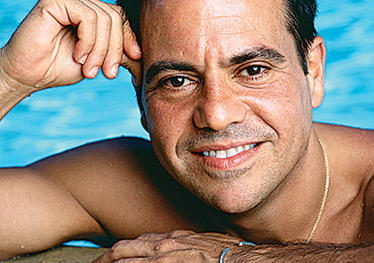
It was one dress that put Cuban-American designer Narciso Rodriguez on the fashion map back in September 1996. He had been toiling away for years�under Donna Karan at Anne Klein, as a design assistant at Calvin Klein and as the designer of the Cerruti label in Paris�when his good friend Carolyn Bessette asked him to design her wedding dress. With one simple matte silk crepe slip, Rodriguez made John F. Kennedy Jr.'s bride both sexy and ethereal�a look that would become his fashion hallmark and the most copied silhouette of the past decade.
"He can cut a dress better than any designer," says Kalman Ruttenstein, fashion director of Bloomingdale's, who has known Rodriguez since he started his label in 1998. The only American to be awarded the Council of Fashion Designers of America (CFDA) award for best designer two years running, Rodriguez is often cited as the heir to the mantle of American sportswear's great minimalist innovators: Anne Klein, Halston and Calvin Klein. But unlike any American designer before him, Rodriguez, 44, draws on his Latino roots to imbue his designs with a distinctive sense of color, curve and verve.
Although his father, a retired longshoreman, didn't initially approve of Rodriguez's career choice, preferring that his son study law or medicine, today he sits in the front row at most of Rodriguez's shows, right alongside the adoring buyers and celebrities.
Click here: TIME.com: Ysrael Seinuk -- Page 1
http://www.time.com/time/nation/article/0,8599,1093654,00.html

DAVID LAGONE
Web Exclusive Nation
Ysrael Seinuk
The Master Builder
By CAROLINA A. MIRANDA
MORE BY AUTHOR
Posted Saturday, Aug. 13, 2005
Look up as you walk the streets of New York City, and you can appreciate the work of Ysrael Seinuk. As a structural engineer, he is the man who makes tall buildings stand, responsible for the steel-and-concrete core that rises dozens of stories above the earth. In a career that has spanned almost five decades, Seinuk, 73, has plenty of high-profile Manhattan high-rises to his credit, including Philip Johnson's famous "lipstick" building; Trump World Tower, which holds the title of tallest residential skyscraper in the western hemisphere; and Norman Foster's angular Hearst Tower, now under construction.
A pioneering force in the complex world of tall-building engineering, Seinuk was an early proponent of using stronger concrete in New York, a feature that has allowed subsequent generations of engineers to go higher without having to go wider. "My work," says Seinuk, "has always been about stretching the horizon." When he arrived in the U.S. from Cuba soon after Castro's revolution, Seinuk had little more than $20 in his pocket, "my slide rule and my diploma from the University of Havana." The memory of those lean years keeps him committed to a variety of causes in his adopted hometown of New York City and beyond�from cerebral-palsy research to Cuban-American political efforts. "I came to a country that welcomed me," he says. "I make an effort to give back."
The 25 Most Influential Hispanics In America - TIME's poll of U.S. Hispanics

Online Edition
Cover Story
From the Magazine Cover
The 25 Most Influential Hispanics In America Inside America's Largest Minority
TIME's poll of U.S. Hispanics
MORE BY AUTHOR
Posted Sunday, Aug. 14, 2005
BY THE NUMBERS
The U.S. Hispanic population has increased 17% in the past four years, to 41.3 million. Hispanics are projected to account for 46% of all U.S. population growth over the next 20 years. Although only 62% of all U.S. Hispanic adults have finished high school, 84% of U.S.-born Hispanics graduate. The median net worth of Hispanic households is $7,932, less than one-tenth the figure for non-Hispanic whites, $88,651. There were 1.6 million Hispanic-owned firms in the U.S. in 2002, a 30% increase since 1997. U.S. Hispanic workers sent an estimated $30 billion home to Latin American countries in 2003
ORIGINS AND IMMIGRATION
Today Hispanics are 14% of the U.S. population. About half were born outside the U.S., but most want to blend into American society
Country of ancestry
Mexico � 58%
Puerto Rico � 10%
Spain � 5%
Cuba � 5%
Dominican Rep. � 4%
U.S. � 4%
El Salvador � 2%
Portugal � 1%
All others � 11%
Place of birth:
Mainland U.S. 46%
Elsewhere 49%
Puerto Rico: 5%
Primary language spoken at home:
Spanish 43%
English 32%
Both 23%
Other/No answer: 2%
How important is it for Latinos to blend into the larger U.S. society?
Very important 64%
Somewhat important 24%
Not too important: 5%
Not at all important: 3%
Don�t know: 4%
Is legal immigration ...
... good for the U.S.? 65%
... bad for the U.S.? 17%
It depends/don�t know 17%
How much legal immigration should the U.S. allow?
More 32%
Less 17%
Same as now 41%
How serious a problem is illegal immigration?
61%
�Extremely 29%
�Very 32%
35%
�Somewhat 22%
�Not very 13%
Are illegal immigrants ...
... taking jobs from U.S. citizens? 14%
... taking jobs U.S. citizens don�t want? 74%
POLITICS AND ISSUES
Hispanics tend to be Democrats, but President Bush grabbed a significant share of their votes in 2004. Education and jobs are top concerns
Political affiliation:
Democrat 38%
Independent 22%
Republican 16%
Which paP>Independent 22%
Republican 16%
Which party better represents the interests of Hispanics?
Democratic 54%
Republican 16%
Neither 9%
Do you expect a Hispanic to be nominated for President or Vice President ...
... in 2008?
Yes 40%
No 53%
... in 2012?
Yes 54%
No 37%
President Bush�s job performance:
Approve 44%
Disapprove 45%
Was the U.S. right to go to war with Iraq?
Yes 34%
No 56%
Page 1 of 2 1 2 Next >>
Page 2 of 2 <
How important are these issues?
Education 95%
Jobs/economy 91%
Homeland security 87%
Environment 86%
Social Security reform 80%
Bilingual education 79%
Immigration 73%
Moral values 72%
U.S. policy toward Latin America 69%
Tax reform 66%
War in Iraq 65%
U.S. policy toward Cuba 35%
Would you like to see the Supreme Court uphold or overturn Roe v. Wade?
Uphold 42%
Overturn 45%
Should states be allowed to issue driver�s licenses to illegal immigrants?
Yes 62%
No 32%
This TIME poll was conducted by telephone July 28-Aug. 3 among 503 Latino adults throughout the U.S. by SRBI Public Affairs. Interviews were conducted in both English (60%) and Spanish (40%). Margin of error for the entire sample: approximately 5 percentage points. �Don�t know� omitted for some questions. Sources for �By the Numbers� statistics: Census Bureau, PewHispanicCenter
Page 2 of 2 <
Table of Contents
Aug. 22, 2005
TIME Poll of U.S. Hispanics
Inside America's Largest Minority
Influencing America
Shaping the main stream
George P. Bush
...The Bush to Watch
Cover Package
Intro
Alberto Gonzales
Mel Martinez
Lionel Sosa
Antonio Gonzalez
Antonio Villaraigosa
Cristina Saralegui
Gustavo Santaolalla
Robert Rodriguez
Alisa Valdes-Rodriguez
Anthony Romero
Arturo Moreno
George Lopez
Jennifer Lopez
Jorge Perez
Mari Carmen Ramirez
Narciso Rodriguez
Aida Giachello
Bill Richardson
Jorge Ramos
Pablo Alvarado
Mario Molina
Jose Gomez
Salma Hayek
Sara Martinez Tucker
Ysrael Seinuk
From the Aug. 22, 2005 issue of TIME magazine
Click here: TIME.com: Influencing America -- Page 1
http://www.time.com/time/nation/article/0,8599,1093645,00.html
Web Exclusive Nation
Influencing America
Hispanics aren't just in the mainstream, they're shaping it
By GUY GARCIA
SUBSCRIBE TO TIMEPRINTE-MAILMORE BY AUTHOR
Posted Saturday, Aug. 13, 2005
In the blockbuster comedy Anchorman, a local TV news team led by Will Farrell has a West Side Story-style showdown with a rival news crew in an empty parking lot. Suddenly maracas and mariachi horns announce the arrival of yet another posse. As the Spanish language news team storms in waving machetes and whips, somebody remarks, "Well, it looks like we got ourselves a bi-lingual bloodfest."
The scene is played strictly for laughs, but the social awareness it draws upon is no joke. In Anchorman, as in real life, Spanish language TV is a force to be reckoned with, and its inclusion in a mainstream comedy film is a clear signal of its arrival as a player in American media. It is also a subtle reminder that the United States is in the midst of a socio-cultural shift that goes far beyond the fact that Univision, Telemundo, and other foreign language networks like them, have entered the national consciousness.
Only a decade ago it seemed that Hispanics in the United States would be doomed to perpetual marginalization. Latinos lagged behind whites, African Americans and Asians in income, buying power, education and health. Their image in the media�if it appeared at all�was generally relegated to gardeners, maids and barrio gangsters. When sales of salsa overtook ketchup in the early 1990s only Heinz seemed to care. Then came Ricky Martin and his bilingual anthem to "Living La Vida Loca." The song redefined urban pop and Latinos, almost overnight, became cool.
But it was the economic and demographic bombshell ticking under the pop culture surface that would bring the deepest change. When the 2000 U.S. census made it clear that Hispanics were poised to become the nation's largest minority, Latinos were thrust into the zeitgeist-visible, indelible, inevitable. The news that the buying power of Hispanics is overtaking that of African Americans and is growing faster than non-Hispanics has sparked a scramble by corporations to understand this huge lucrative market in its midst. The new color of money is brown, black, red, yellow and white. The U.S. consumer economy, in other words, is multicultural-and Latinos, for the first time, are leading the way.
Latinos have not just joined the mainstream; they are helping to define it. The prospect of a Latino U.S. President before the end of the century no longer seems farfetched. In fact, in a survey of Latinos for TIME, 54% of respondents said they believed "a Latino or Hispanic will be nominated for president or vice-president in 2012."
Which is not to say that Latinos no longer face prejudice and enormous social and economic hurdles. Nearly a quarter of all Latinos live in poverty; the high school drop out rate for Latino youths between the ages of 16 and 19 is 21%�more than triple that of non-Hispanic whites. Neo-nativists like Pat Buchanan and Samuel Huntington still argue that the "tsunami" of non-English speakers from Latin America will destroy everything that America stands for. Never mind that most Hispanics are religious, family-centric, enterprising and patriotic. In the TIME poll, 72% said they considered moral issues such as abortion and issues of faith important or very important. This year the government announced that undocumented workers were pouring billions into Social Security and Medicare for benefits that they would never be allowed to claim. Of the 27,000 troops serving in the US armed forces who are not US citizens, a large percentage are from Mexico and the rest of Latin America.
But the greatest argument against inflammatory xenophobes may come from economic trends that will shape the future of Mexico-U.S. relations. Experts point out that Mexico's population growth rate has plunged by more than 50 % during the last five decades, which will probably lead to rising incomes and demand for workers inside of Mexico. Already the percentage of first-generation immigrants in the total US Hispanic population is expected to drop from 40 % in 2000 to closer to a third by 2020, a decline of nearly 20 %. In other words, the forces that have driven emigration from Mexico-and the social pressures they have spawned in the US-may be on the verge of reversing themselves.
Latinos are comprised of many races and nationalities, speak several languages and span the socio-economic spectrum. They can be undocumented immigrants or descendents of families that were on American soil before founding of the republic. Their diversity binds them to each other and to all other Americans. The dreams of the old and new immigrants overlap and mirror each other, offering up myriad reflections of a mutually imagined America. When Christopher Columbus set foot on the shores of the New World, he described the natives as "young...well made with fine shapes and faces...Some paint themselves with black...others with white, others with red, and others with such colors as they can find." Columbus could have hardly foreseen that more than five hundred years later his description of Americans as a multicolored tribe inventing their identity from a dazzling palette of countless hues would ring uncannily true.
Guy Garcia is the author of "Skin Deep" and "The New Mainstream: How the Multicultural Consumer is Transforming American Business".
WHAT MIGHT HAVE BEEN -- THE EFFECTS OF TERM LIMITS
Subject: Term Limits Rule.
Date: 8/17/2005 3:37:53 PM Eastern Daylight Time
From: starquest@nycivic.org
To: reysmontj@aol.com
Sent from the Internet (Details)
WHAT MIGHT HAVE BEEN -- THE EFFECTS OF TERM LIMITS
By Henry J. Stern
August 17, 2005
Yesterday was a milestone in the 2005 political campaigns in New York City. It was four weeks from Primary Day, September 13, six weeks from the runoff (if there is one), September 27, and twelve weeks from Election Day, November 8. Last night was the first TV debate between the major Democratic contenders.
The historic significance of this otherwise relatively tranquil political season is that it is the third Election under term limits. The first was in 2001 and the second in 2003. Term limits have had an enormous impact in determining who is eligible to seek re-election. For example, if he were not being term limited out of office, Gifford Miller, at 35, would surely have sought
re-election to the Council so he could continue to be Speaker while he seasoned himself for a mayoral candidacy, perhaps at the age of 39, 43 or 47. This is in no way a judgment on the merits of his candidacy, he is said to have done the best in last night's debate. However, term limits force him to challenge an incumbent mayor, or run for something else. The only office becoming vacant is Borough President, a lesser position than Speaker of the Council.
Virginia Fields, who just turned 60, would probably have stayed on as Borough President, an office to which she was comfortably re-elected in 2001. That would leave as candidates Fernando Ferrer, term limited out of the Bronx presidency in 2001, and currently holding no public office, and Congressman Anthony Weiner, who runs in even-numbered years, an advantage that Federal and State elected officials enjoy.
Ed Koch, for example, was elected Mayor in 1977 without risking his Congressional seat. John Lindsay did the same in 1965, running from the same district on Manhattan's east side. If the rivals were only Ferrer and Weiner, others would be more likely to enter the race, which could make it a more inspiring contest.
For the other city-wide positions, Comptroller Thompson is unopposed, and he is looking to his mayoral race in 2009, which would benefit from the re-election of Mayor Bloomberg so that Thompson would not have to face an incumbent Democrat. This leads to one of the many contradictions that politics requires. Thompson must give hearty support to a Democrat (logically Ferrer) to gain Latino votes in 2009. He has already performed this public ritual; but he could hardly have done anything else. (BTW, the Brooklyn Democratic organization, which produced Thompson, supports Gifford Miller for mayor.)
Thompson's situation is similar to that which Hillary Clinton faced in supporting John Kerry in 2004. Of course she endorsed him, and campaigned for him whenever asked. Even though Kerry's election would have sunk her Presidential ambition for at least four years, she prudently acted the role of the good soldier. She had to. We have a secret ballot in America, but even so, she probably voted for Kerry because she knew he would win New York by over a million. If she had to cast, in secret, the vote she knew would decide the election, there would have been internal drama, and you can bet on how she would have resolved the issue, depending on how well you think you know her.
For Public Advocate in 2005, we have a rerun of Gotbaum v. Siegel, with a new set of minor candidates. She won the runoff in 2001 with 64% of a low total vote. Assuming Ms. Gotbaum is re-elected, this will be an open seat in 2009, and Siegel will indubitably make his third try. That is not rare; David Dinkins was elected Borough President of Manhattan on his third
attempt in 1985. Ferrer is running for mayor for the third time (he withdrew early in 1997). Many unsuccessful candidates later seek other offices, and some are elected to higher positions than the one for which they lost. In 1858, for example Stephen A. Douglas was reelected U.S. Senator from Illinois, defeating one Abraham Lincoln.
The list of losers in the Public Advocate primary in 2001 has historical interest. After Gotbaum's 156,829 came four men, closely bunched, with totals of 105,976 for lawyer Siegel, 102,327 for Brooklyn Councilman Steven DiBrienza, 101,393 for trombonist and bandleader Willie Colon, and 99,904 for Manhattan Assemblyman Scott Stringer. A distant sixth and seventh were Manhattan Councilwoman Kathryn Freed (now a Civil Court Judge) and Sheila Flaxman, an audiologist. DiBrienza and Freed had been term limited out of their Council seats. However, if the two had not run, that could even have helped engender Gotbaum's victory.
In looking at what 2005 might have been without term limits, we cannot forget the consequences of the First Term Limits Election in 2001. In that year's mayoral race, there was one term-limited candidate, Council Speaker Peter Vallone. Had he sought re-election, Gifford Miller would never have become Speaker, and would have been term limited out in 2003. As Speaker, he got a bill passed extending his eligibility (and that of five colleagues) by two years. The bill was upheld by the courts.
Normally, City Council elections are held quadrennially, at the same time that city-wide officials and borough presidents are elected. But the Council is redistricted after each decennial census. The results were ready in 2003, and therefore there was a mid-term election.
Since changing a past event involves changing other past events that were dependent on the first event (Cf. "Back to the Future" and other projections of time travel); it is difficult to reconstruct the 2005 mayoral election. It is possible that Speaker Vallone, having passed 70, would have run for mayor as a Last Hurrah. In that case, his son and namesake would have been compelled to wait to inherit (through election) his Council seat in 2006, rather than having done so in 2002. The succession could take place even later -- look at Prince Charles.
Henry J. Stern
starquest@nycivic.org
New York Civic
520 Eighth Avenue
22nd Floor
New York, NY 10018
(212) 564-4441
(212) 564-5588 (fax)
www.nycivic.org
Date: 8/17/2005 3:37:53 PM Eastern Daylight Time
From: starquest@nycivic.org
To: reysmontj@aol.com
Sent from the Internet (Details)
WHAT MIGHT HAVE BEEN -- THE EFFECTS OF TERM LIMITS
By Henry J. Stern
August 17, 2005
Yesterday was a milestone in the 2005 political campaigns in New York City. It was four weeks from Primary Day, September 13, six weeks from the runoff (if there is one), September 27, and twelve weeks from Election Day, November 8. Last night was the first TV debate between the major Democratic contenders.
The historic significance of this otherwise relatively tranquil political season is that it is the third Election under term limits. The first was in 2001 and the second in 2003. Term limits have had an enormous impact in determining who is eligible to seek re-election. For example, if he were not being term limited out of office, Gifford Miller, at 35, would surely have sought
re-election to the Council so he could continue to be Speaker while he seasoned himself for a mayoral candidacy, perhaps at the age of 39, 43 or 47. This is in no way a judgment on the merits of his candidacy, he is said to have done the best in last night's debate. However, term limits force him to challenge an incumbent mayor, or run for something else. The only office becoming vacant is Borough President, a lesser position than Speaker of the Council.
Virginia Fields, who just turned 60, would probably have stayed on as Borough President, an office to which she was comfortably re-elected in 2001. That would leave as candidates Fernando Ferrer, term limited out of the Bronx presidency in 2001, and currently holding no public office, and Congressman Anthony Weiner, who runs in even-numbered years, an advantage that Federal and State elected officials enjoy.
Ed Koch, for example, was elected Mayor in 1977 without risking his Congressional seat. John Lindsay did the same in 1965, running from the same district on Manhattan's east side. If the rivals were only Ferrer and Weiner, others would be more likely to enter the race, which could make it a more inspiring contest.
For the other city-wide positions, Comptroller Thompson is unopposed, and he is looking to his mayoral race in 2009, which would benefit from the re-election of Mayor Bloomberg so that Thompson would not have to face an incumbent Democrat. This leads to one of the many contradictions that politics requires. Thompson must give hearty support to a Democrat (logically Ferrer) to gain Latino votes in 2009. He has already performed this public ritual; but he could hardly have done anything else. (BTW, the Brooklyn Democratic organization, which produced Thompson, supports Gifford Miller for mayor.)
Thompson's situation is similar to that which Hillary Clinton faced in supporting John Kerry in 2004. Of course she endorsed him, and campaigned for him whenever asked. Even though Kerry's election would have sunk her Presidential ambition for at least four years, she prudently acted the role of the good soldier. She had to. We have a secret ballot in America, but even so, she probably voted for Kerry because she knew he would win New York by over a million. If she had to cast, in secret, the vote she knew would decide the election, there would have been internal drama, and you can bet on how she would have resolved the issue, depending on how well you think you know her.
For Public Advocate in 2005, we have a rerun of Gotbaum v. Siegel, with a new set of minor candidates. She won the runoff in 2001 with 64% of a low total vote. Assuming Ms. Gotbaum is re-elected, this will be an open seat in 2009, and Siegel will indubitably make his third try. That is not rare; David Dinkins was elected Borough President of Manhattan on his third
attempt in 1985. Ferrer is running for mayor for the third time (he withdrew early in 1997). Many unsuccessful candidates later seek other offices, and some are elected to higher positions than the one for which they lost. In 1858, for example Stephen A. Douglas was reelected U.S. Senator from Illinois, defeating one Abraham Lincoln.
The list of losers in the Public Advocate primary in 2001 has historical interest. After Gotbaum's 156,829 came four men, closely bunched, with totals of 105,976 for lawyer Siegel, 102,327 for Brooklyn Councilman Steven DiBrienza, 101,393 for trombonist and bandleader Willie Colon, and 99,904 for Manhattan Assemblyman Scott Stringer. A distant sixth and seventh were Manhattan Councilwoman Kathryn Freed (now a Civil Court Judge) and Sheila Flaxman, an audiologist. DiBrienza and Freed had been term limited out of their Council seats. However, if the two had not run, that could even have helped engender Gotbaum's victory.
In looking at what 2005 might have been without term limits, we cannot forget the consequences of the First Term Limits Election in 2001. In that year's mayoral race, there was one term-limited candidate, Council Speaker Peter Vallone. Had he sought re-election, Gifford Miller would never have become Speaker, and would have been term limited out in 2003. As Speaker, he got a bill passed extending his eligibility (and that of five colleagues) by two years. The bill was upheld by the courts.
Normally, City Council elections are held quadrennially, at the same time that city-wide officials and borough presidents are elected. But the Council is redistricted after each decennial census. The results were ready in 2003, and therefore there was a mid-term election.
Since changing a past event involves changing other past events that were dependent on the first event (Cf. "Back to the Future" and other projections of time travel); it is difficult to reconstruct the 2005 mayoral election. It is possible that Speaker Vallone, having passed 70, would have run for mayor as a Last Hurrah. In that case, his son and namesake would have been compelled to wait to inherit (through election) his Council seat in 2006, rather than having done so in 2002. The succession could take place even later -- look at Prince Charles.
Henry J. Stern
starquest@nycivic.org
New York Civic
520 Eighth Avenue
22nd Floor
New York, NY 10018
(212) 564-4441
(212) 564-5588 (fax)
www.nycivic.org
CEO seeks new job: the president of Haiti
Miami Herald
Posted on Wed, Aug. 17, 2005
HAITI
CEO seeks new job: the president of Haiti
A Haitian-American businessman who was born in poverty but is a self-made millionaire faces long odds in his campaign for the presidency of Haiti.
BY JACQUELINE CHARLES
jcharles@herald.com
The walls of Haitian-American entrepreneur Dumarsais ''Dumas'' Sim�us' office bear witness to his success -- proud photos, awards and magazine covers recognizing his $100 million food empire in this rapidly growing city in the Lone Star State.
His humble roots are here, too: a framed photograph of a two-room shack with an aluminum roof in the village of Pont-Sond�, Haiti, where he was born 65 years ago.
Those roots have inspired Sim�us, one of the nation's top black businessmen and a member of Florida Gov. Jeb Bush's Haiti Task Force, to take on the greatest challenge of his life: seeking the presidency of Haiti.
Sim�us, whose first introduction to the United States was as a student at Florida A&M University in Tallahassee, plans to declare his candidacy today, standing in front of that childhood home in Haiti. He says he brings more than just love of his country, where his parents still live. He brings the business savvy of a maverick CEO.
Haiti is ''a country of eight million customers that's into bankruptcy. And you need a professional leader, a professional executive to come and get the country out of bankruptcy,'' Sim�us said in a recent interview in his second-floor office at Sim�us Foods International, a food manufacturing company whose customers include Denny's, T.G.I. Friday's and Burger King.
WORLDS APART
Critics say the world in which Sim�us has succeeded is very different from the one he wants to take over.
''It's impossible for someone from the diaspora to maneuver through the political land mines in Haiti,'' said Marie Florence Bell, chairwoman of Bush's task force, who is among a small group of South Florida Haitian Americans who have been hosting informal ''get to know you'' sessions with Haiti's presidential candidates in recent months.
''The rules of engagement [in Haiti] are completely different; it's a mind-boggling, complex, multilayered society,'' she said.
Bell and others say that while they respect Sim�us' accomplishments, he should take note of the last Haitian who tried but failed to stabilize an impoverished and volatile Haiti: longtime South Florida resident and current interim Prime Minister Gerard Latortue.
''After seeing what Gerard Latortue has done to the country, I would rather have someone be president of Haiti who has lived in Haiti for the past five years and knows what is going on,'' said Charles-Henri Baker, a leading opponent of former Haitian President Jean-Bertrand Aristide who intends to run for president as an independent.
MANAGER IS NEEDED
Sim�us said the Haitian people have misunderstood why Latortue has failed.
''It's not the fact that he's been in the diaspora,'' said Sim�us, a father of three. ``It's the fact that Latortue is not a proven leader, a proven executive. He's never had to manage and run complex organizations. That is the only reason why he has not delivered.''
Sim�us faces enormous challenges before Haiti's Nov. 6 presidential election. He must get 100,000 signatures by Sept. 10 as an independent to qualify for the ballot. And he must energize a disenchanted electorate while staving off attempts by Haiti's political class to derail his presidential bid.
Many Haitian politicians have been waiting in the wings since the fall of former Haitian dictator Jean-Claude ''Baby Doc'' Duvalier in 1986 and Aristide's departure last year.
They argue Sim�us can't be president because he has lived abroad for the past 44 years.
Article 135 of the Haitian Constitution states a presidential candidate must ''be a native-born Haitian and never have renounced Haitian nationality,'' and have resided in the country for five consecutive years before the election.
Sim�us said he has never renounced his Haitian citizenship despite being a U.S. citizen. And he argues that constitutional requirements don't apply in any case, claiming Haiti has been operating outside of the constitution since Aristide's ouster in 2004.
His attorneys have been working the phones, trying to overcome the perceived legal obstacles.
The story of how the son of an uneducated farmer and a merchant woman became a successful American businessman is about never losing sight of the dream.
Like many Haitian youngsters, Dumarsais Sim�us stood on the docks of St. Marc, near his hometown, and dreamed about going where the boats were coming from.
His parents sold a plot of land to help him buy a plane ticket to attend college in the United States. He first enrolled at Florida A&M University before eventually graduating from Howard University in Washington, D.C., with a degree in electrical engineering. Later he earned an MBA from the University of Chicago.
He eventually landed a job with TLC Beatrice Foods International, where he developed a reputation for being a taskmaster and ``fixing what's broken.''
He honed his business savvy as president and chief operating officer at Beatrice, the largest black-owned company in the nation.
His firm, which he bought in 1996 with a $55 million loan, is today Texas' largest black-owned company and the largest black-owned food processing plant in the country, according to Black Enterprise magazine. Through it all, Sim�us kept in close touch with his homeland.
Though he brought 40 relatives to the United States, including 16 siblings, a foundation bearing his name provides healthcare, food, clothing and education to residents of Haiti's breadbasket, the Artibonite Valley.
''The bottom line is he is a native son of Haiti, clearly born and raised in Haiti, went out in the world to make a success and he has kept constant connection with Haiti,'' said Rob Allyn, the Dallas-based GOP political strategist hired by Sim�us.
The firm has helped engineer victories for candidates in the Bahamas, Indonesia and Mexico, as well as for the George W. Bush gubernatorial campaign in Texas.
''Anyone would agree that Dumas Sim�us has never forgotten where he came from,'' Allyn added.
Sim�us' political platform includes making it easier for companies to invest in Haiti, promoting jobs, and rooting out corruption by making government accountable.
Whether Sim�us succeeds, his critics and supporters agree: He is an inspiration.
''I want to create a Haiti where people are proud to stay because there are opportunities,'' he said. ``I want a Haiti where there is access to capital for the average guy, for the poor guy who was born in a hut like I was born in.''
Click here: Herald.com 08/17/2005 CEO seeks new job: the president of Haiti

NATIVE SON: Texas businessman 'Dumas' Simeus, in front of the Texas and U.S. flags, wants to return to his homeland of Haiti -- to be president.
R E L A T E D C O N T E N T
CARL JUSTE/HERALD STAFF
More photos
R E L A T E D L I N K S
� Profile
� Audio Interview with Simeus
Posted on Wed, Aug. 17, 2005
HAITI
CEO seeks new job: the president of Haiti
A Haitian-American businessman who was born in poverty but is a self-made millionaire faces long odds in his campaign for the presidency of Haiti.
BY JACQUELINE CHARLES
jcharles@herald.com
The walls of Haitian-American entrepreneur Dumarsais ''Dumas'' Sim�us' office bear witness to his success -- proud photos, awards and magazine covers recognizing his $100 million food empire in this rapidly growing city in the Lone Star State.
His humble roots are here, too: a framed photograph of a two-room shack with an aluminum roof in the village of Pont-Sond�, Haiti, where he was born 65 years ago.
Those roots have inspired Sim�us, one of the nation's top black businessmen and a member of Florida Gov. Jeb Bush's Haiti Task Force, to take on the greatest challenge of his life: seeking the presidency of Haiti.
Sim�us, whose first introduction to the United States was as a student at Florida A&M University in Tallahassee, plans to declare his candidacy today, standing in front of that childhood home in Haiti. He says he brings more than just love of his country, where his parents still live. He brings the business savvy of a maverick CEO.
Haiti is ''a country of eight million customers that's into bankruptcy. And you need a professional leader, a professional executive to come and get the country out of bankruptcy,'' Sim�us said in a recent interview in his second-floor office at Sim�us Foods International, a food manufacturing company whose customers include Denny's, T.G.I. Friday's and Burger King.
WORLDS APART
Critics say the world in which Sim�us has succeeded is very different from the one he wants to take over.
''It's impossible for someone from the diaspora to maneuver through the political land mines in Haiti,'' said Marie Florence Bell, chairwoman of Bush's task force, who is among a small group of South Florida Haitian Americans who have been hosting informal ''get to know you'' sessions with Haiti's presidential candidates in recent months.
''The rules of engagement [in Haiti] are completely different; it's a mind-boggling, complex, multilayered society,'' she said.
Bell and others say that while they respect Sim�us' accomplishments, he should take note of the last Haitian who tried but failed to stabilize an impoverished and volatile Haiti: longtime South Florida resident and current interim Prime Minister Gerard Latortue.
''After seeing what Gerard Latortue has done to the country, I would rather have someone be president of Haiti who has lived in Haiti for the past five years and knows what is going on,'' said Charles-Henri Baker, a leading opponent of former Haitian President Jean-Bertrand Aristide who intends to run for president as an independent.
MANAGER IS NEEDED
Sim�us said the Haitian people have misunderstood why Latortue has failed.
''It's not the fact that he's been in the diaspora,'' said Sim�us, a father of three. ``It's the fact that Latortue is not a proven leader, a proven executive. He's never had to manage and run complex organizations. That is the only reason why he has not delivered.''
Sim�us faces enormous challenges before Haiti's Nov. 6 presidential election. He must get 100,000 signatures by Sept. 10 as an independent to qualify for the ballot. And he must energize a disenchanted electorate while staving off attempts by Haiti's political class to derail his presidential bid.
Many Haitian politicians have been waiting in the wings since the fall of former Haitian dictator Jean-Claude ''Baby Doc'' Duvalier in 1986 and Aristide's departure last year.
They argue Sim�us can't be president because he has lived abroad for the past 44 years.
Article 135 of the Haitian Constitution states a presidential candidate must ''be a native-born Haitian and never have renounced Haitian nationality,'' and have resided in the country for five consecutive years before the election.
Sim�us said he has never renounced his Haitian citizenship despite being a U.S. citizen. And he argues that constitutional requirements don't apply in any case, claiming Haiti has been operating outside of the constitution since Aristide's ouster in 2004.
His attorneys have been working the phones, trying to overcome the perceived legal obstacles.
The story of how the son of an uneducated farmer and a merchant woman became a successful American businessman is about never losing sight of the dream.
Like many Haitian youngsters, Dumarsais Sim�us stood on the docks of St. Marc, near his hometown, and dreamed about going where the boats were coming from.
His parents sold a plot of land to help him buy a plane ticket to attend college in the United States. He first enrolled at Florida A&M University before eventually graduating from Howard University in Washington, D.C., with a degree in electrical engineering. Later he earned an MBA from the University of Chicago.
He eventually landed a job with TLC Beatrice Foods International, where he developed a reputation for being a taskmaster and ``fixing what's broken.''
He honed his business savvy as president and chief operating officer at Beatrice, the largest black-owned company in the nation.
His firm, which he bought in 1996 with a $55 million loan, is today Texas' largest black-owned company and the largest black-owned food processing plant in the country, according to Black Enterprise magazine. Through it all, Sim�us kept in close touch with his homeland.
Though he brought 40 relatives to the United States, including 16 siblings, a foundation bearing his name provides healthcare, food, clothing and education to residents of Haiti's breadbasket, the Artibonite Valley.
''The bottom line is he is a native son of Haiti, clearly born and raised in Haiti, went out in the world to make a success and he has kept constant connection with Haiti,'' said Rob Allyn, the Dallas-based GOP political strategist hired by Sim�us.
The firm has helped engineer victories for candidates in the Bahamas, Indonesia and Mexico, as well as for the George W. Bush gubernatorial campaign in Texas.
''Anyone would agree that Dumas Sim�us has never forgotten where he came from,'' Allyn added.
Sim�us' political platform includes making it easier for companies to invest in Haiti, promoting jobs, and rooting out corruption by making government accountable.
Whether Sim�us succeeds, his critics and supporters agree: He is an inspiration.
''I want to create a Haiti where people are proud to stay because there are opportunities,'' he said. ``I want a Haiti where there is access to capital for the average guy, for the poor guy who was born in a hut like I was born in.''
Click here: Herald.com 08/17/2005 CEO seeks new job: the president of Haiti
NATIVE SON: Texas businessman 'Dumas' Simeus, in front of the Texas and U.S. flags, wants to return to his homeland of Haiti -- to be president.
R E L A T E D C O N T E N T
CARL JUSTE/HERALD STAFF
More photos
R E L A T E D L I N K S
� Profile
� Audio Interview with Simeus
Tuesday, August 16, 2005
highest bohemian index in city
jah6@gwu.edu>
To: JordiReyes-Montblanc
Date: Fri, 12 Aug 2005 18:21:32 -0400
Subject: highest bohemian index in city
Message-ID:
http://www.themorningnews.org/archives/new_york_new_york/the_bohemian_index.php

New York, New York
The Bohemian Index
by Dorothy Gambrell
Not in �number of illegal clubs� or art-supply stores, that�s for sure: So how, really, do you measure �bohemian-ness� in New York City? Dorothy Gambrell developed a method of calculation, and has maps to illustrate her findings.
Bohemian: a person with artistic or literary interests who disregards conventional standards of behavior (American Heritage). But you could also says it�s a matter of �you know one when you see one.� Dorothy Gambrell�s maps of the boroughs show where the major areas of �bohemian-ness� exist. Here she explains her findings to us. (Maps available below.)
What, in your opinion, is a bohemian?
A bohemian is someone who believes they cannot be defined by their job. Bohemians devote their lives to the pursuit of things other than money, but end up with a stable income. Bohemians believe that there is a class system in America, and believe themselves exempt.
Why did you start this project?
People talk about �hipsters� like it applies to everyone but them and maybe some of their closer acquaintances. I was looking for a way to quantify what a hipster was and cut through anyone-but-me prattle when a friend mentioned the possibilities of measuring the inverse relationship between income and education. Upon further investigation this measure appeared to be ideal for sniffing out bohemians rather than hipsters. (For the purposes of our study we will define hipsters as younger, meaning that they are often not finished with their post-high school education and are not yet economically self-sufficient.) As economic and educational data is available by zip code from the U.S. Census, mapping was the ideal way to display this information. Once the question had been defined and the data had been located there was no way to not go ahead with the project. I had to see how it ended.
How do you calculate �bohemian-ness?�
The Bohemian Index is measured by dividing education completed or currently being undertaken by residents by the median household income. In order to differentiate between which academic accomplishments would signify possible bohemianism among different age groups, the percentage of people 25 or older with a bachelor�s degree is combined with the percentage of people 18 � 24 with some college or an associates degree or higher at a ratio of 7:1. The ratio of 7:1 is an approximation of the ratio of people over 25 to those 18 � 24 years old in New York City.
What findings do you have? Any theories you�ve developed out of it?
Most surprising was how conservative bohemians were, living in areas that were thought hip and charming 40 years ago. Astoria, Long Island City, and the South Bronx have all been crowned the next Williamsburg, while Williamsburg�s Bohemian Index is average. I would love to see a companion map graphing the amount New York neighborhoods donated to NPR. If it could be cross-referenced with donations to WFMU, so much the better.
What�s the single most bohemian area? Single least?
The most bohemian area is zip code 10027, roughly corresponding to Morningside Heights. Hello, Columbia University! The least bohemian area � by a wide margin � is the John F. Kennedy International Airport. The least bohemian residential areas are South Ozone Park and South Richmond Hill, which are located just north of JFK in Queens.
Is there any correlation between your findings and rent prices?
That�s a tricky question, since a number of the less bohemian areas (especially as you approach Westchester or Long Island) are communities of homeowners. You will see higher rents in more traditionally desirable areas like Manhattan, but large differences in the Bohemian Index within Manhattan (like that between Morningside Heights and the Upper East Side, or Chelsea and the West Village) are not reflected in rent differences.
Looking at the maps, what�s there to do in Rego Park, Queens, do you think, that makes it such an anomaly?
I hear they have a mall there. With a Sears store. Possibly Marshall�s as well.
The Bohemian Index
The Bohemian Index is determined as follows:
[(% of persons 18�24 with some college or associate degree or higher) + 7(% of persons 25+ with a bachelors degree or higher)] / [median household income in dollars]
Data � 2000 U.S. Census
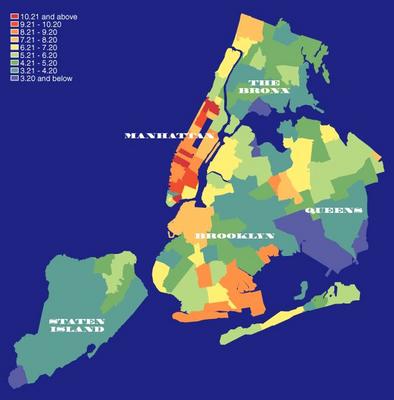
To: JordiReyes-Montblanc
Date: Fri, 12 Aug 2005 18:21:32 -0400
Subject: highest bohemian index in city
Message-ID:
http://www.themorningnews.org/archives/new_york_new_york/the_bohemian_index.php

New York, New York
The Bohemian Index
by Dorothy Gambrell
Not in �number of illegal clubs� or art-supply stores, that�s for sure: So how, really, do you measure �bohemian-ness� in New York City? Dorothy Gambrell developed a method of calculation, and has maps to illustrate her findings.
Bohemian: a person with artistic or literary interests who disregards conventional standards of behavior (American Heritage). But you could also says it�s a matter of �you know one when you see one.� Dorothy Gambrell�s maps of the boroughs show where the major areas of �bohemian-ness� exist. Here she explains her findings to us. (Maps available below.)
What, in your opinion, is a bohemian?
A bohemian is someone who believes they cannot be defined by their job. Bohemians devote their lives to the pursuit of things other than money, but end up with a stable income. Bohemians believe that there is a class system in America, and believe themselves exempt.
Why did you start this project?
People talk about �hipsters� like it applies to everyone but them and maybe some of their closer acquaintances. I was looking for a way to quantify what a hipster was and cut through anyone-but-me prattle when a friend mentioned the possibilities of measuring the inverse relationship between income and education. Upon further investigation this measure appeared to be ideal for sniffing out bohemians rather than hipsters. (For the purposes of our study we will define hipsters as younger, meaning that they are often not finished with their post-high school education and are not yet economically self-sufficient.) As economic and educational data is available by zip code from the U.S. Census, mapping was the ideal way to display this information. Once the question had been defined and the data had been located there was no way to not go ahead with the project. I had to see how it ended.
How do you calculate �bohemian-ness?�
The Bohemian Index is measured by dividing education completed or currently being undertaken by residents by the median household income. In order to differentiate between which academic accomplishments would signify possible bohemianism among different age groups, the percentage of people 25 or older with a bachelor�s degree is combined with the percentage of people 18 � 24 with some college or an associates degree or higher at a ratio of 7:1. The ratio of 7:1 is an approximation of the ratio of people over 25 to those 18 � 24 years old in New York City.
What findings do you have? Any theories you�ve developed out of it?
Most surprising was how conservative bohemians were, living in areas that were thought hip and charming 40 years ago. Astoria, Long Island City, and the South Bronx have all been crowned the next Williamsburg, while Williamsburg�s Bohemian Index is average. I would love to see a companion map graphing the amount New York neighborhoods donated to NPR. If it could be cross-referenced with donations to WFMU, so much the better.
What�s the single most bohemian area? Single least?
The most bohemian area is zip code 10027, roughly corresponding to Morningside Heights. Hello, Columbia University! The least bohemian area � by a wide margin � is the John F. Kennedy International Airport. The least bohemian residential areas are South Ozone Park and South Richmond Hill, which are located just north of JFK in Queens.
Is there any correlation between your findings and rent prices?
That�s a tricky question, since a number of the less bohemian areas (especially as you approach Westchester or Long Island) are communities of homeowners. You will see higher rents in more traditionally desirable areas like Manhattan, but large differences in the Bohemian Index within Manhattan (like that between Morningside Heights and the Upper East Side, or Chelsea and the West Village) are not reflected in rent differences.
Looking at the maps, what�s there to do in Rego Park, Queens, do you think, that makes it such an anomaly?
I hear they have a mall there. With a Sears store. Possibly Marshall�s as well.
The Bohemian Index
The Bohemian Index is determined as follows:
[(% of persons 18�24 with some college or associate degree or higher) + 7(% of persons 25+ with a bachelors degree or higher)] / [median household income in dollars]
Data � 2000 U.S. Census
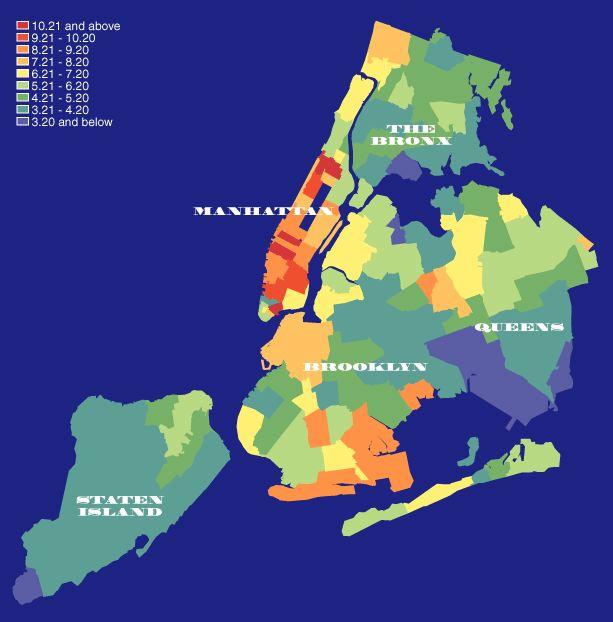
Monday, August 15, 2005
Ratner-Style Deal with Columbia University?


Ratner-Style Deal with Columbia University?
 Manhattanville residents are gearing up to make an agreement with Columbia University to get jobs and other benefits into the Ivy League school's planned expansion project.
But activists told The Real Estate they're not looking east to Brooklyn--where developer Bruce Ratner wants to build a massive mixed-use complex built around a stadium for the Nets--for their example.
Forest City Ratner Cos. made a deal with a coalition of local groups (including a local chapter of the national group, ACORN) to include affordable housing and job benefits for the neighborhood in their plan. But, said Jordi Reyes-Montblanc, the chairman of Community Board 9, only eight organizations were a part of it.
�We are avoiding the Brooklyn model,� he said. �We are wanting to do something else. We are wanting to develop a wide coalition of organizations and people that will be properly represented, perhaps through a local development corporation, but it�s not going to be ACORN negotiating for the community or any similar type of thing.�
Reyes-Montblanc said that negotiations on the "community benefits agreement"--which is the term for these contracts in which a developer promises a certain number of jobs to local residents or affordable apartments or both--will start once the environmental impact statement is complete.
Columbia University's press office issued a statement saying the university is �willing to discuss long term benefits that are aligned with the university�s mission as an educational institution. Whether or not that results in some sort of formal binding agreement is still undecided.�
The fact that only eight groups signed the Brooklyn agreement of course opened it up to easy criticism from opponents who claimed it didn�t represent the community.
By the way, the coalition that signed the Brooklyn agreement sent out a press release Aug. 4--a group of South African officials had stopped by to take a look--and at the time the coalition claimed that �more than 200 organizations have affirmed� the agreement since its signing in June�meaning they supported the idea even if they were not involved in negotiating the agreement or will be a part of enforcing it. The Real Estate asked for the list and counted fewer than 175; and that's only if �organizations� include elected officials, restaurants and real-estate agencies, as well as block associations and the like. But we were nonetheless surprised it had traveled so far, so fast. Why, there are groups from as far away as Queens and Manhattan on this list! (Are they part of the "community" in downtown Brooklyn?)
- Matthew Schuerman
Posted by Tom 8/15/2005 10:49:00 AM
Permalink
NB - Complete Brooklyn-Ratner Community Benefits Agreement
 Download here
http://www.buildbrooklyn.org/pr/cba.pdf
Applications Available for Two- and Three-Family Homes in Harlem and East Harlem


"Homes for Sale"
Applications Available for Two- and Three-Family Homes in Harlem and East Harlem
The New York City Department of Housing Preservation and Development (HPD) has updated its web content concerning listings for homes for sale.
Applications are available for seven two- and three-family homes in Harlem and East Harlem in Manhattan. The home prices range from $902,500 to $925,500. Eligible buyers must have an annual household income sufficient to qualify for mortgage financing (approximately $200,000). For more information, visit http://nyc.gov/html/hpd/html/for-homebuyers/manhattan-homes-sale.html.
The City itself does not sell homes, but works with real estate professionals and community sponsors who market them. You will need to contact them directly to fill out an application and enter it in the lottery. There are no broker fees and no application fees.
We suggest you look at HPD's home and apartment lists at least once a month.
This is the NYC.gov News You Requested For: Apartments and Homes for Rent or Sale
To subscribe please go to this link:
https://www.nyc.gov/portal/signin.jsp
Comment on this news service:
http://www.nyc.gov/html/misc/html/news_feedback.html
PLEASE DO NOT REPLY TO THIS MESSAGE!


Ratner-Style Deal with Columbia University?
Published: August 15, 2005
Manhattanville residents are gearing up to make an agreement with Columbia University to get jobs and other benefits into the Ivy League school's planned expansion project.
But activists told The Real Estate they're not looking east to Brooklyn--where developer Bruce Ratner wants to build a massive mixed-use complex built around a stadium for the Nets--for their example.
Forest City Ratner Cos. made a deal with a coalition of local groups (including a local chapter of the national group, ACORN) to include affordable housing and job benefits for the neighborhood in their plan. But, said Jordi Reyes-Montblanc, the chairman of Community Board 9, only eight organizations were a part of it.
"We are avoiding the Brooklyn model," he said. "We are wanting to do something else. We are wanting to develop a wide coalition of organizations and people that will be properly represented, perhaps through a local development corporation, but it's not going to be ACORN negotiating for the community or any similar type of thing."
Reyes-Montblanc said that negotiations on the "community benefits agreement"--which is the term for these contracts in which a developer promises a certain number of jobs to local residents or affordable apartments or both--will start once the environmental impact statement is complete.
Columbia University's press office issued a statement saying the university is "willing to discuss long term benefits that are aligned with the university's mission as an educational institution. Whether or not that results in some sort of formal binding agreement is still undecided."
The fact that only eight groups signed the Brooklyn agreement of course opened it up to easy criticism from opponents who claimed it didn't represent the community.
By the way, the coalition that signed the Brooklyn agreement sent out a press release Aug. 4--a group of South African officials had stopped by to take a look--and at the time the coalition claimed that "more than 200 organizations have affirmed" the agreement since its signing in June—meaning they supported the idea even if they were not involved in negotiating the agreement or will be a part of enforcing it. The Real Estate asked for the list and counted fewer than 175; and that's only if "organizations" include elected officials, restaurants and real-estate agencies, as well as block associations and the like. But we were nonetheless surprised it had traveled so far, so fast. Why, there are groups from as far away as Queens and Manhattan on this list! (Are they part of the "community" in downtown Brooklyn?)
- Matthew Schuerman
http://www.nyobserver.com/node/33803
Tags: Real Estate, Brooklyn, Columbia University, Forest City Ratner Companies, Jordi Reyes-Montblanc
Sunday, August 14, 2005
Parks New York City Regional Events Newsletter - Issue #1
Subject: Fwd: State Parks New York City Regional Events Newsletter - Issue #1
Date: 8/13/2005 8:37:31 A.M. Eastern Standard Time
From: SBaileymcc
To: Reysmontj
Please forward
Savona
-----------------
Subj: State Parks New York City Regional Events Newsletter - Issue #1
Date: 8/12/2005 3:23:48 P.M. Eastern Standard Time
From: Jack.Dolgen@oprhp.state.ny.us
To: Jack.Dolgen@oprhp.state.ny.us
Sent from the Internet (Details)
It continues to be another busy summer at State Parks in the New York City Region. We want to let you know about some of the great events that have occurred and others that will be taking place in some of our parks.
There�s something for everyone, from cultural programs, concerts, movies, classes, special events and more! Please visit the link below and take a look at our Regional Events Newsletter for a recap of some fun and exciting events we�ve had this summer and get a sneak peak at some future events you won�t want to miss.
http://www.nysparks.state.ny.us/news/public/archive/NYC_200501.pdf
While you�re on our website, be sure to look around at all of the diverse and interesting regions of the New York State Parks system.
Please feel free to forward this email to anyone you think might be interested!
If you'd like to join our mailing list, send an email to jack.dolgen@oprhp.state.ny.us with the subject, "join regional list"
If you would like to be removed from this mailing list, please send an email to jack.dolgen@oprhp.state.ny.us with the subject "remove"
Date: 8/13/2005 8:37:31 A.M. Eastern Standard Time
From: SBaileymcc
To: Reysmontj
Please forward
Savona
-----------------
Subj: State Parks New York City Regional Events Newsletter - Issue #1
Date: 8/12/2005 3:23:48 P.M. Eastern Standard Time
From: Jack.Dolgen@oprhp.state.ny.us
To: Jack.Dolgen@oprhp.state.ny.us
Sent from the Internet (Details)
It continues to be another busy summer at State Parks in the New York City Region. We want to let you know about some of the great events that have occurred and others that will be taking place in some of our parks.
There�s something for everyone, from cultural programs, concerts, movies, classes, special events and more! Please visit the link below and take a look at our Regional Events Newsletter for a recap of some fun and exciting events we�ve had this summer and get a sneak peak at some future events you won�t want to miss.
http://www.nysparks.state.ny.us/news/public/archive/NYC_200501.pdf
While you�re on our website, be sure to look around at all of the diverse and interesting regions of the New York State Parks system.
Please feel free to forward this email to anyone you think might be interested!
If you'd like to join our mailing list, send an email to jack.dolgen@oprhp.state.ny.us with the subject, "join regional list"
If you would like to be removed from this mailing list, please send an email to jack.dolgen@oprhp.state.ny.us with the subject "remove"
Thursday, August 11, 2005
Her Park Name is Everest
Subject: Her Park Name is Everest
Date: 8/10/2005 4:18:35 PM Eastern Daylight Time
From: starquest@nycivic.org
To: reysmontj@aol.com
Sent from the Internet (Details)
Every now and then, we depart from our mission of reporting on the competence and integrity of local public officials; either to delve into political or personal history, or to look at the larger world.
At the end of this article, there is an invitation to a free event this evening, a speech to the Libertarians of Manhattan.
WHY DO ELEPHANTS PREFER JEANINE PIRRO TO ED COX? THEY WANT TO MINIMIZE HILLARY'S EXPECTED VICTORY.
By Henry J. Stern
August 10, 2005
Today's newspapers discuss the impending Senate race between Senator Hillary Clinton and Westchester District Attorney Jeanine Pirro. This is not an area where we have inside information, but because of the importance of the election and its effect on the Presidential campaign, we venture a dozen observations of varying degrees of perspicacity.
1. Hillary Clinton has been a first-rate Senator for New York. She is both brilliant and disciplined. She tells as much of the truth as she can, and people who know politics realize that is a decent standard. On the other hand, there is a lot she won't tell, and some things she can't tell. Many of those omissions are not really her fault. They will be forgiven by people who believe her election is in the national interest. The unforgiving would not support her if she were Mother Teresa, a future saint with whom she is unlikely to be confused.
2. The Senator's ongoing ideological migration from the left to the center of her party (still to the left of middle America) is due in part to her sensitivity to the American people and their core beliefs. Howard Dean makes a perfect foil for her, an example of the yellow dog Democrat who cannot come to terms with the reality of how Americans feel about themselves and their country. Dean may not be able to raise much money for his party, but he inadvertently serves Hillary's purpose by making her appear moderate compared with him, without the Senator having to abandon traditional liberal positions.
3. One problem for Senator Clinton and the voters is that no one can be certain what she really believes, underneath the protection provided by precisely prepared public position papers that prudent politics postulates for its partisan participants. She is highly intelligent (most people know she is smart but don't realize just how smart, which is all right because they could be frightened off) and she is so careful and verbally gifted so that her views on a subject can evolve without her appearing to flip-flop. An open and inquiring mind takes new evidence into account, and does not remain frozen in a position which no longer makes sense. Sometimes it is hard for the public to understand this, especially if others plant doubt of your veracity or consistency. Still, we do not know what she would actually do were she not constrained by the political reality of satisfying the heart of America in pursuit of 270 electoral votes.
4. Jeanine Pirro is attractive, ambitious and moderate. She is hindered by her husband's sins, which are more serious than her opponent's husband's indiscretions. But even if Albert Pirro were a Boy Scout, his wife would still have an almost impossible race because Mrs. Clinton is wiser, knows far more about issues large and small, and has given distinguished service for five years, demonstrating her ability to reach out to people and her concern for their well being. What can Ms. Pirro do or say in the next fifteen months to match this towering talent?
5. One need not be paranoid to see the hand of Karl Rove in this ostensibly New York decision. As a supporter of a Republican in 2008 (Jeb Bush, if he can get away with it), Rove wants to minimize the strength of a rival. By sending a woman to oppose Hillary, the race will be seen to some extent, the New York Times (which is correct on this issue) notwithstanding, as a catfight, rather than as a warm-up for the Presidential race. The selection of Ms. Pirro is an attempt to undermine Senator Clinton's probable victory. And her matrimonial baggage will provide an excuse for the Republicans if she is overwhelmed at the polls.
6. Who cares whether Mrs. Clinton will serve two years or six? She promised in 2000 to serve a full term, and kept her word. In her second term she is entitled to seek promotion. If a Republican governor is elected in 2006, he will be able to select her replacement through 2008, when there will be an election for the remaining four years of her term. If a Democrat is elected, she will have to wait for his January inauguration to resign, but that will come well before her Jan. 20 speaking date in Washington, so that her Senate seat will be saved for the Democrats, at least through January 3, 2009.
7. If she should be elected President, that would only be helpful to the State of New York, which has suffered through Federal funding formulas that favor other states. It is an honor to have your Senator seriously considered for the highest office in the land. To project that as a negative is ridiculous.
8. Ed Cox would be a more authentic alternative to Senator Clinton's liberal philosophy, but he is not famous in his own right. The reputation of his late father in law, President Nixon, would not be particularly helpful or harmful. Cox is a gentleman, a successful attorney, and quite knowledgeable about government. He is also chairman of the State Council on Parks, which means a lot to us parkies. If Cox runs and loses, the race could seem to have been decided by ideological differences. The Clinton-Pirro duel is likely to be viewed as a popularity or personality contest, and the results will be easier to discount as unrepresentative of public sentiment on substantive issues. Since Pirro is viewed as a liberal (by national GOP standards), her loss will not be viewed as a blow to the conservative movement.
9. Running for the Senate did not do a lot of good for former Congressman Rick Lazio, the loser in 2000. He lost his House seat, had his 15 minutes of fame as a counterpoint to Hillary, and after being defeated by 55 per cent to 43 per cent, ( 3,747,310 - 2,915,730, to be exact) sank back into the obscurity whence he came. Note that Lazio did not receive a significant position in the Bush administration after his loss, while other Senate losers like John Ashcroft and Spencer Abraham were rewarded with Cabinet seats.
10. The New York Senate contest will be the race of the year in 2006, competitive with Governor Schwarzenegger's campaign for re-election (if he runs) and the Governorship of New York. The cost of these campaigns will approach, if not surpass, $100 million each. The contests all over the country will be a fund-raisers' delight. They will probably distract millions of people from important Senate and Congressional races with less prominent candidates in other states.
11. Which party will take Congressional seats from the other depends on events that have not yet taken place, notably the progress of the war in Iraq. The recent stories that Rumsfeld is chickening out of his own war will create new problems for President Bush. His popularity is down to 36 per cent, and there is widespread sentiment that the terrorists, although not winning, are wearing us out. We may be right to be there, but our guys keep getting blown up, many by roadside mines and suicide bombers. Is there no way to stop those losses?.
12. If we lived in the days of Caesar or Achilles, or even harked back to the time of Henry V at Agincourt (1415), the Commander-in-Chief would lead our troops on the field of battle, and the outcome of the war might be determined by his fate. That will not occur today. We could use W's experience in the Air National Guard to patrol the Iraqi skies, but that would require significant deployment of fighter planes to protect him. If the Iraq conflict is resolved satisfactorily, the President will be helped; if it goes badly, he may or may not be hurt, since people historically rally around their leaders in wartime, and cast them aside only when the battle is won (Cf. England, 1945).
- - - - - -
LAST MINUTE NOTICE OF PERFORMANCE. QUESTIONS REQUESTED. SPEECH TONIGHT AT UKRAINIAN VILLAGE. WELCOME. EXHIBIT YOUR ZEAL. ATTEND.
StarQuest will speak at a Manhattan Libertarian Party gathering this evening (Wed, Aug 10), at the Ukrainian East Village Restaurant, at 6:30 p.m. Listening to the speech is free. If you care to, you can buy dinner at the moderately-priced restaurant, whose name bespeaks its cuisine. AM New York reported yesterday that "he will speak about his role as muckraker, whistle-blower, cheerleader and insider of New York's public and civic life."
The address is 140 Second Avenue, between E 9th Street and St. Mark's Place. The phone number is 212-779-1873, but reservations are probably not necessary.
I don't want to impose on people by asking them to come, but I would feel worse if the event turned out well and I hadn't let them know about it. This is not a fundraiser for New York Civic.
Henry J. Stern
starquest@nycivic.org
New York Civic
520 Eighth Avenue
22nd Floor
New York, NY 10018
(212) 564-4441
(212) 564-5588 (fax)
www.nycivic.org
Date: 8/10/2005 4:18:35 PM Eastern Daylight Time
From: starquest@nycivic.org
To: reysmontj@aol.com
Sent from the Internet (Details)
Every now and then, we depart from our mission of reporting on the competence and integrity of local public officials; either to delve into political or personal history, or to look at the larger world.
At the end of this article, there is an invitation to a free event this evening, a speech to the Libertarians of Manhattan.
WHY DO ELEPHANTS PREFER JEANINE PIRRO TO ED COX? THEY WANT TO MINIMIZE HILLARY'S EXPECTED VICTORY.
By Henry J. Stern
August 10, 2005
Today's newspapers discuss the impending Senate race between Senator Hillary Clinton and Westchester District Attorney Jeanine Pirro. This is not an area where we have inside information, but because of the importance of the election and its effect on the Presidential campaign, we venture a dozen observations of varying degrees of perspicacity.
1. Hillary Clinton has been a first-rate Senator for New York. She is both brilliant and disciplined. She tells as much of the truth as she can, and people who know politics realize that is a decent standard. On the other hand, there is a lot she won't tell, and some things she can't tell. Many of those omissions are not really her fault. They will be forgiven by people who believe her election is in the national interest. The unforgiving would not support her if she were Mother Teresa, a future saint with whom she is unlikely to be confused.
2. The Senator's ongoing ideological migration from the left to the center of her party (still to the left of middle America) is due in part to her sensitivity to the American people and their core beliefs. Howard Dean makes a perfect foil for her, an example of the yellow dog Democrat who cannot come to terms with the reality of how Americans feel about themselves and their country. Dean may not be able to raise much money for his party, but he inadvertently serves Hillary's purpose by making her appear moderate compared with him, without the Senator having to abandon traditional liberal positions.
3. One problem for Senator Clinton and the voters is that no one can be certain what she really believes, underneath the protection provided by precisely prepared public position papers that prudent politics postulates for its partisan participants. She is highly intelligent (most people know she is smart but don't realize just how smart, which is all right because they could be frightened off) and she is so careful and verbally gifted so that her views on a subject can evolve without her appearing to flip-flop. An open and inquiring mind takes new evidence into account, and does not remain frozen in a position which no longer makes sense. Sometimes it is hard for the public to understand this, especially if others plant doubt of your veracity or consistency. Still, we do not know what she would actually do were she not constrained by the political reality of satisfying the heart of America in pursuit of 270 electoral votes.
4. Jeanine Pirro is attractive, ambitious and moderate. She is hindered by her husband's sins, which are more serious than her opponent's husband's indiscretions. But even if Albert Pirro were a Boy Scout, his wife would still have an almost impossible race because Mrs. Clinton is wiser, knows far more about issues large and small, and has given distinguished service for five years, demonstrating her ability to reach out to people and her concern for their well being. What can Ms. Pirro do or say in the next fifteen months to match this towering talent?
5. One need not be paranoid to see the hand of Karl Rove in this ostensibly New York decision. As a supporter of a Republican in 2008 (Jeb Bush, if he can get away with it), Rove wants to minimize the strength of a rival. By sending a woman to oppose Hillary, the race will be seen to some extent, the New York Times (which is correct on this issue) notwithstanding, as a catfight, rather than as a warm-up for the Presidential race. The selection of Ms. Pirro is an attempt to undermine Senator Clinton's probable victory. And her matrimonial baggage will provide an excuse for the Republicans if she is overwhelmed at the polls.
6. Who cares whether Mrs. Clinton will serve two years or six? She promised in 2000 to serve a full term, and kept her word. In her second term she is entitled to seek promotion. If a Republican governor is elected in 2006, he will be able to select her replacement through 2008, when there will be an election for the remaining four years of her term. If a Democrat is elected, she will have to wait for his January inauguration to resign, but that will come well before her Jan. 20 speaking date in Washington, so that her Senate seat will be saved for the Democrats, at least through January 3, 2009.
7. If she should be elected President, that would only be helpful to the State of New York, which has suffered through Federal funding formulas that favor other states. It is an honor to have your Senator seriously considered for the highest office in the land. To project that as a negative is ridiculous.
8. Ed Cox would be a more authentic alternative to Senator Clinton's liberal philosophy, but he is not famous in his own right. The reputation of his late father in law, President Nixon, would not be particularly helpful or harmful. Cox is a gentleman, a successful attorney, and quite knowledgeable about government. He is also chairman of the State Council on Parks, which means a lot to us parkies. If Cox runs and loses, the race could seem to have been decided by ideological differences. The Clinton-Pirro duel is likely to be viewed as a popularity or personality contest, and the results will be easier to discount as unrepresentative of public sentiment on substantive issues. Since Pirro is viewed as a liberal (by national GOP standards), her loss will not be viewed as a blow to the conservative movement.
9. Running for the Senate did not do a lot of good for former Congressman Rick Lazio, the loser in 2000. He lost his House seat, had his 15 minutes of fame as a counterpoint to Hillary, and after being defeated by 55 per cent to 43 per cent, ( 3,747,310 - 2,915,730, to be exact) sank back into the obscurity whence he came. Note that Lazio did not receive a significant position in the Bush administration after his loss, while other Senate losers like John Ashcroft and Spencer Abraham were rewarded with Cabinet seats.
10. The New York Senate contest will be the race of the year in 2006, competitive with Governor Schwarzenegger's campaign for re-election (if he runs) and the Governorship of New York. The cost of these campaigns will approach, if not surpass, $100 million each. The contests all over the country will be a fund-raisers' delight. They will probably distract millions of people from important Senate and Congressional races with less prominent candidates in other states.
11. Which party will take Congressional seats from the other depends on events that have not yet taken place, notably the progress of the war in Iraq. The recent stories that Rumsfeld is chickening out of his own war will create new problems for President Bush. His popularity is down to 36 per cent, and there is widespread sentiment that the terrorists, although not winning, are wearing us out. We may be right to be there, but our guys keep getting blown up, many by roadside mines and suicide bombers. Is there no way to stop those losses?.
12. If we lived in the days of Caesar or Achilles, or even harked back to the time of Henry V at Agincourt (1415), the Commander-in-Chief would lead our troops on the field of battle, and the outcome of the war might be determined by his fate. That will not occur today. We could use W's experience in the Air National Guard to patrol the Iraqi skies, but that would require significant deployment of fighter planes to protect him. If the Iraq conflict is resolved satisfactorily, the President will be helped; if it goes badly, he may or may not be hurt, since people historically rally around their leaders in wartime, and cast them aside only when the battle is won (Cf. England, 1945).
- - - - - -
LAST MINUTE NOTICE OF PERFORMANCE. QUESTIONS REQUESTED. SPEECH TONIGHT AT UKRAINIAN VILLAGE. WELCOME. EXHIBIT YOUR ZEAL. ATTEND.
StarQuest will speak at a Manhattan Libertarian Party gathering this evening (Wed, Aug 10), at the Ukrainian East Village Restaurant, at 6:30 p.m. Listening to the speech is free. If you care to, you can buy dinner at the moderately-priced restaurant, whose name bespeaks its cuisine. AM New York reported yesterday that "he will speak about his role as muckraker, whistle-blower, cheerleader and insider of New York's public and civic life."
The address is 140 Second Avenue, between E 9th Street and St. Mark's Place. The phone number is 212-779-1873, but reservations are probably not necessary.
I don't want to impose on people by asking them to come, but I would feel worse if the event turned out well and I hadn't let them know about it. This is not a fundraiser for New York Civic.
Henry J. Stern
starquest@nycivic.org
New York Civic
520 Eighth Avenue
22nd Floor
New York, NY 10018
(212) 564-4441
(212) 564-5588 (fax)
www.nycivic.org
Subscribe to:
Posts (Atom)


